Chemical-Free Sake Sales Surge After 2025 Renewal
Kojima Sohonten says TOKO AIGAMO sold about 3.3 times more after a redesign that highlighted its sustainable farming methods
Friday, April 17, 2026
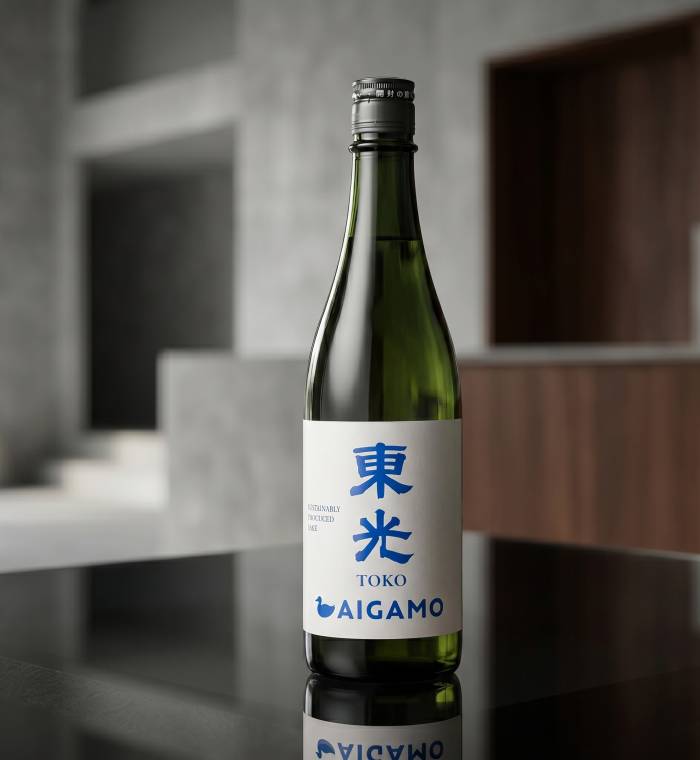
A sake made from rice grown without chemicals has seen sales rise about 3.3 times after a 2025 renewal, according to Kojima Sohonten Co., Ltd., a Yamagata Prefecture brewery that says the result suggests sustainability is becoming a factor in what consumers choose to buy.
The product, now sold as TOKO AIGAMO, was originally introduced in October 2023 under the name TOKO Junmai Daiginjo AIGAMO Robot Farming and was renewed in March 2025. The company said it compared total sales volume over the one-year period after launch for the original version and the renewed product and found that sales after the renewal were about 3.3 times higher.
Kojima Sohonten, based in Yonezawa, has brewed sake for more than 400 years, since 1597. In recent years, it has moved to making only junmai sake, which is brewed without added distilled alcohol, and has also promoted environmental measures tied to its production process. The company said it reached carbon neutrality for Scope 1 and Scope 2 emissions in 2023 by using renewable energy generated from sake lees in a biogas system.
TOKO AIGAMO is made from rice cultivated without chemicals using the solar-powered AIGAMO Robot™, an automatic weeding machine that stirs up mud in rice paddies to block sunlight and suppress weeds. The method allows farmers to avoid chemical herbicides while supporting biodiversity, the company said.
In the March 2025 renewal, the brewery kept the same Yamagata-grown rice, Dewasansan, but changed the polishing ratio from 50% to 80%. Rice polishing removes outer layers of the grain before brewing. Kojima Sohonten said the new version was designed to make better use of the rice’s natural character while keeping a balanced taste with acidity that works well with food. The label was also redesigned with an AIGAMO icon to make the product’s background easier to understand.
The company said several factors helped drive sales growth, including stronger shelf presentation at retailers, neck-tag point-of-purchase materials that explained the product’s story, and tasting opportunities in stores. It said customers often responded positively after learning about the farming method and then trying the sake.
At Kanamori Liquor Store in Yamagata, store manager Shikama said customer conversations often begin with questions about what the AIGAMO Robot is and how it works. He said tastings help turn interest into purchases and that the sake offers “natural character and clean umami.”
Kojima Sohonten President Kenichiro Kojima said the company believes sustainability is increasingly being recognized not just as an idea but as a value customers actively choose. He said younger consumers in particular have shown interest in the background of products made through chemical-free cultivation and brewing methods that respect ingredient character.
The brewery said its sustainability efforts also include employee field training at the source area of the Mogami River in Mt. Azuma and visits to a biogas power plant in Iide Town, where sake lees are turned into energy. It said those activities are meant to deepen understanding of local water sources, recycling systems and the role of brewing in a circular economy.
TOKO AIGAMO has also expanded beyond Japan to markets including South Korea, Taiwan and Canada, with plans for Europe, according to the company.