How to find your favorite flavors through mindful tasting
A beginner's guide to wine tasting at home
Tasting wine at home has become a popular activity for many Americans interested in learning more about what is in their glass. With a few simple steps, anyone can enjoy and analyze wine, regardless of experience. The process does not require professional training or expensive equipment, but following some basic guidelines can help reveal new flavors and aromas, making the experience more enjoyable and educational.
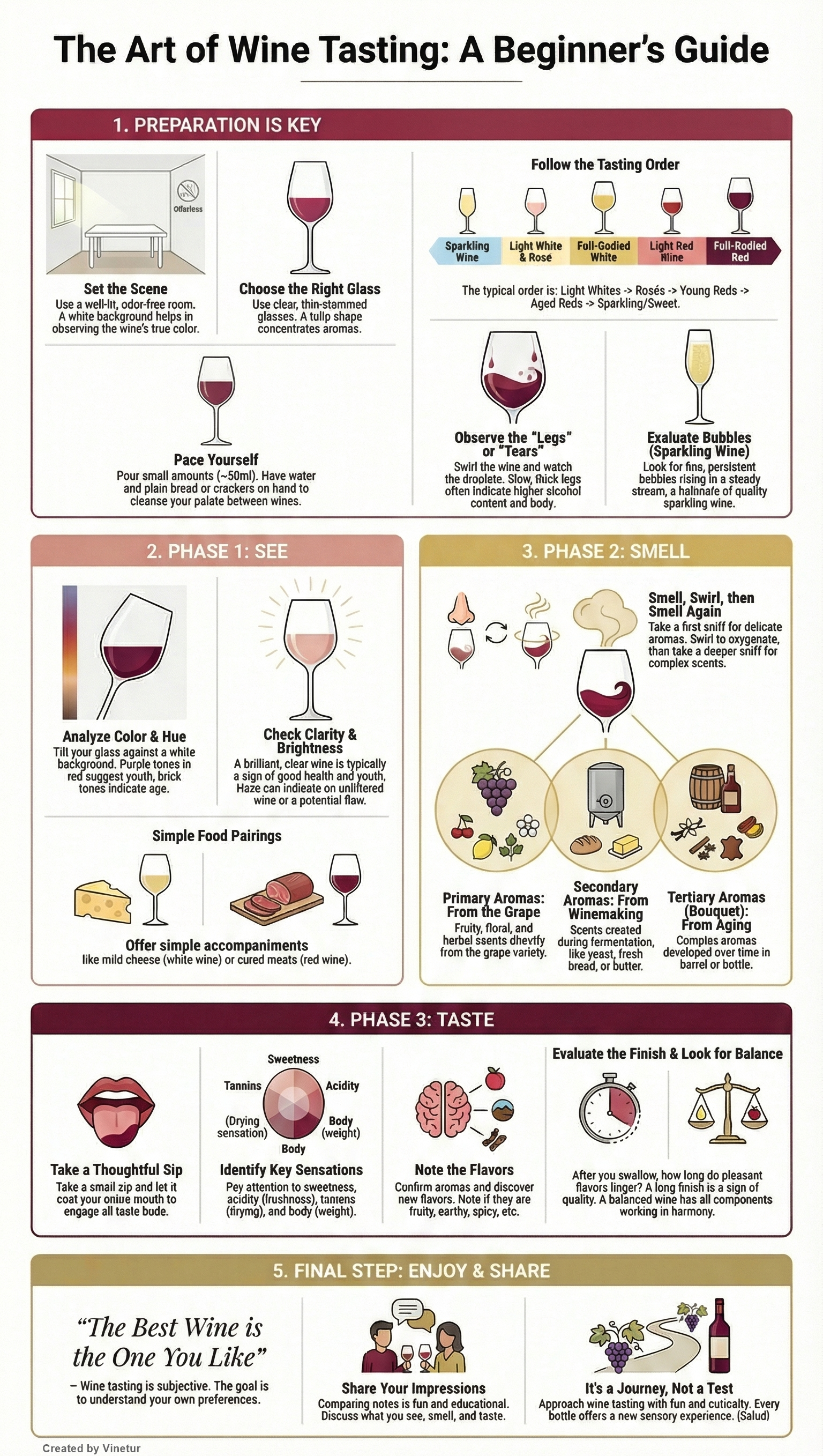
The first step is to prepare the space. Good lighting is important, ideally natural or neutral white light, to properly observe the color of the wine. A white background, such as a tablecloth or sheet of paper, helps highlight the wine’s appearance. The room should be well-ventilated and free from strong odors like food, smoke, or perfume that could interfere with the wine’s aroma. A calm environment without loud music or distractions allows for better focus on the tasting.
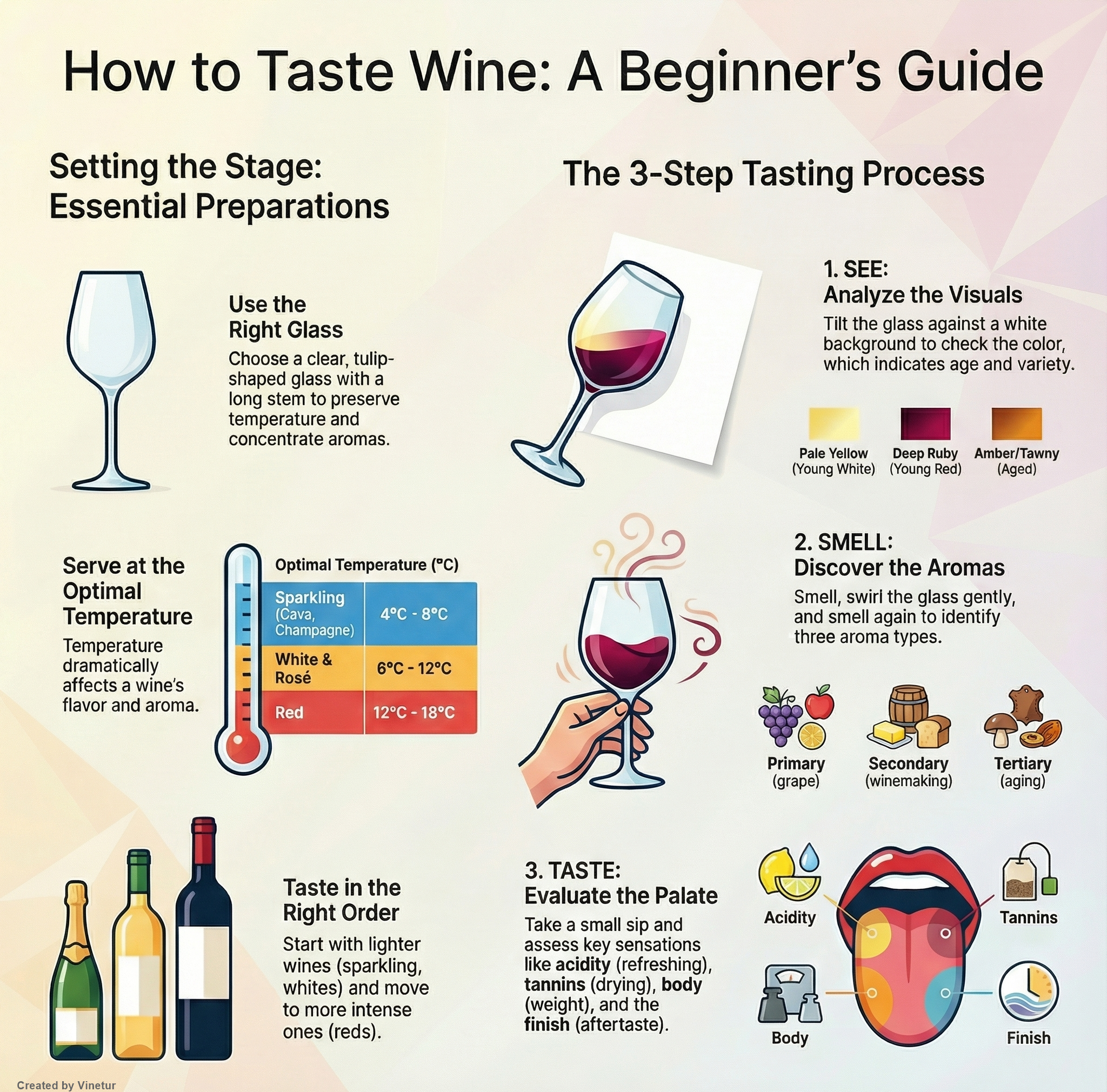
Choosing the right glassware also matters. Clear, thin crystal glasses with a long stem are preferred because they allow you to hold the glass without warming the wine with your hand. Glasses shaped like a tulip—wider at the base and narrower at the rim—help concentrate aromas. Each wine should have its own clean glass if possible, but rinsing between wines is acceptable if necessary. It is best to wash glasses with hot water only before tasting to avoid any detergent residue.
Serving temperature affects how a wine tastes and smells. Red wines are generally served between 54°F and 64°F (12°C–18°C), with lighter reds on the cooler end and fuller-bodied reds slightly warmer. White wines are best between 43°F and 54°F (6°C–12°C), with young whites colder than those with more body or oak aging. Rosés are typically served around 46°F–54°F (8°C–12°C). Sparkling wines should be even colder, between 39°F and 46°F (4°C–8°C). If a bottle needs quick chilling, an ice bucket with water, ice, and salt can lower the temperature in about 15–20 minutes.
When tasting several wines in one session, start with lighter styles—such as young whites—then move to rosés, followed by reds from lightest to fullest-bodied, ending with sparkling or sweet wines if included. This order prevents palate fatigue and allows each wine’s character to come through.
Pour small amounts—about 1.5 ounces (50 ml) per glass—to avoid overconsumption and keep your senses sharp throughout the tasting. Take breaks between wines to let your palate recover. Drinking water and eating plain bread or crackers can help cleanse your mouth between samples.
Simple snacks can enhance the experience without overpowering the wines. Soft cheeses or fresh seafood pair well with young whites; mild cured meats or olives suit rosés; young reds go nicely with Spanish omelet or roasted peppers; aged reds match stronger cheeses or grilled meats; sparkling wines complement fried appetizers or sushi. The goal is for food to support—not overshadow—the wine.
The tasting itself follows three main steps: looking, smelling, and tasting.
Begin by observing the wine’s color and clarity against a white background. Whites range from pale greenish-yellow to deep gold; reds may show purple hues when young and brick tones as they age. Clarity indicates whether a wine is filtered or natural; sediment is common in older reds or unfiltered bottles but not necessarily a flaw. Swirling the glass releases aromas and reveals “legs” or “tears”—the streaks left on the glass—which suggest alcohol content and body.
For sparkling wines, note bubble size and persistence: fine bubbles that rise steadily indicate quality production methods.
Next comes smelling. First sniff without swirling to catch delicate aromas, then swirl gently and smell again for deeper notes released by oxygenation. Aromas fall into three categories: primary (from grapes—fruits, flowers, herbs), secondary (from fermentation—yeast, bread dough, butter), and tertiary (from aging—vanilla, toast, nuts, leather). Try to identify what you notice most clearly; there are no wrong answers since perception varies by individual.
Finally, taste the wine by taking a small sip and letting it coat your mouth. Assess sweetness (dry to sweet), acidity (mouthwatering freshness), tannins (astringency mainly in reds), body (light to full), alcohol (warming sensation), flavor intensity, balance among components, and length of finish—the time flavors linger after swallowing.
Compare what you taste with what you smelled; sometimes flavors match aromas closely while other times new notes appear on the palate. Notice if any element dominates or if everything feels harmonious.
After analyzing each aspect, take time to enjoy your favorite wine from the session. Sharing impressions with friends or family can make tasting more interactive; everyone may notice something different in each glass.
Wine tasting at home is ultimately about enjoyment and discovery rather than technical expertise. With practice, anyone can develop their palate and learn which styles they prefer most. The best wine remains the one you like best—regardless of price or reputation—and every bottle offers an opportunity to explore new sensations in good company.