Toxic chemical TFA found in all recent European wines as contamination levels more than double since 2017
Researchers link rise to agricultural PFAS use and warn of potential health risks from persistent pollutants in food and water
Saturday, May 3, 2025
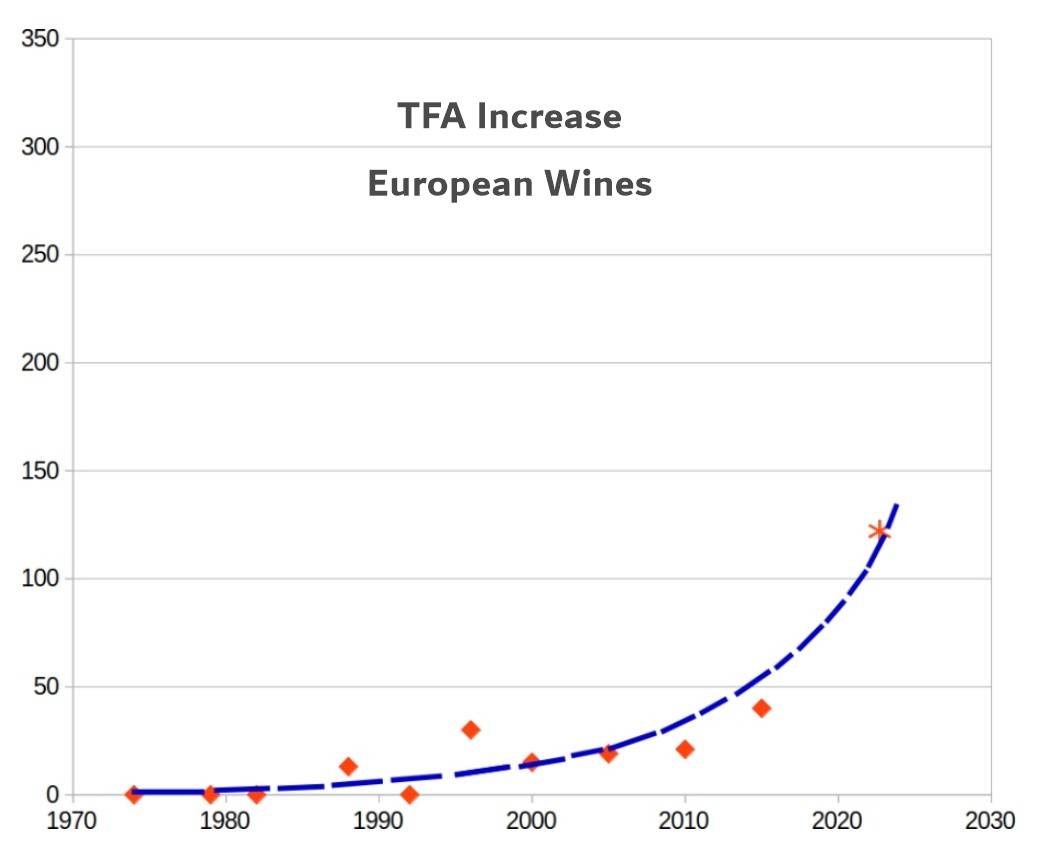
A recent study has revealed a sharp increase in the presence of trifluoroacetic acid (TFA), a toxic perfluorinated compound, in European wines. The report, titled "Message in a Bottle – The Rapid Rise of TFA Contamination in Wine Across Europe," was published by the Pesticide Action Network (PAN) Europe and Ecologistas en Acción, along with other European organizations. Researchers analyzed 49 wines from 10 different European countries. Their findings show that TFA, which was undetectable in wines produced before 1988, is now present in all recent samples. The average concentration reached 110 micrograms per liter (µg/L), rising to 122 µg/L in wines produced between 2021 and 2024. Some samples showed levels as high as 320 µg/L.
The wine samples were tested at the Institut Dr. Wagner in Austria. Alongside TFA, the researchers also screened for other pesticides and their metabolites. Results indicate that 94% of conventionally produced wines contained up to eight different pesticides or their breakdown products. These findings were compared with official European Union data from 2017, which had been commissioned by the European Commission. In 2017, the average TFA concentration in 27 European wines was 50 µg/L, with a maximum of 120 µg/L. The current study shows more than double the average concentration and nearly triple the maximum level.
The report suggests that TFA is accumulating in plants, raising concerns that dietary intake of this chemical may be higher than previously estimated. The increase in contamination has been especially pronounced since 2010. Experts warn that TFA is a "forever chemical," meaning it does not break down naturally and cannot be removed with current technologies. This has led to calls for an immediate ban on all PFAS pesticides and fluorinated gases.
TFA is a degradation product of per- and polyfluorinated alkyl substances (PFAS) used in agriculture. These chemicals are known to contaminate both surface and groundwater across Europe. According to a study by the German Environment Agency, pesticides are responsible for about 76% of TFA found in groundwater. Rainfall, which carries TFA emissions from fluorinated gases used in refrigeration systems, accounts for another 17%. Wastewater treatment plants and manure each contribute about 3%. Because TFA is not removed during water treatment processes, it has also been detected in drinking water, including bottled water.
From a toxicological perspective, a study commissioned by pesticide manufacturers under the EU’s REACH chemical regulation framework found that TFA caused severe malformations in rabbit fetuses. Since then, there have been growing concerns about potential risks to human reproductive health.
The rapid rise of TFA contamination in wine highlights broader issues related to persistent chemical pollutants in agriculture and water supplies across Europe. The organizations behind the report are urging policymakers to take swift action to address this growing threat to public health and environmental safety.