Digital age checks expose alcohol sellers to AI-powered ID fraud
Retailers in England and Wales fear phone-based proof of age may invite altered screenshots, cloned app screens, AI-made licenses.
Tuesday, September 29, 2026

Views › 2668
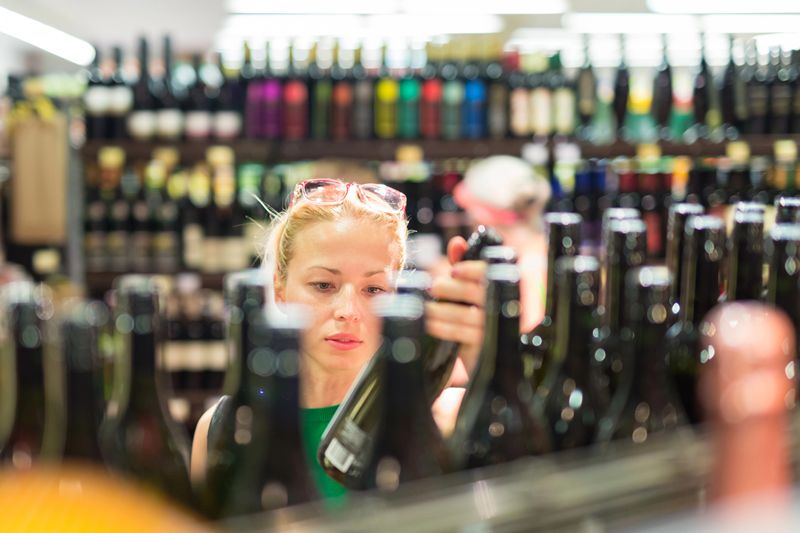
The move toward digital proof-of-age checks in alcohol sales in England and Wales is shifting attention from the traditional fake ID to a different problem: AI-assisted document fraud that may be harder for retailers to spot with the naked eye.
That concern was raised this month in material circulated to drinks industry media by Hopscotch System, a communications firm in Dublin, on behalf of Finovox, a company that sells fraud-detection technology. In its outreach, Finovox said new research found that 11% of Britons admit to having committed document fraud, while 67% said AI is one of the main factors making that kind of fraud easier. Among respondents who said they had committed document fraud, 82% said they had succeeded. The company said driving licenses were among the documents being falsified.
The figures point to a growing issue for alcohol retailers because driving licenses are one of the most common forms of proof of age in Britain. If age checks move from a plastic card shown across a counter to a digital credential displayed on a phone or shared through an app, the change could reduce some forms of low-tech deception while creating new openings for digitally altered records, copied credentials, or AI-generated identity documents.
Finovox framed the issue as a direct question for the alcohol trade: whether digital proof of age could help end the traditional fake ID or whether fraud will simply adapt. That is becoming a practical concern for supermarkets, convenience stores, bars, restaurants, and home-delivery operators that already face legal and financial risks if they sell alcohol to underage customers.
The challenge for sellers is that digital identity systems can improve security and convenience at the same time, but only if retailers are able to verify that what they are seeing comes from a trusted source. A physical fake ID often depends on flaws in printing, holograms, card stock, or a poor photo. A digital fake may depend on an altered screenshot, a manipulated QR code, a cloned app screen, or a document image generated or edited by AI tools that are now widely available to consumers.
That changes the burden on frontline staff. In a store or at a bar, employees who were once trained to compare a face with a photo and inspect a card for obvious signs of tampering may now need to recognize whether a digital credential is being presented through an approved channel and whether it includes live or dynamic security features rather than a static image. The same issue extends to alcohol delivery, where drivers may have only a few seconds at the doorstep to complete an age check.
The use of AI adds speed and scale to the problem. Editing tools can now change dates of birth, names, and photographs in seconds, and image-generation systems can help produce convincing document layouts. Fraud specialists have warned across several industries that the barrier to entry is lower than it was when fake documents required specialist software, printing equipment, or access to templates. In that environment, digital age checks do not remove fraud risk on their own. They change the form that risk takes.
The claims shared by Finovox come with an important limitation. The material circulated to the media did not include detailed methodology for the research, such as sample size, fieldwork dates, or how respondents were selected. That makes it difficult to independently assess how representative the results are. Finovox also has a commercial interest in the issue because it offers tools designed to detect document fraud.
Even with that caveat, the broader concern is likely to resonate in the drinks business as age verification systems evolve. Alcohol retailers have spent years balancing compliance, customer speed, and staff training. Digital credentials may help reduce errors tied to manual inspection and may offer a more standardized way to verify age, especially if they connect directly to official records or approved identity wallets. But those gains depend on whether the systems used at checkout can authenticate a credential rather than simply display it.
That distinction may shape how retailers invest in age-check technology over the next phase of rollout. Systems that only capture an image of a document or rely on a visual review may be more exposed to AI-assisted tampering than systems built around encrypted credentials, real-time validation, device checks, or liveness controls. For sellers, the issue is not only whether a customer can show proof of age on a phone, but whether that proof can be trusted at the point of sale.
The drinks industry is also watching the issue because any increase in fraud pressure can affect more than compliance. Failed age checks slow transactions, disputes at the register can put staff under pressure, and weak controls can damage retailer reputation if stores become known as easy places for underage buyers to test forged credentials. For online alcohol sellers, the problem can be even more complex because identity checks may happen at account creation, at payment, and again at delivery.
Finovox said its chief executive, Marc de Beaucorps, was available to discuss how AI is changing identity and document fraud and where new vulnerabilities could emerge as age verification becomes more digital. That reflects a wider debate now taking shape around digital ID in alcohol sales: not whether technology will play a bigger role, but whether retailers, regulators, and vendors can stay ahead of the next generation of fake credentials as the market moves from physical cards to digital proof.