Napa Valley's Newton Vineyard Closes Permanently After Devastating Glass Fire
LVMH's decision reflects high restoration costs and declining U.S. wine sales amid generational shifts and market challenges.
2025-02-27
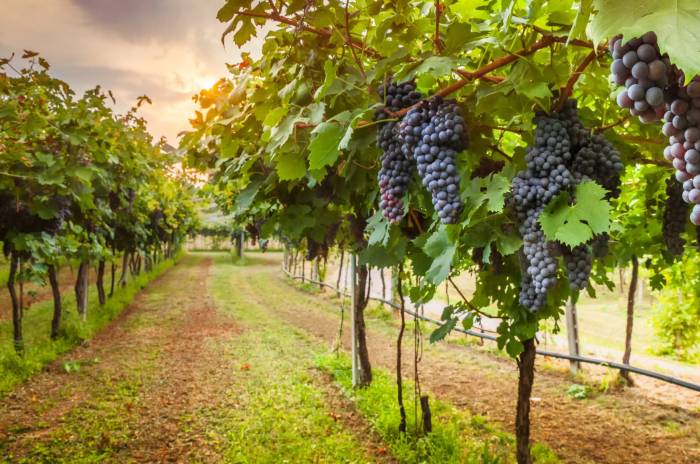
In 2020, the Glass Fire ravaged Newton Vineyard, one of Napa Valley's most scenic wineries. Situated on Spring Mountain, Newton was known for its hillside vineyards, English-style gardens, and a distinctive winery. The fire destroyed most of the vines, the winery itself, and wiped out the entire 2020 harvest. Rebuilding was expected to take years and cost millions. However, last week, owner LVMH announced to wine club members that Newton would close permanently. LVMH did not comment on the decision. The choice seems logical given LVMH's other Napa properties and the high cost of restoration. Yet, if the fire had occurred a decade earlier, LVMH might have opted to rebuild. Newton is a casualty of both the fire and changing times. U.S. wine sales have declined for four consecutive years, according to IMPACT Databank. The 2024 harvest was California's smallest in two decades, with 100,000 tons of fruit left unpicked. Tens of thousands of vineyard acres are being removed. Industry analyst Rob McMillan describes it as the biggest correction in 30 years in his "State of the Wine Industry" report for Silicon Valley Bank.
The coming years will be challenging for those in the wine industry. However, there is hope and work to be done. Wineries should view this as an opportunity. The decline in wine sales is not new, but the extent of the problem has been hard to gauge. During the pandemic, U.S. wine sales grew by 4.33% in 2020, but have been falling since, with a 2.4% decline estimated for 2024. The pandemic caused a surge in demand, followed by supply chain disruptions. Wholesalers and retailers still face inventory backlogs. McMillan notes that wine sales have been slowing for a decade. Growth was 5.19% in 2015, then less than 1% annually from 2016 to 2019. Sales of lower-priced wines began declining around 2017, offset by higher-priced bottles, but it was a warning sign. Now, sales are declining across almost all price points.
The shift in wine consumers is a significant factor. Neo-prohibitionists have gained traction post-pandemic, but their influence is limited. McMillan highlights that the last major correction in the wine market was in the 1980s, during a generational shift from the Greatest Generation to Baby Boomers. As Boomers aged, wine sales surpassed spirits, aided by reports of wine's health benefits. Now, another generational shift is occurring. Boomers are aging and retiring. Gen X drinks wine but is a smaller group. Millennials are settling down, and Gen Z is coming of age. These younger generations are not embracing wine in large numbers, which is a primary reason for the current challenges.
Today's consumers have endless choices. In the past, wine offered variety compared to limited beer and spirits options. Now, young consumers face a plethora of choices, from artisanal spirits to hard seltzers and cannabis products. Wine struggles to capture their attention. Wine's unique qualities—tradition, complexity, and food pairing—are hard to convey amid colorful, trendy alternatives.
McMillan remains optimistic, stating that wine aligns with younger consumers' values—being green, plant-based, natural, and often organic. However, wineries cannot wait for younger consumers to discover wine on their own. They must highlight wine's strengths while finding new ways to engage these consumers. Wine can still be enjoyed in traditional settings, but winemakers need to consider how to make wine appealing for different occasions. They should ask, "How can I ensure younger consumers see my wine? How can I make it an option for more situations while staying true to its roots?"
Wineries must also consider pricing for younger consumers, who have different financial resources than Boomers. Meeting them where their wallets are is crucial. The current market correction will not last forever. Angelo Gaja, a renowned winemaker, recently reminded me of the enduring nature of wine. He referenced Noah from Genesis, who planted vines after the flood to enjoy wine in company. Wine is here to stay. The question is how wineries will navigate and own the recovery.

Founded in 2007, Vinetur® is a registered trademark of VGSC S.L. with a long history in the wine industry.
VGSC, S.L. with VAT number B70255591 is a spanish company legally registered in the Commercial Register of the city of Santiago de Compostela, with registration number: Bulletin 181, Reference 356049 in Volume 13, Page 107, Section 6, Sheet 45028, Entry 2.
Email: [email protected]
Headquarters and offices located in Vilagarcia de Arousa, Spain.