Italian Wine Exports to Non-EU Markets Plunge 14% in Third Quarter
Industry leaders warn funding cuts and regulatory delays threaten global competitiveness as Brussels debates long-term promotion strategies.
Thursday, December 4, 2025
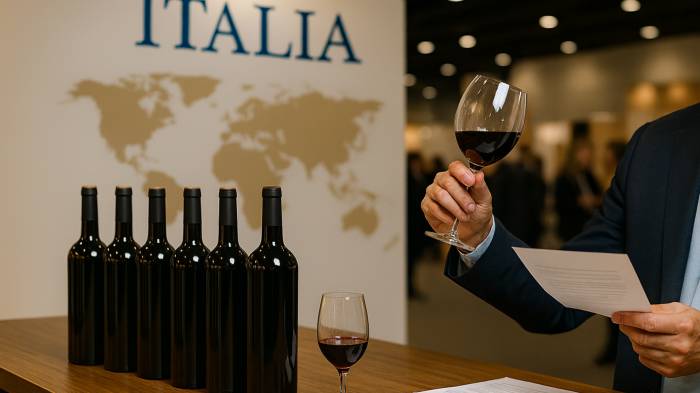
The National Council of the Unione Italiana Vini (UIV) met yesterday to discuss the current challenges facing Italian wine exports, particularly in non-EU markets. According to data from the UIV Observatory, exports to countries outside the European Union have shown a steady decline. In the third quarter, export value dropped by 14 percent, and for the first nine months of this year, the cumulative decrease reached 5.7 percent compared to the same period last year.
This downturn has led industry leaders to call for increased funding and extended timelines for promotional activities in third countries. The UIV is urging that more resources be allocated to the Italian Trade Agency (Agenzia Ice) to support market diversification efforts. These initiatives are seen as essential for long-term growth and maintaining a strong presence in international markets.
The council also addressed upcoming negotiations in Brussels regarding the so-called "Wine Package," which will be discussed in a trilogue meeting tomorrow. One of the key requests from UIV is to extend the duration of the OCM Promotion measure from three years to ten consecutive years for activities targeting specific countries. This extension is considered crucial for building lasting relationships and effective brand recognition abroad.
Another major topic was the proposed financing of vineyard uprooting, a measure that would be funded entirely from existing resources without additional funds. Paolo Castelletti, UIV’s secretary general, reminded council members that a similar initiative was implemented in 2009 with a community expenditure of one billion euros but failed to achieve its objectives. He warned that diverting funds from development, promotion, investment, and restructuring could undermine the sector’s future growth.
The council also expressed concern about delays in approving regulations for dealcoholized wines. The interministerial decree from Masaf and Mef has been pending with the State General Accounting Office for about two months. Italian producers are waiting for this regulation to compete on equal terms with other European producers, who have had a four-year head start since the EU regulation was published in December 2021.
Industry representatives emphasized that safeguarding resources for development and promotion is vital at a time when global competition is increasing and traditional markets are showing signs of weakness. The decisions made in Brussels and Rome over the coming weeks are expected to have a significant impact on the direction of Italy’s wine sector and its ability to adapt to changing international conditions.