Forty New Grape Varieties Tested in Switzerland to Cut Synthetic Fungicide Use in Vineyards
Researchers focus on disease-resistant grapes and natural alternatives like oregano oil to protect vines and meet environmental demands
2025-12-04
In the vineyards above Nyon, Switzerland, researchers at the Haute école de Changins are working to reduce the use of synthetic fungicides in viticulture. The experimental vineyard, overlooking Lake Geneva, is home to a project focused on developing grape varieties that can withstand fungal diseases. Markus Rienth, head of the viticulture sector at Changins, leads a team that combines fieldwork with laboratory research. On a recent visit, he pointed out a pale spot on a vine leaf—a sign of downy mildew—explaining that this particular grape variety is not resistant enough.
The experimental plot covers about half a hectare and has been dedicated for several years to testing new grape varieties bred for resistance to fungal diseases. These efforts are part of the Innopiwi project, funded by the Swiss Federal Office for Agriculture. The project’s name comes from the German “Piwi,” meaning fungus-resistant varieties. Forty new grape types, developed by research institutes across Europe, have been planted here. Each is multiresistant, carrying several genes to fight off downy mildew and powdery mildew.
Researchers systematically study each variety’s yield, physiology, resistance to environmental stress like heat or drought, and their ability to withstand pathogens. They also evaluate organoleptic qualities such as appearance, aroma, and taste. The goal is to provide concrete recommendations for Swiss winegrowers interested in planting these Piwi varieties. Similar studies are underway at two other Swiss research sites with different soil and climate conditions: Frick and Wädenswil.
For an untrained eye, the rows of vines look similar except for the color of their grapes, which range from deep blue to amber yellow. There are no signs indicating their names or origins—only numbers identify them for researchers, a precaution against theft.
The context for this research dates back to the late 19th century when European grapevines (Vitis vinifera) were first exposed to fungal diseases brought from America through increased trade. Unlike their American counterparts, European vines had not developed natural resistance. Early solutions included copper and sulfur treatments; later, synthetic fungicides became widespread from the 1930s onward. By the mid-20th century, concerns about these chemicals led scientists to explore crossbreeding with American vines, which are naturally resistant.
Over time, breeders succeeded in creating grape varieties that combined disease resistance with desirable taste profiles. However, developing new varieties without using genetically modified organisms (GMOs) remains slow—about 15 years per breeding cycle—even with modern techniques like marker-assisted selection. Rienth notes that only allowing GMOs would significantly speed up progress but clarifies he is not personally advocating for lifting Switzerland’s moratorium on GMOs.
One major challenge is maintaining wine quality while increasing disease resistance. Many white Piwi grapes produce acceptable wines, but achieving similar results with red varieties is more difficult. This has led researchers to explore alternative ways to reduce fungicide use while preserving vineyard ecosystems and meeting consumer demand for environmentally friendly products.
Some essential oils show promise in stimulating grapevines’ natural defenses or acting as antifungal agents. In one study funded by the Swiss National Science Foundation (FNS), Rienth’s team demonstrated that oregano oil can trigger immune responses in vines. A new project launched in summer 2025 aims to microencapsulate oregano oil in alginate and chitosan—materials that prevent washing away and degradation of the oil while reducing its toxicity and prolonging its protective effects against downy mildew.
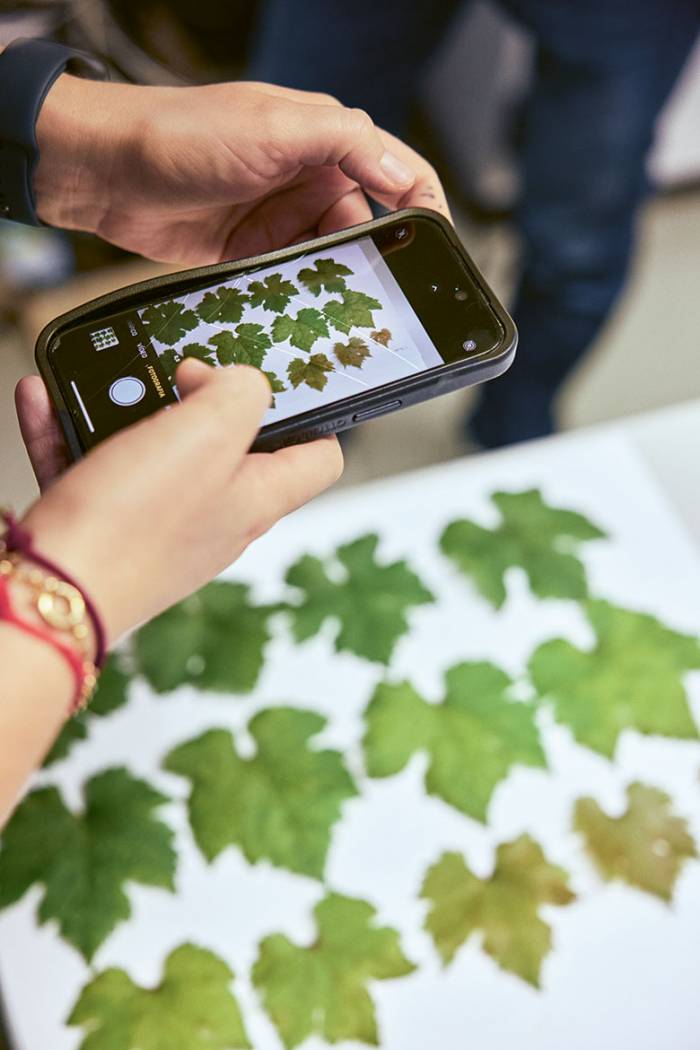
Inside the laboratory at Changins, researchers infect vine leaves with downy mildew under controlled conditions to compare plant resistance levels. They also analyze soil samples and photograph leaves for later assessment of disease severity.
Beyond scientific challenges, Swiss wine producers face a broader issue: declining global wine consumption. While this trend may be positive from a public health perspective, it creates economic pressure on growers who must compete internationally. Despite high quality, Swiss wines account for only half of domestic consumption—a gap that Rienth believes could be narrowed through improved marketing.
As climate change and disease threats persist, projects like those at Changins aim to secure the future of viticulture by combining traditional breeding with innovative natural solutions. The work continues both in the vineyard rows above Lake Geneva and in the laboratories where science meets tradition.
