United States Raises Global Tariff Rate to 15% After Supreme Court Overturns Trump’s Trade Policy
Importers and trading partners face uncertainty as new tariff takes immediate effect, with key exemptions for agriculture and critical goods
Tuesday, February 24, 2026
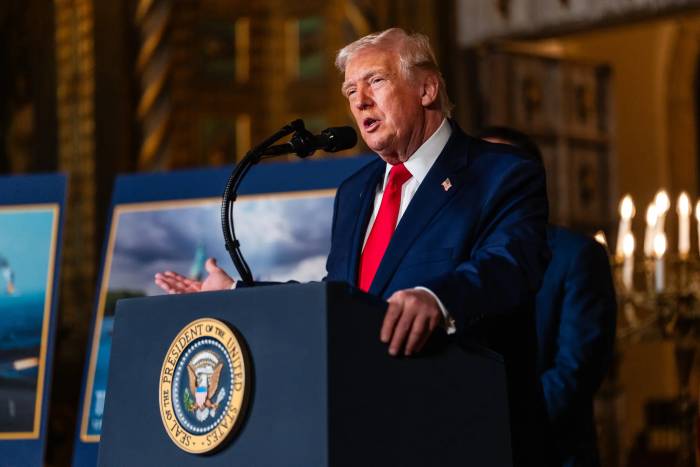
The United States began enforcing a new global tariff rate of 15% on imports this Tuesday, replacing the initially announced 10%. The change comes after the Supreme Court struck down much of President Donald Trump’s previous tariff framework. The administration is using this measure as a temporary alternative while it seeks a more permanent solution.
Last Friday, following the Supreme Court’s decision to invalidate most of Trump’s tariff agenda, the president said he would quickly implement a flat 10% tariff on all trading partners under a different law. However, Trump later posted on his Truth Social account that he would raise the global tariff to 15% with immediate effect, stating that this level was fully legal. The U.S. Customs and Border Protection agency had informed importers that the initial rate would be 10% for all countries for 150 days unless specifically exempted. Despite this communication, the White House confirmed that the 15% rate is now in effect.
The new tariff is being applied under Section 122 of the Trade Act of 1974. It took effect at midnight Tuesday and is set to remain in place for about 150 days, until July 23. Any extension beyond that date would require Congressional approval.
According to details released by the White House, several categories are exempt from the new tariff. These include agricultural products such as beef and tomatoes, pharmaceuticals, critical minerals and metals used for coinage, certain energy and aerospace products, donations, and related luggage. Sectors already subject to tariffs outside the scope of the International Emergency Economic Powers Act (IEEPA) are also not affected by this new measure. This includes existing tariffs of up to 50% on steel, aluminum, and their derivatives, as well as goods covered under the United States-Mexico-Canada Agreement (USMCA).
The Supreme Court ruling specifically targeted so-called “reciprocal” tariffs imposed by Trump on U.S. trading partners in an effort to reduce the trade deficit. It also invalidated additional tariffs of 25% on Mexico and Canada that were intended to pressure those countries to curb fentanyl trafficking. The court’s decision further struck down increases up to 50% on tariffs against Brazil and India, which had been imposed in response to legal actions against former Brazilian President Jair Bolsonaro and India’s purchase of Russian crude oil.
The implementation of the new 15% global tariff has created uncertainty among importers and trading partners as they adjust to rapidly changing trade policies. The administration maintains that these measures are necessary to protect American industries while it works with Congress on longer-term solutions.