Taste is in the mind, not just the glass
Using biometric sensors, researchers found that the weight of a glass and the serving ritual change how the brain processes color, aroma, and intensity
2025-12-03
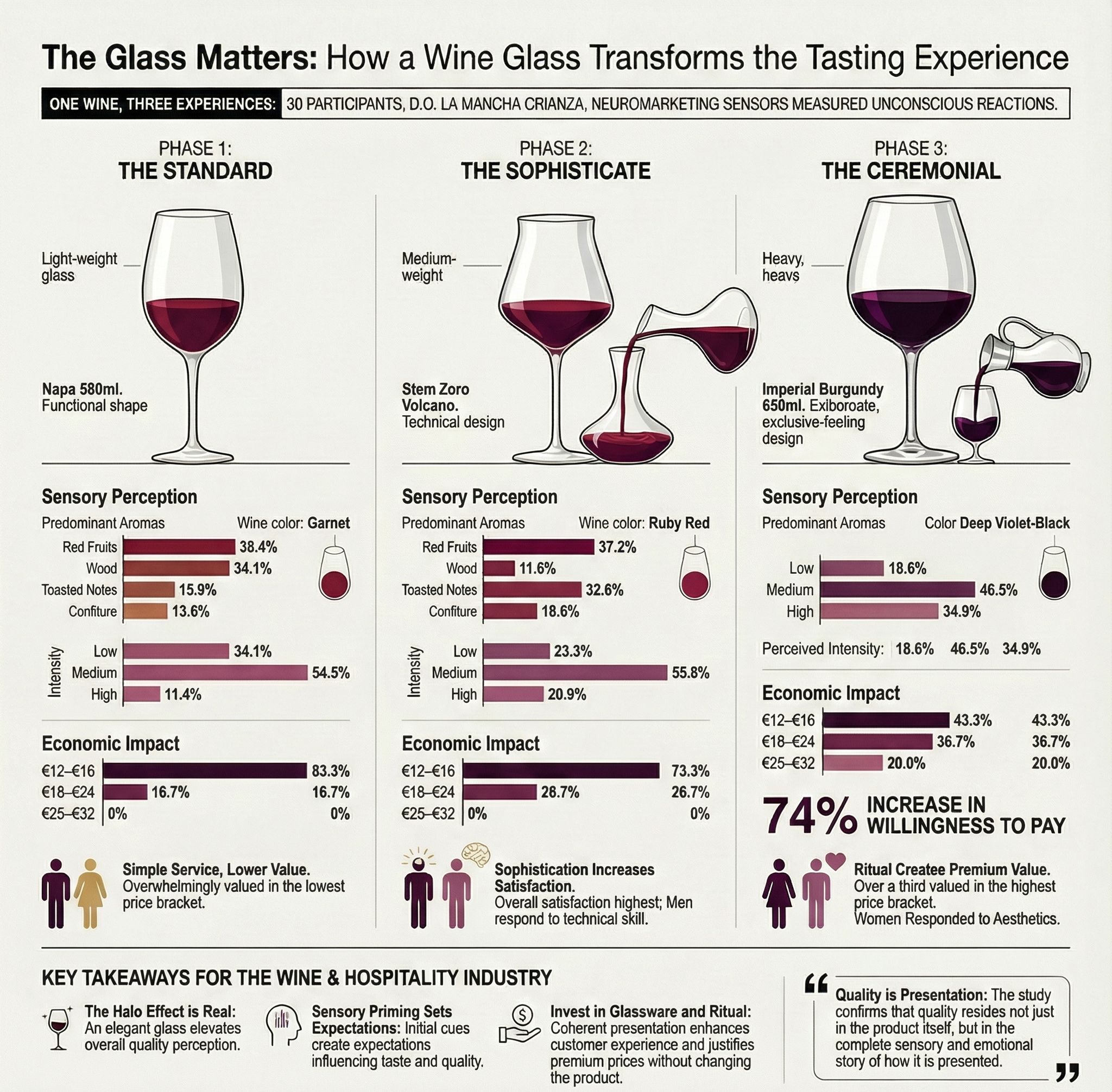
A recent study by Aplus Gastromarketing, a Spanish agency specializing in gastronomic marketing, has found that the shape, weight, and serving ritual of a wine glass can significantly alter how consumers perceive wine on sensory, emotional, and economic levels. The research was conducted during the latest edition of Gastrolab, an event organized by the agency, where 30 participants took part in a controlled tasting experiment. The central question was whether the glass and the way wine is served could change the consumer experience, even when the wine itself remains unchanged.
During the experiment, each participant tasted the same crianza varietal wine from D.O. La Mancha, poured from a magnum bottle, across three different scenarios. The only variables were the type of glass and the method of service. In the first phase, wine was served in a light, classic glass with a standard, functional service. In the second phase, it was poured into a more stylized glass after being decanted in front of participants. The third phase featured a heavy, large-bowled glass and an elaborate ceremonial service that emphasized exclusivity.
To measure responses objectively, researchers used computational neuroscience sensors to track positive emotional activation and purchase decision indices. Participants also completed questionnaires about their sensory perceptions and estimated price points for each tasting.
The results showed that both the physical characteristics of the glass and the style of service had a direct impact on how participants experienced the wine. Visual perception of color shifted depending on the glass: in standard glasses, most described the wine as garnet; in stylized glasses, as ruby red; and in heavy glasses with ceremonial service, as having deeper violet-black tones. Aromatic complexity also increased with more sophisticated presentations. Simple notes like red fruits and wood dominated in phase one, while phases two and three saw more complex descriptors such as toasted notes, balsamic aromas, cocoa, and ripe fruits.
Perceived intensity followed a similar pattern. The standard presentation led most to rate intensity as medium or low. With decanting and heavier glassware, ratings shifted toward high or very high intensity. These changes occurred despite all participants tasting exactly the same wine.
Economic perception was also strongly affected by presentation. In the standard scenario, most participants estimated the wine’s value at €12–16 per bottle. After experiencing the premium presentation with heavy glassware and elaborate ritual, over a third placed its value at €25–32—a 74% increase in average willingness to pay compared to the basic service.
The study also identified gender-based differences in emotional response. Female participants responded more strongly to aesthetic elements such as elegance and luxury associated with heavier or more refined glasses. Their emotional connection was tied to visual pleasure and symbolic cues of exclusivity. Male participants showed greater emotional activation during technical aspects of service—particularly when watching wine being decanted—focusing on skillful gestures and professional detail.
Despite these differences in what triggered their responses, both groups rated their overall satisfaction higher as presentation became more sophisticated. Emotional engagement increased with each step up in ritual and glass quality.
From a neuromarketing perspective, these findings support several established principles: first, that a “halo effect” can occur when one outstanding feature (such as elegant glassware) positively influences overall product perception; second, that initial sensory cues (like shape or ritual) prime expectations for taste and quality; third, that context can elevate perceived value without changing the product itself; and finally, that symbolic actions during service create stronger emotional memories.
The implications for hospitality professionals and wineries are clear: investing in quality glassware and thoughtful service rituals is not just about aesthetics but can directly enhance customer experience and justify higher prices. The study suggests that in today’s competitive market—where emotional connection is key—service becomes part of the story told to consumers, with glassware acting as a symbol of value.
Aplus Gastromarketing’s research provides scientific evidence that context matters as much as content when it comes to enjoying wine. For restaurants and wineries seeking to differentiate themselves or command premium pricing, attention to detail in presentation may be as important as what is poured into the glass.
