Independent winemakers’ fair in Bologna draws 29,000 visitors, topping its 2025 turnout
Organizers said the three-day event featured 1,005 producers and more than 8,000 labels, with direct purchases driving business across the venue
Tuesday, November 24, 2026

Views › 209
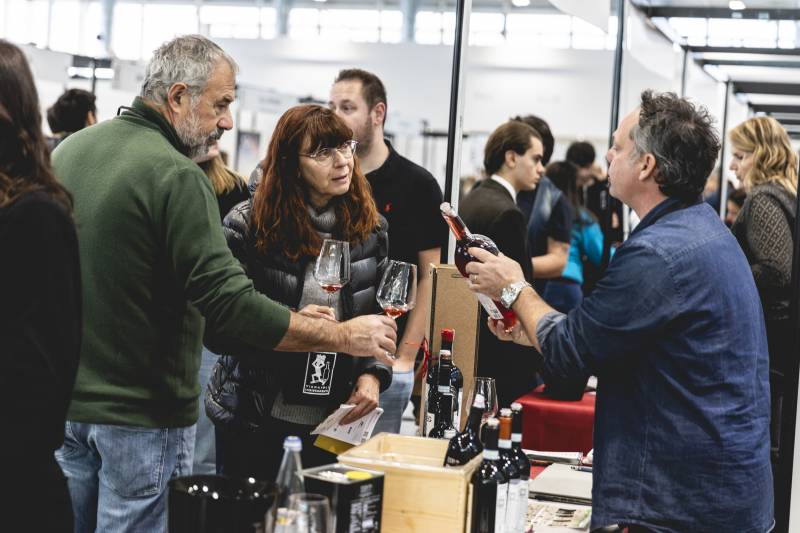
The 15th edition of the Mercato dei Vini dei Vignaioli Indipendenti ended in Bologna with 29,000 admissions, a higher turnout than the 2025 edition, according to figures released on Tuesday, Nov. 24, by organizers BolognaFiere and FIVI, the Italian federation of independent winegrowers.
The three-day fair, held at the Bologna exhibition center, brought together 1,005 FIVI producers in pavilions 29 and 30 and offered more than 8,000 wine labels for tasting and sale, organizers said. They also said exhibitors posted stronger business results than a year earlier, though they did not release a year-over-year comparison or revenue totals.
The event has become one of Italy’s main showcases for small and medium-sized wine estates that grow their own grapes and bottle their own wines. Alongside producers from every Italian region, this year’s edition also included independent winegrowers from Bulgaria, the Czech Republic and Slovenia through CEVI, the European confederation of independent vintners. The fair also hosted 29 olive oil producers affiliated with FIOI, the Italian federation of independent olive growers.
Organizers said the profile of visitors continues to shift toward more informed consumers who attend not only to taste wines but also to buy directly from producers. That direct-purchase focus was visible across the venue. BolognaFiere said 1,500 carts and rolling trolleys were made available for buyers carrying bottles to parking areas, and a home-shipping service also operated inside the fairgrounds.
Rita Babini, a winegrower and president of FIVI, said the event’s importance goes beyond raw attendance. In a statement, she said the fair remains a key annual meeting point for producers, wine enthusiasts and trade professionals, and argued that the quality and enthusiasm of the audience are central to its appeal.
BolognaFiere President Gianpiero Calzolari described the event as evidence of the strength of an agricultural business model built on local identity and product quality. He also pointed to the fair’s growing connection with the city of Bologna, which has become a larger part of the event’s strategy in recent years through off-site programming.
That broader citywide presence was visible in the Fuori Mercato schedule, which extended beyond the exhibition halls. More than 60 venues in Bologna and the surrounding province took part in related events on Nov. 20 and Nov. 21, organizers said. Among them was FUORI DI FIVI, which this year included Bologna’s Mercato Albani for the first time. The off-site program also featured a “white night” for the restaurant sector promoted by Confcommercio Ascom Bologna, with participating restaurants keeping kitchens open until midnight for producers and visitors attending the fair.
Inside the exhibition center, organizers credited a packed program of tastings and talks for helping drive attendance. All four FIVI master classes sold out, they said. This year’s theme was “Think Pink,” focused on wines and producers framed around the idea of building hope. The sessions ranged from organically farmed vineyards in Valdarno di Sopra to rosé wines from five parts of Italy: Veneto, the Lake Garda area, Abruzzo, Puglia and Calabria. Other classes examined volcanic island vineyards on Salina, Lipari and Vulcano, and a Valpolicella project developed through a partnership between a woman producer and a social cooperative that involves disabled young people in every stage of production.
The olive oil section also drew heavy traffic, according to organizers. At the FIOI Oil Bar, professional tasters guided visitors through oils from the 29 participating farms and explained how to distinguish a high-quality extra virgin olive oil from lower-grade or defective oils. The area also hosted bread tastings prepared by Il Forno di Calzolari, paired with oils chosen for spicy, bitter and fruity characteristics.
Another well-attended feature was the Emilia-Romagna regional stand, managed by the region’s agriculture department. The stand offered guided tastings led by chef Carla Brigliadori to promote regional products with protected designation labels, paired with local wines selected by FIVI producers and presented by Enoteca Regionale Emilia Romagna. Products highlighted there included traditional balsamic vinegar of Modena, Parmigiano Reggiano, Culatello di Zibello, Piadina Romagnola, Coppa di Parma and Squacquerone di Romagna, among others.
Organizers said food service areas across the fairgrounds remained busy throughout the event, including the food area in pavilion 26, the coffee bar and gelato stand in the gallery, and a full-service restaurant in pavilion 28. That level of activity reflected the fair’s dual role as both a trade event and a large public market, where visitors move between structured tastings, direct purchases and food pairings.
The closing days of the fair also included two annual awards. The “Vignaiolo come noi” prize went to RECUP, a social promotion association that works against food waste. The “Leonildo Pieropan” award was presented to Mario Pojer, the Trentino producer widely known in Italian winemaking for technical innovation and long-standing influence in the sector. FIVI said the first prize recognizes people or organizations outside the profession of winegrowing whose work reflects values such as quality, originality and craftsmanship, while the second honors the memory of one of the federation’s founders.
On its final day, the fair was also used to introduce a new research initiative for the wine sector. FIVI presented FIVI Lab, described as an observatory on vertically integrated wine businesses, developed with the Italian Academy of Vine and Wine. Organizers said the project is intended to address current issues facing wine producers and to strengthen the analytical tools available to a part of the industry that often argues it is underrepresented in policy and market debates.
The Mercato dei Vini dei Vignaioli Indipendenti is a FIVI event organized by BolognaFiere with the support of the Emilia-Romagna regional government, the city of Bologna and Confcommercio Ascom Bologna. Organizers said the next edition is scheduled for 2027.