Italian wine producers urged a halt to new vineyard plantings after stocks climbed to 41 million hectoliters
At a conference in Piedmont, industry leaders said a 12% drop in global wine consumption is squeezing prices and margins
Friday, November 20, 2026

Views › 474
Wine producers, economists and regional officials in Piedmont said on Thursday, November 19, that Italy’s wine sector is facing a widening gap between supply and demand as consumption falls and inventories rise, prompting calls for tighter control of new vineyard plantings and other market-management measures.
The debate took place at the Castle of Grinzane Cavour during a conference organized by Confagricoltura Cuneo on the wine market, health and the sector’s changing outlook. Speakers said the pressure is being driven by weaker global demand, higher production costs and softer prices, even as some export markets remain resilient.
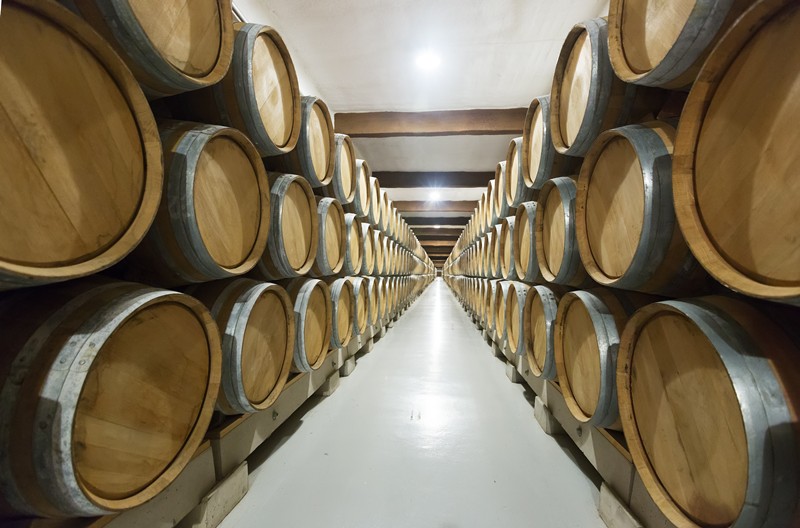
Confagricoltura’s national wine federation said Italian wine stocks stood at 41 million hectoliters on Sept. 30, up from 36 million hectoliters a year earlier. That increase has sharpened concern across the industry that oversupply could erode margins further and force difficult decisions on yields, plantings and emergency market measures. For the broader beverage business, the stock buildup matters because prolonged pressure on wine prices and profitability can affect investment, promotion spending and product mix, especially as demand shifts within the category.
Enrico Allasia, president of Confagricoltura Cuneo and Piedmont, said the wine world is under strain from rising inventories, higher farm costs and uncertainty in international markets. The concern is not uniform across Italy or even across Piedmont, where export performance and pricing differ by territory and appellation, but the overall market trend has become harder to ignore.
Gian Luca Demaria, who heads Confagricoltura Piemonte’s wine section, said Piedmont has 44,961 hectares of vineyards, of which 42,786 hectares, or 95%, are dedicated to DOC and DOCG wines. Regional production in 2025 was about 2.1 million hectoliters. At the same time, the structure of the sector has changed sharply. Between 2010 and 2025, the number of wine-growing businesses in Piedmont fell from 19,229 to 11,153, a 42% decline. Vineyard area expanded in Cuneo, while Asti and Alessandria lost hectares, and land has become more concentrated in fewer companies across the main producing provinces.
Demaria argued for suspending new planting authorizations and using green harvesting in areas that need it. He also said any voluntary uprooting of vineyards that are no longer economically sustainable should be approached cautiously. His position reflected a broader message from the meeting: producers want tools to align output more closely with weaker demand, but many remain wary of using drastic measures too early or too broadly.
Denis Pantini, head of Nomisma’s Wine Monitor, presented data showing the scale of the consumption slowdown. Over the past 20 years, global wine consumption has dropped 12%, falling from about 250 million hectoliters to less than 210 million hectoliters. In Italy, consumption declined from 24.2 million hectoliters in 2021 to 20.2 million hectoliters in 2025. Pantini said drinking frequency is falling and the average consumer age is rising. The retreat has hit still red wines in particular, while sparkling wines have increased their market share.
That shift is also visible in trade data. Piedmont exported 567 million euros worth of wine in the first half of 2026, up 2.3% from a year earlier. But for the region’s red PDO wines, export volumes grew faster than export value, implying lower average unit revenue. That points to a familiar problem for producers: shipments can keep rising while earnings per bottle come under pressure.
Several speakers looked to France as an example of how governments are responding to weaker demand. Ludovic Roux, a French winegrower and vice president of the Copa-Cogeca wine working group, said France has already financed the uprooting of 10,000 hectares in the Bordeaux area. National programs then allocated 110 million euros for 2025 and another 120 million euros for 2026. The potential vineyard area covered by those two programs is about 27,000 and 30,000 hectares respectively, though Roux said those figures represent theoretical intervention capacity rather than hectares already removed. He also said France distilled about 3.2 million hectoliters of wine between September 2023 and May 2024 at a cost of about 200 million euros.
Italian producers at the conference did not present distillation or uprooting as a first choice. Christian Marchesini, president of Confagricoltura’s national wine federation, said the supply chain is asking for a promotion plan, a suspension of new planting authorizations and supply-management tools tailored to regional conditions. Extraordinary distillation and uprooting, he said, should be used only where indispensable and without draining resources from investment and promotion.
The discussion also touched on the health debate that continues to shape wine consumption. Attilio Giacosa, president of an institute focused on research on wine, food and health, referred to epidemiological studies on moderate consumption and wine’s place in the Mediterranean diet. His remarks came against a backdrop of continued warnings from health authorities about the risks associated with alcohol consumption. That tension has become part of the commercial landscape for wine producers as they confront changing consumer habits and tighter public-health messaging.
In the closing discussion, producer Angelo Gaja said the sector needs to rebalance production with demand, which he said, based on an assessment shared with some colleagues, may be around 35 million hectoliters. He also pointed to uncertainty over possible U.S. tariffs and said Italian wines need stronger commercial positioning.
Piedmont Agriculture Councilor Paolo Bongioanni said the regional government will convene a Green Table on November 30 and expand the meeting to include protection consortia. The region is also expecting the first results in December from a wine observatory developed with Agrion and the University of Turin, data that producers and officials are likely to use as they weigh how far to go in restraining output.