China will tighten oversight of outsourced baijiu under rules that take effect on Dec. 1
The regulation makes brand owners chiefly responsible for food safety, bans split production and requires labels to identify both brands and factories
Friday, November 20, 2026

Views › 376
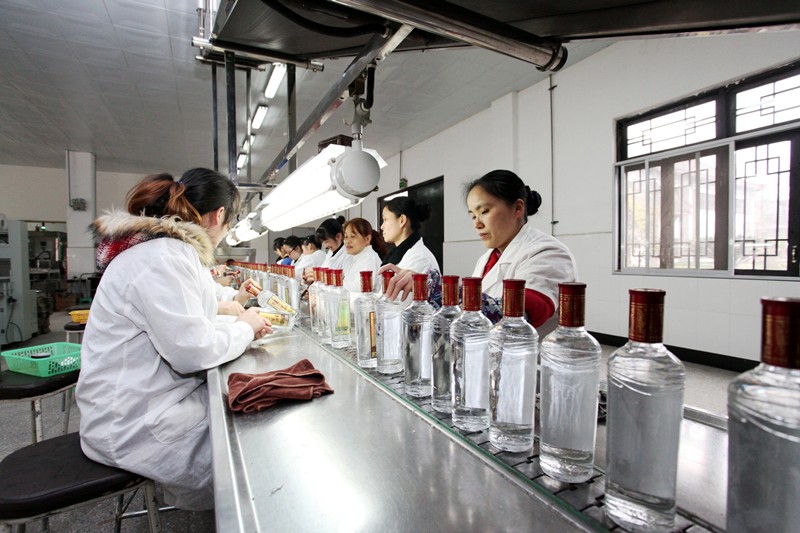
China will tighten oversight of baijiu made under private-label, trademark licensing and other commissioned-production arrangements from December 1, when a new national regulation on entrusted food manufacturing takes effect.
The regulation, called the Measures for the Supervision and Administration of Entrusted Food Production, was issued as Order No. 113 by China’s top market regulator. According to a Thursday, November 19 report by Yunjiu Toutiao, a Chinese alcohol industry outlet, the rules will for the first time place trademark licensing, franchising and contract manufacturing under one dedicated regulatory framework for food safety.
People in the baijiu trade told the outlet that the change is likely to alter how many brands outsource production to distilleries. The new system makes the commissioning party, usually the brand owner or marketer, primarily responsible for food safety. The producer, or the factory that makes the product, remains responsible for its manufacturing activities. The rules say neither side can use private contracts to reduce those legal duties.
That is a major shift for a part of the baijiu business where some brands have focused mainly on marketing and sales while relying on outside plants for production. Under the new rules, a brand owner will no longer be able to argue that it only licensed a trademark and therefore bears no responsibility for product safety.
The regulation also adopts a substance-over-form approach to determine whether an arrangement qualifies as commissioned production. According to industry participants cited by Yunjiu Toutiao, a deal described as authorized production, joint development or customized cooperation can still be treated as entrusted manufacturing if the brand side sets product requirements and the distillery produces and delivers the liquor. The same principle can apply even when several business entities are involved, if ownership links and the actual commercial relationship show who is directing the product.
For regulators, that means more attention to how a product is really made and controlled, not just how the contract describes the relationship. For companies, it narrows the room to obscure outsourcing arrangements or weaken the formal link between a brand and its contract producer.
The rules also impose hard qualification requirements on both sides. The commissioning party must obtain the legally required food production or food operation license, or complete the filing required for businesses that only sell prepackaged food. It must also have the ability to supervise the producer’s operations and fulfill its food-safety obligations. The producing party must hold a valid food production permit, have the matching production capacity and food-safety safeguards, and stay within the scope allowed by its license.
For baijiu, one of the most important changes is a ban on splitting up production for foods that require a complete manufacturing process. The report said this applies to baijiu, whose production normally involves a full chain that includes koji making, fermentation, distillation, storage and blending. Under the new rules, companies will not be allowed to carve up that process into separate outsourced stages.
That provision could put pressure on a business model used by some operators in the spirits market, in which a brand buys base liquor, does limited blending and then rents a bottling line to launch a labeled product. People interviewed by Yunjiu Toutiao said the regulation is designed to stop companies from shifting responsibility or avoiding scrutiny by breaking production into pieces on paper while still marketing the final product as a complete branded liquor.
The regulation also creates new reporting requirements. Within 10 working days after a contract is signed, both the commissioning party and the producer must report the arrangement to county-level market regulators in their respective jurisdictions. The filing must include the names and addresses of both parties, the responsible persons, contact details, permit or filing numbers, the food category, the applicable standard and the contract term. If the reported information changes, or if the contract ends, both sides must report that within 10 working days as well.
Labeling rules will also become stricter. Prepackaged baijiu produced under an entrusted arrangement must display the names, addresses and contact details of both the commissioning party and the producer on the label, placed next to clear wording identifying each side as the commissioning party and the producer. Supporters of the measure say it will make supply chains easier to trace and give buyers and regulators a clearer picture of who is responsible for the product.
Deng Chaolan, general manager of Luzhou Shulu Liquor Industry Co., told Yunjiu Toutiao that the new rules make both sides’ duties more concrete. In his view, earlier filing and local oversight should strengthen control before problems surface, rather than relying mainly on after-the-fact investigations once an issue appears in the market.
The outlet also reported differing views on the business impact. A small baijiu producer in Chengdu, identified only by the surname Wang, said the new requirements raise the threshold for development and private-label products because simple authorization will no longer be enough. Deng Youliang, a representative of Chengdu Heyifang Liquor Industry, said companies that are already operating in compliance may see little effect on their business.
The effect may go beyond baijiu. Wang Wengui, founder of a Luzhou beverage company that operates both baijiu and sake businesses, told Yunjiu Toutiao that the rules also have consequences for other alcohol categories because entrusted production must remain within the producer’s approved business scope. He said a company licensed under China’s “other alcoholic beverages” category could not commission products such as rice wine or liqueurs outside that classification, even if the processes are similar.
Zou Qiang, a member of the National Technical Committee for Baijiu Standardization and technical director at Yuankun, told the outlet that the regulation should not be seen as a rejection of commissioned production, but as an effort to standardize it. For the wider drinks sector, the changes are likely to increase compliance demands on both brand owners and contract manufacturers. They could also reshape private-label and trademark-licensing models in spirits and other beverage segments where outsourced production is common.
For baijiu companies in particular, the new rules point to a tougher operating environment in which branding and distribution alone may no longer be enough. Regulatory compliance, documented quality controls and the ability to manage food-safety risk are set to become more important in deciding which brands and producers can keep using entrusted production at scale.