Pessac-Léognan approves five climate-adaptation grape varieties for its wines
The Bordeaux appellation will allow three disease-resistant white grapes plus two red varieties under 5% planting and 10% blending caps
Friday, November 20, 2026

Views › 390
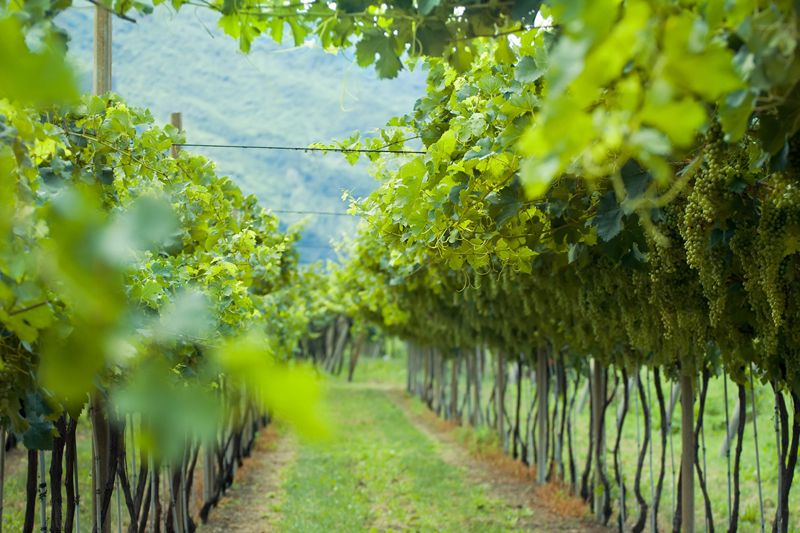
Pessac-Léognan, one of Bordeaux’s most prestigious wine appellations, has approved changes to its production rules that will allow limited use of five grape varieties intended to help vineyards adapt to climate pressures, including three white grapes bred for resistance to fungal disease.
According to Terroirs du Monde, a French wine education body that published a line-by-line comparison of the new and previous rules, the revised production rulebook was approved on November 3 after France’s national opposition procedure in 2026. The changes were requested by the appellation’s defense and management body and apply to the area’s still red and white wines.
The main shift is the admission of five so-called adaptation varieties under France’s VIFA framework, a category created by the national appellation authority, INAO, to let appellations test grapes considered better suited to a warming climate. For white wines, Pessac-Léognan has added Floréal, Sauvignac and Souvignier Gris. All three are varieties selected for resistance to disease and are intended to reduce the need for fungicide treatments. For red wines, the appellation has approved Arinarnoa, a cross between Tannat and Cabernet Sauvignon, and Castets, an old Bordeaux variety that had largely fallen out of use.
The authorization comes with strict limits. Each producer that wants to use the new grapes must sign an agreement with INAO and the local appellation body. The adaptation varieties can account for no more than 5% of an estate’s vineyard area and no more than 10% of any finished blend. Those caps are calculated separately for red and white wines.
There is one exception for white grapes. Plantings of the new white adaptation varieties that are located within 20 meters of inhabited areas covered by French rural code protections, where spraying is already restricted, will not count toward the 5% planting cap. The exemption does not change the 10% limit in finished wine, and it does not apply to the two red varieties.
The rule change also eases some long-standing vineyard layout requirements. Minimum planting density falls from 6,500 vines per hectare to 5,500 vines per hectare, a reduction of about 15%. Maximum row spacing increases from 1.6 meters to 1.8 meters. Minimum spacing between vines within a row remains 0.8 meters. Because the required height of the trained canopy is tied to row width, the minimum canopy height rises from 0.96 meters to 1.08 meters.
On weed control, the appellation has narrowed the area where chemical weeding is allowed to a strip of 30 centimeters on either side of the row. Existing prohibitions on chemically weeding headlands and on total chemical weeding remain in place.
Older vineyards will also get more time to remain eligible for the appellation. Under the revised rules, vines planted before August 31, 1990, at densities between 5,000 and 5,500 vines per hectare can continue to qualify for Pessac-Léognan through the 2050 harvest, subject to a flat 10% reduction in permitted yield. Under the 2024 rules, that grace period ran only through 2030, and the yield penalties ranged from 10% to 40%.
One earlier exemption was not carried over. A 2024 measure that had allowed plots planted before July 31, 2009, to continue if they met the old 6,500-vine density but not the spacing rules is no longer in the updated text. Terroirs du Monde said those parcels will need to be examined individually.
Several core parts of the appellation remain unchanged. Pessac-Léognan is still limited to its 10 communes. The basic yield remains 54 hectoliters per hectare, with a ceiling of 60 hectoliters per hectare. Aging and release dates are unchanged, as are the requirement to bottle at the producing estate and the labeling rules, including the use of the mention Cru Classé de Graves.
For the wine business, the decision is likely to be watched closely beyond Bordeaux because it offers a possible model for how a high-profile appellation can try to protect its identity while still adjusting to disease pressure, spraying limits and a warmer growing climate. The change also gives added weight to adaptation varieties that have already been admitted in broader regional designations. Arinarnoa and Castets were previously authorized in Bordeaux and Bordeaux Supérieur, and the white grapes Floréal, Sauvignac and Souvignier Gris were already included in the Bordeaux Supérieur rules approved in 2025.
The revised text also includes administrative changes. Parcel maps can now be consulted on the INAO website rather than at town halls, and the official geographic reference code has been updated. Pessac-Léognan was created in 1987 from the northern part of Graves.