Italy’s New Energy Decree Gives Wineries Relief Only Through Some Power Contracts
It offers no direct subsidy, making any savings hinge on spot-indexed electricity purchases under rules still being defined
Sunday, November 15, 2026

Views › 257
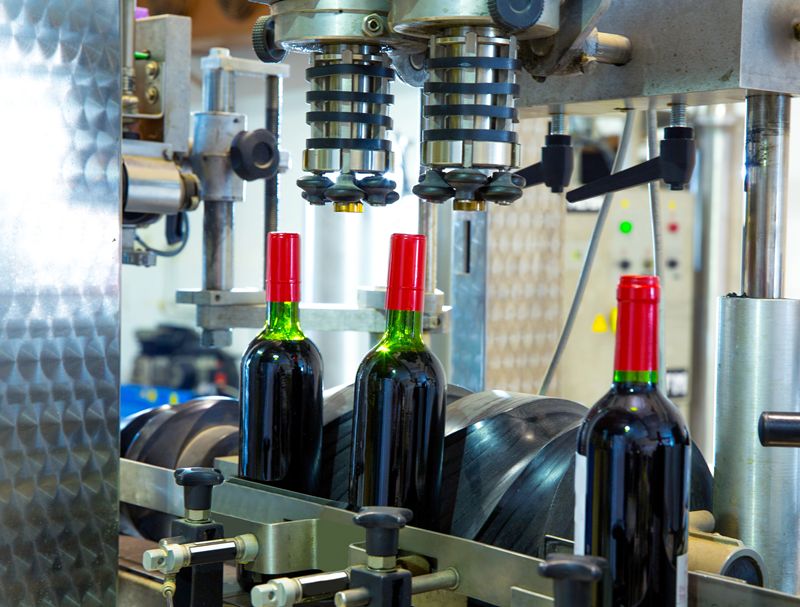
Italy’s new decree on electricity and gas took effect on Saturday, November 14, but any relief for wineries will depend largely on how they buy energy rather than on a direct state subsidy.
The measure, Decree-Law No. 207 of Friday, November 13, was published in Italy’s Official Gazette No. 265. It changes the reimbursement system for gas-fired thermoelectric plants, with the stated aim of containing electricity generation costs and encouraging more competitive wholesale market offers. For businesses that buy power, including wineries, the practical effect is indirect: the decree does not create a payment that producers can apply for to lower their own utility bills.
That distinction is important for wine companies, which have been under pressure from high operating costs. Electricity and gas are central to refrigeration, temperature control, bottling and other winery operations, while many producers have little room to pass cost increases on through higher bottle prices. Any reduction in energy costs could therefore matter for margins, but the decree does not promise a uniform drop in bills.
The impact will vary most clearly by contract type. Under the new rules, the specific charges used to finance the added reimbursement mechanism can be passed on to end customers only for consumption tied to electricity prices indexed to the spot market, and only within the limits set by the decree. Companies on fixed-price contracts may see a different effect from those on indexed contracts, depending on the wording of their supply agreements and how suppliers apply the relevant components.
The decree does not cover every item on an energy bill in the same way. That means businesses cannot assume that a change in the energy commodity price will automatically produce a similar change in the total amount they pay. Network charges, transport items and other components remain part of the final cost. For wineries trying to assess the measure, the key question is not only whether prices move in the wholesale market, but also which parts of the bill are affected under their contracts.
Further implementation steps are still ahead. From January 1, 2027, additional gas transport components will be included among the charges eligible for reimbursement to thermoelectric producers. By November 30, Italy’s Regulatory Authority for Energy, Networks and Environment, known as ARERA, must define how resources will be used to reduce gas charges for final customers. Those are regulatory deadlines, not application dates for wineries or other businesses.
The decree is also still subject to conversion into law, a routine but important step in Italy’s legislative process. Until that happens, producers face uncertainty over the final shape of the rules. Even if the law is converted without major changes, the measure does not guarantee the same savings for every company, because the benefit depends on market movements and on the structure of each supply contract.
For many wineries, that leaves energy management as important as regulatory change. According to analysis cited by Italy’s ENEA in guidance for wine businesses on energy efficiency, about 90% of the energy used in wineries is electricity, and refrigeration and thermal control account for about 50% of total consumption. That means even small shifts in power costs can have a noticeable effect on operations, especially in a sector where cooling, controlled fermentation and temperature stability are essential product requirements rather than optional expenses.
The same ENEA guidance evaluates efficiency measures by required investment, expected savings and payback time, underscoring that bill relief may come as much from equipment and process decisions as from market rules. In practical terms, wineries are likely to get the clearest picture of the decree’s effect by comparing their actual consumption patterns with the terms of their supply contracts and the performance of energy-intensive systems such as refrigeration, rather than relying on broad claims of savings.
For Italian beverage producers more broadly, the decree touches one of the most sensitive cost lines in production. Wine is the clearest case because cellar work depends heavily on electricity, but the same pressure applies across other drinks businesses that use cooling, controlled temperatures and bottling lines. Whether the new rules ease that burden will depend less on a headline announcement from Rome than on the combination of wholesale price trends, supplier practices and each company’s contract.