Italian wine bottlings stabilized in the third quarter after declines earlier in 2026.
Valoritalia said white and sparkling appellations drove the shift, leaving red wines and Igp labels under pressure.
Wednesday, October 7, 2026
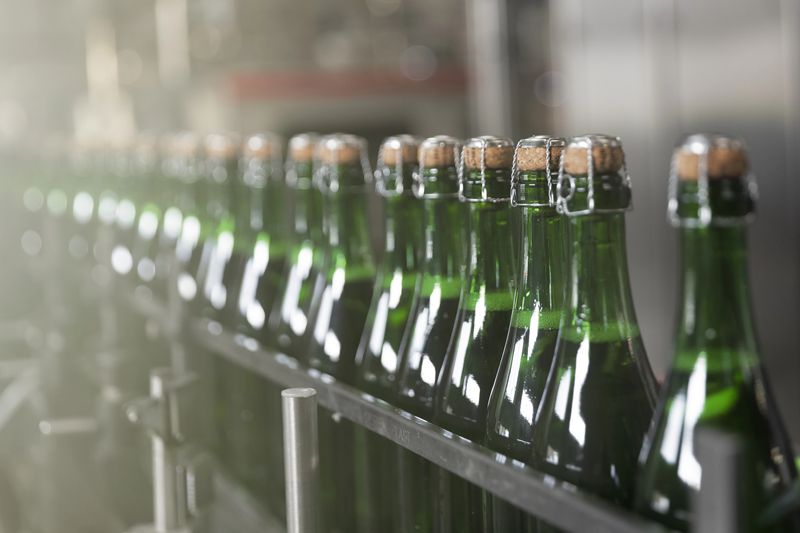
Italian wine bottling volumes stabilized in the third quarter after a weak start to the year, helped by stronger demand for white and sparkling wines with protected origin status, while red wines and lower-tier geographical indications remained under pressure.
The data come from Valoritalia, Italy’s largest wine certification body, which said its certified bottlings were down 0.3% in the third quarter from the same period in 2025. For the first nine months of 2026, bottlings fell 3% to 9.86 million hectoliters. That was also 4.2% below the average for 2023 through 2025.
Valoritalia, chaired by Francesco Liantonio and led by Giuseppe Liberatore, said it certifies 219 appellations and covers 56% of Italy’s Dop and Igp wine output. In Italy, Dop refers to protected designation of origin wines, while Igp refers to protected geographical indication wines.
The third-quarter result marked a clear slowdown in the decline seen earlier in the year. Valoritalia said the first quarter had closed with a 7.7% drop from the previous year, followed by a 0.6% decline in the second quarter. In September alone, certified bottlings rose 4.9% from a year earlier.
The improvement was not broad-based. Wines in the Doc and Docg quality categories returned to growth in the third quarter, rising 5% and 4.9%, respectively. Igp wines moved in the opposite direction, with bottlings falling 18.9% in the quarter. Over the first nine months, Doc wines were nearly flat at -0.5% and Docg wines at -0.2%, while Igp wines were down 13%.
Product type showed an equally sharp divide. In the third quarter, still white wines rose 6.7% from a year earlier and white sparkling wines increased 7.6%. Red wines fell 6.7%. That shift also changed the picture for the year to date. From January through September, still whites were up 1.8% and white sparkling wines gained 1.3%, while reds were down 8.8%.
The figures point to a market that is moving at different speeds, with buyers favoring some categories and moving away from others. Valoritalia said the recent recovery appears to be supported mainly by white wines and, especially in the third quarter, by sparkling wines, while red wines continue to show weaker demand.
The certification body said the bottling data do not tell the whole story of the wine market, but they are a useful indicator, especially for wines tied to origin rules and geographical identity. It also said the broader context remains difficult. Companies are still dealing with geopolitical tensions, U.S. trade policy, and uncertainty over tariffs, all of which are affecting decisions in international markets. At the same time, longer-term changes in drinking habits and consumption occasions are reshaping demand in major export markets.
Valoritalia pointed to international data to show the scale of the pressure. According to the International Organisation of Vine and Wine, global wine consumption fell 2.7% in 2025, while consumption in the European Union dropped 3.1%. Valoritalia also cited Nomisma Wine Monitor, which found that the value of wine imports in the world’s 12 main wine markets fell 11% in the first seven months of the year. In the United States, the drop reached 23%.
Regional patterns inside Italy were uneven as well. In the first nine months of the year, bottlings fell 4.7% in central Italy and 4.1% in the northeast. The northwest returned to positive territory with a 1.4% increase. Southern Italy posted a 26.7% rise, though Valoritalia said that figure reflects much smaller certified volumes within its reporting base.
The group said the regional data need to be read carefully because its certification footprint is much stronger in northern Italy than in other parts of the country. In the northern regions, it said, the wines it certifies account for more than 90% of total denomination-based production, making those figures more representative of the market there than in areas where its coverage is smaller.
Another point of concern is inventories. As of July 31, 2026, the last month that could be compared statistically before the new vintage entered the system, wine stocks in the denominations certified by Valoritalia stood at about 15.96 million hectoliters. That was up from 13.67 million hectoliters a year earlier, an increase of about 16.8%.
Liantonio said the third-quarter figures offered an encouraging sign after the difficulties of the first part of the year, but he stopped short of calling it a structural turnaround. He said the relative stability in overall bottlings and the return to growth for Doc and Docg wines showed that the sector still had the ability to react even in a complicated international environment.
He also said the data made clear that the market is not moving evenly. White and sparkling wines are performing much better than reds, and Doc and Docg wines are doing better than Igp wines. He said one of the main uses of Valoritalia’s business intelligence work is to turn certification data into information that wineries, consortia, and the broader wine supply chain can use as demand shifts across categories and markets.