Rioja finishes its earliest harvest on record with 333.77 million kilograms of grapes.
Persistent heat accelerated ripening, lifting the crop 48% above last year under favorable fruit health conditions.
Tuesday, October 6, 2026
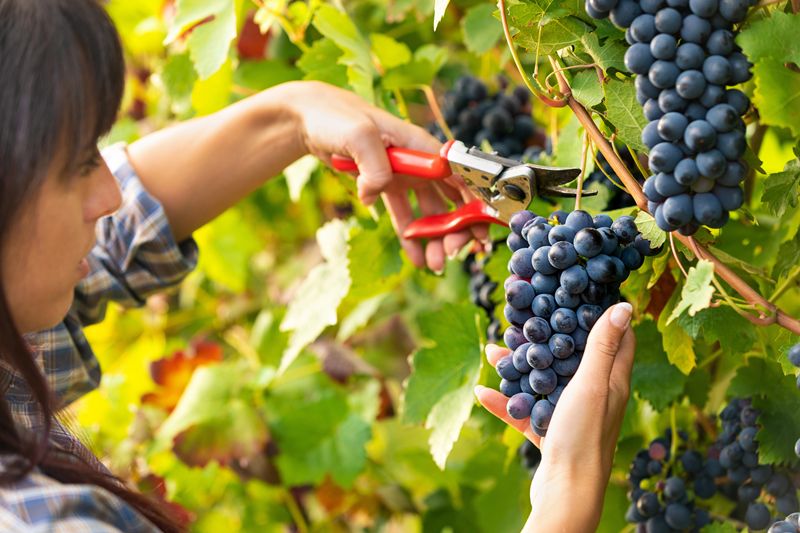
Spain’s Rioja wine region has wrapped up its regular 2026 grape harvest after one of the earliest and most compressed picking seasons on record, bringing in 333.77 million kilograms of grapes in a campaign marked by high temperatures, fast ripening and strong expectations for quality.
The total includes 290.91 million kilograms of red varieties and 42.86 million kilograms of white grapes, according to figures released by the Rioja appellation’s regulatory council. The volume is 48% higher than last year’s harvest and above the levels recorded in 2024 and 2025, although it remains below the 382 million kilograms collected in 2023.
The campaign began on Aug. 6, when the first grapes were cut at Viñedos de Aldeanueva and Bodegas Ilurce. From the start, the season stood out for its unusual timing. Rioja described it as the earliest harvest in the history of the denomination, with picking moving ahead by several weeks from the usual calendar.
The advance was driven mainly by persistent heat, which forced growers and wineries to closely monitor vineyard development. As the harvest moved forward, ripening accelerated, especially in the second half of the campaign. The probable alcohol content in the grapes rose quickly, while total acidity and malic acid fell and pH increased. Berry weight either held steady or fell slightly in vineyards that faced greater heat and water stress.
Even with that pressure, the region said phenolic ripeness improved toward the end of the harvest. That matters for color, tannin development and structure in red wines. The pace and timing of picking varied widely from one vineyard to another because of differences in altitude, exposure, soils, water availability and grape variety. That forced producers to fine-tune harvest dates to balance technological ripeness, such as sugar and acidity, with phenolic maturity.
One of the strongest points of the campaign was the health of the fruit. The regulatory council said vineyard checks across the appellation remained favorable and that grapes generally arrived at wineries in good condition. The lack of major rain events during much of the final stretch helped limit disease pressure and allowed growers to finish picking under stable conditions.
For parcels that were left for later harvesting, monitoring focused on acidity, malic acid and pH, as well as the effects of heat and water stress. That attention became more important as the season moved quickly and growers tried to avoid losing freshness while still waiting for enough maturity in skins and seeds.
The speed of ripening also led to a highly concentrated harvest window. Rioja said collected fruit rose from 185.1 million kilograms in mid-September to 333.77 million kilograms by the close of the regular harvest on Sept. 22. The council noted that small additional volumes could still arrive from later-ripening parcels, but the ordinary campaign is considered finished.
The 2026 harvest took place under Rioja’s “Balance Plan,” a framework approved by the regulatory council with the support of 97% of the sector. Under that plan, the protected yield was set at 90% for red grapes, or 5,850 kilograms per hectare, and 100% for white grapes, or 9,000 kilograms per hectare. The authorized juice extraction rates were set at 69% for reds and 70% for whites.
The council also said oversight was reinforced through a special winegrowing monitoring plan that added new checks before, during and after the harvest and expanded the team responsible for supervising the campaign. Rioja has increased its focus in recent years on controlling yields and tracking vineyard practices as it tries to balance supply, preserve quality and respond to increasingly variable weather conditions.
Attention is now shifting from the vineyards to the cellars, where fermentations will show more clearly how this year’s fruit performs in the finished wines. The central question is how grapes that accumulated sugar quickly, lost acidity and still reached favorable phenolic maturity will translate into style and balance once fermentation is complete.
For red wines, producers will be watching the relationship between alcohol, acidity, extraction and phenolic maturity. For whites, the priority will be preserving freshness and tension despite the warm conditions that shaped the season. Early observations point to strong quality potential, but Rioja said the final assessment of the vintage will depend on how the wines evolve during fermentation and in the months that follow.
The figures and technical data suggest a season that was larger than the past two years, but still shaped by the same issue that now defines many European wine regions: heat arriving earlier and pushing grapes to ripen faster. In Rioja, that meant an intense campaign with little room for delay, where harvest decisions had to be made quickly and often parcel by parcel.
Even so, the region is entering the next stage of the vintage with a larger crop, healthy fruit and cautious optimism. The final judgment on 2026 will come later, after fermentations settle and the wines begin to show whether the speed and pressure of the season can be turned into quality in the bottle.