Beer Sales in Britain’s Managed Venues Rose 8.4% in Early September
NIQ data showed growth eased to 5.7% a week later, leaving the recovery from August’s slump looking fragile.
Monday, September 28, 2026
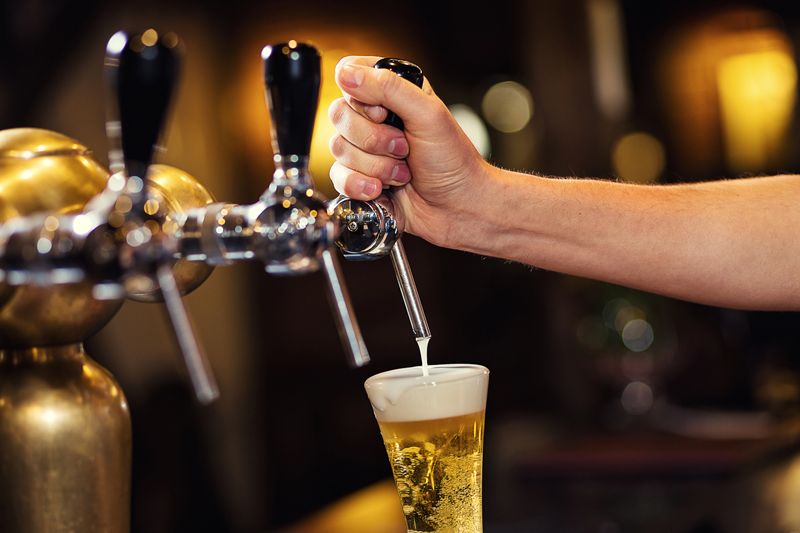
Beer sales in managed hospitality venues across Britain rose in the first two weeks of September after a weak August, according to new data from NIQ, though the pace of growth slowed in the second week and left the recovery looking tentative.
NIQ’s Daily Drinks Tracker, which measures sales in managed licensed venues rather than the whole British market, said beer sales were 8.4% higher than a year earlier in the week ending Sept. 5. In the following week, ending Sept. 12, beer sales were still up year over year, but the increase eased to 5.7%. That was a slowdown of 2.7 percentage points from one week to the next.
The figures point to a clear rebound from late August, when operators were dealing with a difficult run of trading. NIQ said total drinks sales in managed venues fell 9.7% year over year in the week ending Aug. 29. It described that as the sixth straight week of negative sales growth since the end of the football World Cup in mid-July, a period when fans had been spending heavily in pubs and bars.
September’s early improvement was helped by warmer weather, the August Bank Holiday weekend and a schedule of Premier League and Champions League matches that supported traffic in pubs. NIQ said the first week of September delivered average total drinks sales growth of 7.6% from the same week in 2025, followed by a 2.5% increase in the week ending Sept. 12.
Beer was one of the stronger categories in that period. Cider posted even bigger gains, rising 13.3% in the week ending Sept. 5 and 7.3% in the following week. Soft drinks also performed well, up 11.9% and 4.6% across the two weeks. Wine and spirits were weaker. Wine sales rose 2.9% in the first week of the month and then fell 6.0% in the second, while spirits edged up 0.8% before dropping 16.5%.
The daily pattern in NIQ’s data showed how much the holiday weekend shaped the early September figures. Sales on Sunday, Aug. 30, were 39.3% above the same day a year earlier, while Monday, Aug. 31, was up 59.4%. NIQ said those comparisons were affected by the timing of the Bank Holiday, which fell earlier in 2025. Two other strong trading days came in the following week, with sales up 15.9% on Wednesday, Sept. 9, and 8.9% on Thursday, Sept. 10.
The September recovery followed a difficult summer spell for the on-premise drinks trade. NIQ said extreme heat in August kept some consumers away from pubs and bars, while spending also became more cautious after the burst of demand linked to the World Cup. The company said those factors created a tough environment for venues and drinks suppliers as they moved toward the final quarter of the year.
Rachel Weller, NIQ’s commercial lead for the U.K. and Ireland, said the stronger start to September would have brought relief to operators and to beer, cider and soft drink brands after ground lost in August. But she also said trading conditions were still likely to remain challenging, with consumer confidence and the hospitality sector looking to the British government’s October budget.
The data also suggest that the rebound may already have become less stable by the third week of the month. NIQ said average drinks sales in the seven days ending Sept. 19 were 2.0% lower than in the corresponding week of 2025 as cooler and wetter weather spread across many parts of Britain. The company did not publish a separate beer figure for that week, so the broader decline in drinks sales cannot be used to say beer also returned to negative territory.
That distinction matters because the tracker is not a full measure of all alcohol sales in Britain and because category performance can diverge sharply from one week to the next. In the first half of September, beer and cider outperformed wine and spirits, showing that consumers in pubs were favoring longer and more refreshing serves. The same period also showed how quickly year-over-year growth rates can shift when they are influenced by weather, football schedules and holiday timing.
For brewers and pub operators, the latest figures offer some evidence that demand improved after August’s setback, but they do not yet point to a settled trend. Beer remained in positive territory across both weeks measured in early September, yet the moderation from 8.4% growth to 5.7% suggests momentum weakened even before the broader drinks market slipped back in the week ending Sept. 19.