Half of California’s 2026 wine grape harvest has no buyer.
Growers say weak demand has slashed contracts, forcing some vineyards to sell at a loss or leave fruit unpicked.
Wednesday, September 23, 2026
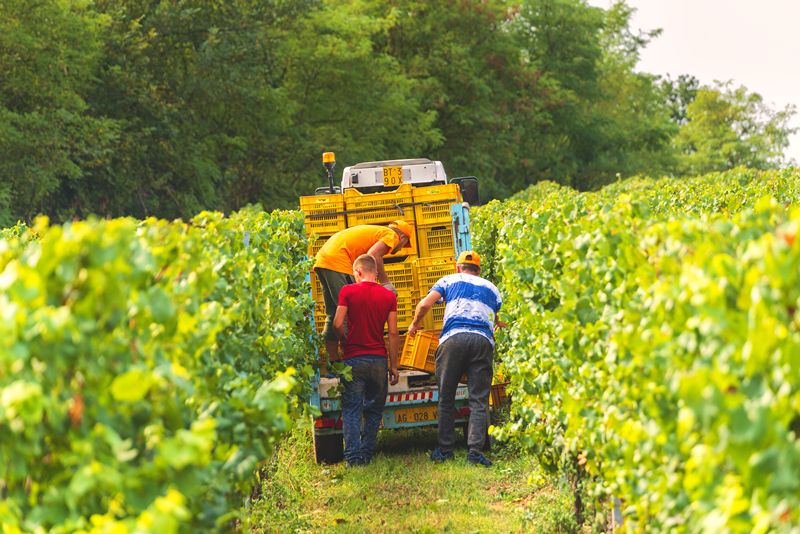
California’s wine grape harvest is moving ahead this season with an unusual problem: a large share of the crop has no buyer.
Growers and industry groups say about half of California’s 2026 wine grape harvest reached picking season without contracts, a sharp break from a normal year, when 70%-80% of the crop would already be committed to wineries or other buyers. The drop in contracted sales is one of the clearest signs yet that the long slide in wine demand is now hitting farms directly in the country’s top wine-producing state.
The pressure is especially visible in and around Lodi and other parts of the Central Valley, where large areas of grapes are grown for lower-priced wines. Some farmers are harvesting fruit they expect to sell at a loss. Others are leaving grapes on the vine because the cost of picking them cannot be justified without a firm buyer. Some are pulling out vineyards altogether and shifting land to almonds, pistachios, walnuts, olives or other crops with stronger demand.
Bill Berryhill, a third-generation grower near Lodi, said he has been unable to find buyers for grapes on about 200 of his 500 acres. He said he plans to remove 50 acres of vines after the harvest. Standing in a Merlot vineyard with no contract, Berryhill said the result is another year of financial losses despite what he described as a strong crop.
The downturn follows several years of weaker wine sales in the United States. Industry data cited by growers show that U.S. wine sales fell from 427 million cases in 2020 to 329 million cases in 2025, a decline of 98 million cases, or 23%. Consumer spending on wine dropped over the same period from $94 billion to $74 billion, down $20 billion, or 22%.
California produces more than 80% of the wine made in the United States, so the decline has broad consequences for growers, wineries, farmworkers and rural communities tied to the business. Jeff Bitter, president of Allied Grape Growers, said the market has become so weak that many vineyards can no longer be farmed profitably.
According to Bitter, California had close to 600,000 acres of vineyards at the pandemic peak. Since then, growers have removed or left inactive about one-quarter of that area, or roughly 150,000 acres. That estimate combines vineyards that have been torn out with land that is no longer being actively farmed for wine grapes.
Even after that reduction, Bitter said, there are still too many grapes for current demand.
The market changed quickly after a pandemic-era surge. Wine sales rose when restaurants were closed and more drinking shifted to homes. That period led to stronger demand and encouraged continued production. But the rise did not last. As restaurants reopened and consumer habits changed, the industry was left with excess supply and fewer buyers.
Producers and analysts say the decline is being driven by several forces at once. Older Americans who helped fuel decades of wine growth are aging out of the market. Younger adults are generally drinking less alcohol and in many cases are more cautious about health and spending. Wine is also facing stronger competition from craft beer, spirits, ready-to-drink cocktails and cannabis.
The weakness is not limited to the United States. Global wine consumption fell 2.7% in 2025 from the previous year and was down 14% from 2018, according to the International Organisation of Vine and Wine. The broader slowdown has made it harder for California to move surplus wine or grapes into export markets. Growers also say U.S. production costs are higher than in countries such as Argentina and Australia, which limits California’s ability to compete abroad on price.
Trade barriers have added another problem. Industry officials say tariffs have hurt exports, including sales to Canada, which had been the largest foreign market for U.S. wine.
On the ground, the downturn is leaving visible waste during harvest. In some vineyards, ripe clusters remain on the vines because picking crews cost more than the expected return. Where growers do find a market, it is often at reduced prices, including sales for concentrate rather than for bottled wine. That lowers revenue further in a year when many farmers already face high labor, water and input costs.
Kyle Collins, operations manager at Allied Grape Growers in Lodi, said the effects go beyond growers and wineries. When grape values fall or fruit is left unpicked, he said, the losses spread through the local economy and reduce the money available for field labor and related businesses.
The damage is especially difficult for multigenerational farm families that have grown grapes for decades. Berryhill said his family has been in the business for nearly a century and that the last three years have been especially hard. Even so, he said he does not plan to leave wine grapes behind entirely, despite the losses.
Industry analysts say the sector is still looking for a way to rebalance supply with lower demand. That means more vineyard removals are possible if consumption does not recover. It also means producers will need to decide what kinds of wines and price points still match what younger and shifting groups of consumers want to buy.
For now, the immediate issue is the 2026 harvest. Across California, grapes are ready, crews are working and many growers are still searching for buyers in a market that has moved sharply against them.