Ukraine’s Château Chizay rushes to secure backup power before winter
The winery near Hungary began its grape harvest under labor shortages, fearing renewed Russian strikes on Ukraine’s energy grid.
Tuesday, September 22, 2026
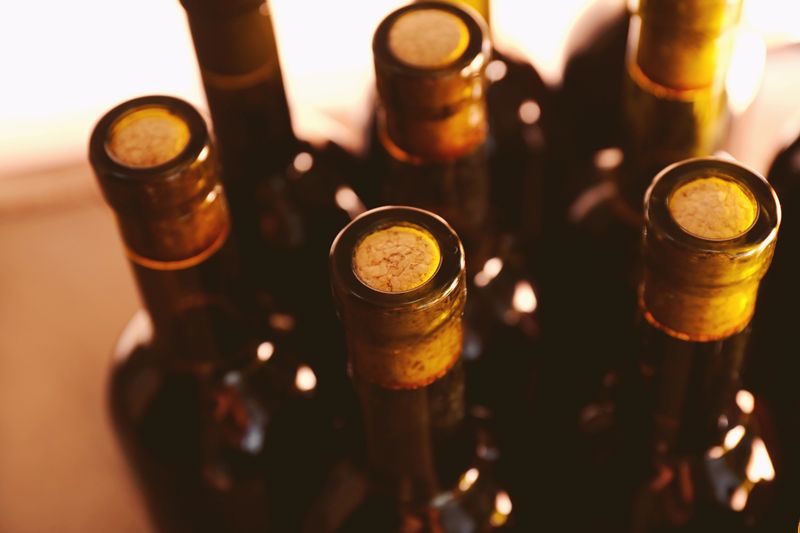
In the hills of western Ukraine, near the border with Hungary, workers at Château Chizay are moving quickly through the first days of the grape harvest while also preparing for another winter of war-related energy disruption.
At the estate in the Transcarpathia region, viticulture director Guennadiy Vatchylia walks the vineyard rows in late summer to check how the fruit is ripening before picking begins. The task is routine for this time of year, but the pressure on producers has grown since Russia’s full-scale invasion. Alongside the harvest, the winery is trying to install solar panels and secure other backup power sources after months of concern over Russian attacks on Ukraine’s energy system.
Inside the estate’s large cellars, wine ages in hundreds of oak barrels and in large steel tanks. The cool temperature needed for storage and production depends on refrigeration systems that cannot fail for long. After the blackouts and severe cold of the previous winter, managers say energy security has become as important as field work.
“We believe and hope that we will get through this winter somehow, thanks to alternative sources of electricity,” said Dmytro Kholoudko, the estate’s director.
Château Chizay produces about 1.3 million bottles a year. Its wines are mainly sauvignon, muscat and riesling, but the winery is especially known for furmint, a white grape more commonly associated with neighboring Hungary. The region has long been better known for white wines, though growers say conditions are changing.
Vatchylia said warmer temperatures have steadily pushed the harvest earlier, by two or three days each year. He said climate change has also opened more room for red varieties in a part of Ukraine where white wines have historically dominated.
Even as the weather shifts, the larger strain comes from the war. With hundreds of thousands of men serving in the armed forces, vineyards and wineries across Ukraine are struggling to find enough labor. Kholoudko said the estate needs about 110 seasonal workers to hand-pick grapes across its 270 hectares of vineyards spread over rolling hills, but recruiting has become difficult.
“We have just started the season and we badly need hands, but it is hard to find them,” he said.
The labor shortage is only one part of the damage. People in the sector say some winemakers have been killed at the front or in strikes. Some vineyards have been destroyed, while others are now in territory occupied by Russian forces. The war has also hit storage and distribution.
A Russian strike on Kyiv damaged a warehouse belonging to wine merchant Okwine, causing $13.5 million in losses, according to the company’s estimate. The attack underscored the broader risks facing a business that depends not only on agriculture, but also on safe transport, power, bottling, warehousing and consumer demand.
Ukraine remains a small player in global wine trade. According to figures cited in Ukrainian media, the country exports about $11 million worth of wine a year, mainly to Romania, while importing about $200 million. That gap reflects both the modest scale of domestic producers and the challenge of building recognition abroad.
On the international market, Ukraine is still not widely seen as a wine-producing country. That perception is one reason producers and sellers say they are trying to raise the profile of local wine despite the war.
In Kyiv, wine bar owner Serhiy Klimov has chosen to serve only Ukrainian bottles. He argues that the country has a long winemaking history and a wide range of growing conditions. In his view, southern regions can produce fuller-bodied reds, while western regions such as Transcarpathia are better suited to fresh, mineral-driven whites.
Klimov said the country’s wine industry has changed sharply since the Soviet period, when mass production dominated and quality was often poor. He said Ukraine is now seeing a strong rise in smaller and more ambitious vineyards that are trying to compete on quality rather than volume.
At Château Chizay, that effort includes putting Ukrainian wine beside foreign competitors in tastings and export markets. Chief winemaker Zoltan Udvarguely said the goal is to show buyers that Ukrainian wine can match, and sometimes exceed, the quality of imported bottles.
The domestic market has also shifted during the war. At the winery, groups of Ukrainian tourists continue to visit for guided tastings and tours. Kholoudko said he has seen more consumers choosing local products out of patriotism, curiosity, or a search for quality. For many producers, that support has become an important buffer as the industry faces disrupted logistics, higher costs and uncertainty over future harvests.
The war has left its mark even on milestones that should have been simple business decisions. Kholoudko recalled that the estate had planned to begin production of its first sparkling wine on Feb. 24, 2022, the day Russia launched its full-scale invasion. Of several dozen employees, only 10 came to work that morning.
“But we got up, and with those 10 people, we started making the sparkling wine,” he said.