A 101-Year-Old Sardinian Credits Work for Her Long Life
In a YouTube interview, María Antonietta said she takes no medicine, still drinks a daily glass of red wine.
Wednesday, September 23, 2026
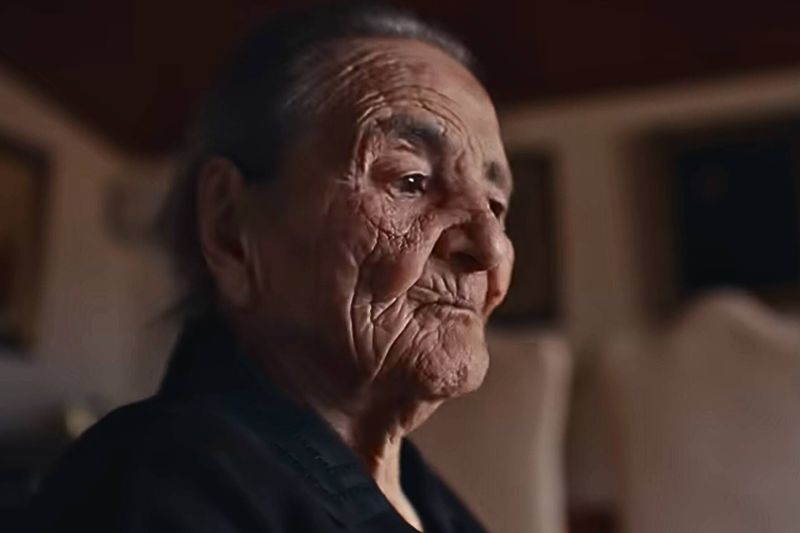
María Antonietta, a 101-year-old woman from Sardinia, said in a YouTube interview that she does not take any medication and still feels well. “I don’t take any medicine. Just a glass of red wine,” she said in comments shared by the content creator Proyecto Happiness.
Her remarks drew attention because Sardinia, the Italian island in the Mediterranean, has long been associated with unusual longevity. The island is often described as a “blue zone,” a term used for places where people are more likely to live to very old ages. According to figures cited in the interview, Sardinia has about 22 centenarians for every 100,000 residents, a level presented as similar to that of Okinawa, Japan. Average life expectancy on the island is about 83 years.
In the interview, María Antonietta linked long life less to a single habit than to the kind of life she and many others in Sardinia lived for decades. She said she has never skipped meals and eats what is available. “I eat whatever there is,” she said, adding that she is not picky, aside from raw potatoes.
She also described the harder conditions of her youth, especially during wartime, when families had little but depended on their own labor and what they could grow. She recalled a life without many comforts and said people could not afford to reject food. “Those were wartime years, there was nothing, and you couldn’t say what you liked to eat because it wasn’t possible,” she said. “What there was, you had to like.”
Her memories offered a picture of a rural life that has often been cited by researchers studying longevity in Sardinia. The island’s interior is mountainous, and in many communities daily routines traditionally involved walking long distances, working outdoors, and tending animals or crops. The interview described that lifestyle as one reason Sardinia came to be seen as a blue zone. Shepherding and farming required constant movement, often on steep terrain, and local diets relied heavily on vegetables, legumes, goat cheese and wine.
María Antonietta said her family’s food came in part from their garden. She remembered fresh green beans and potatoes and said that, despite the scarcity of the time, they did not go without the basics. “We had the garden,” she said. “We didn’t have many things to eat, but we lacked nothing.” She also recalled that there was no running water in the house and that people had to go to the river to fetch it, carrying it home in jugs on their heads.
Even with those hardships, she said she prefers the past to the present. Her explanation was not based on comfort, but on attitude. Today, she said, people can live well because they have everything at home, but satisfaction is harder to find. “It was better before because now we are never satisfied,” she said. “If they give us a finger, we want the whole hand.”
The interview also showed her sense of humor. At one point, she joked that she would attend the interviewer’s 100th birthday when he reaches it in 65 years. The light exchange stood next to a more serious point she repeated about aging: in her view, work has been central to her long life.
“The secret to reaching 100 is working,” she said. She described a routine of going to the fields and the mountains, preparing firewood, returning home, cultivating the garden and walking long distances. According to her account, she regularly covered seven kilometers going out and another seven coming back. “I don’t feel that old, even though I have my years,” she said.
Her comments fit a broader public interest in the habits of people who live past 100, especially in places such as Sardinia, where researchers and journalists have spent years examining diet, family ties, physical activity and social life. Experts on aging have often cautioned that no single food or drink explains extreme longevity and that genetics, environment and lifelong behavior all play a role. Still, personal testimonies like María Antonietta’s continue to attract wide attention because they put a human voice on a subject that is often discussed through statistics and medical research.
In her case, that voice was direct and unsentimental. She did not describe a miracle cure or a strict formula. Instead, she spoke about work, simple meals, hardship, movement and moderation, along with a daily glass of red wine.