German Appeals Court Lets Vegan Drink Keep “Liqueur Without Egg” Name
The ruling said the soy-based product cannot use the protected term for egg liqueur in advertising.
Friday, September 18, 2026
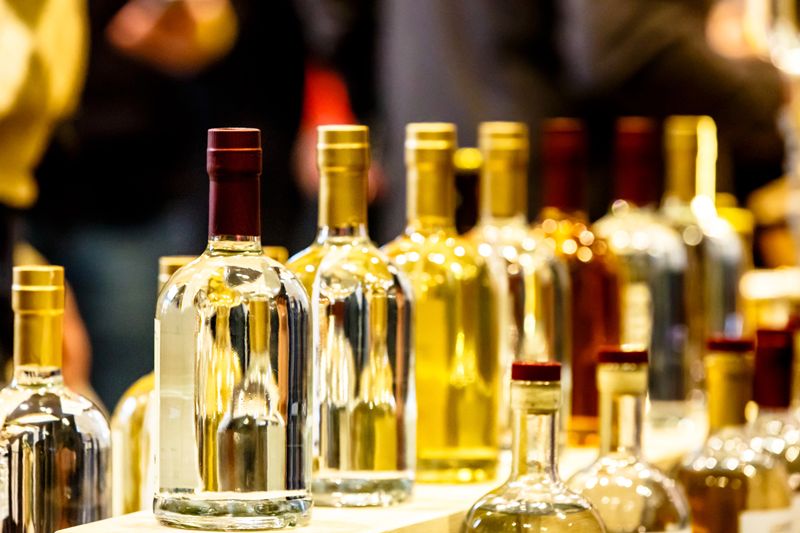
A German appeals court has ruled that a vegan soy-based drink may continue to be sold under the name “Likör ohne Ei,” or “liqueur without egg,” while barring its maker from using the protected term “Eierlikör,” meaning egg liqueur, in advertising.
The ruling was issued on Sept. 16 by the Higher Regional Court of Schleswig-Holstein in the northern city of Schleswig in case 6 U 49/25. According to the court’s press release, the dispute centers on how far a producer may go in naming and marketing a drink that resembles a protected category under European Union spirits law but does not meet its legal definition.
The case pits Nachlass Warlich GmbH, a spirits maker based in Henstedt-Ulzburg near Hamburg, against Schutzverband der Spirituosen-Industrie e.V., a German trade association representing the spirits industry. Warlich markets the product as a soy-based liqueur with Jamaican rum and 17% alcohol. The company says the drink is yellow in color and creamy in appearance, but contains no egg.
The trade group argued that EU rules reserve the term egg liqueur for products that actually contain eggs and that the product’s branding came too close to that protected category. Warlich countered that the name “Likör ohne Ei” clearly tells consumers the product does not contain egg and distinguishes it from conventional egg liqueur rather than passing itself off as one.
The company had won the first round of the case in Kiel. On Oct. 28, 2025, the Regional Court of Kiel dismissed the claim in case 15 O 28/24. That court allowed both the product name and the use of the word “Eierlikör” in advertising. The trade association appealed, and the case was heard in Schleswig on Aug. 26.
The appeals court partly reversed the lower court. It said the product name itself can stay because it does not directly use the protected category name and does not unlawfully evoke it through wording. According to the court, the association with egg liqueur arises mainly from the product’s presentation in a clear bottle with yellow, creamy contents, not from the words “Likör ohne Ei” alone.
That distinction is central to the ruling. Under EU Regulation 2019/787, spirit drink names are protected not only against direct misuse but also against unlawful “evocation” through terms, brand names, images, signs, or similar references. The court said that in this case the association created by the appearance of the liquid itself does not fall within the type of protected evocation covered by the regulation. The court also allowed the bottle’s rooster image to remain, according to the German news agency dpa.
On advertising, however, the court took a stricter approach. It said the producer may not use the word “Eierlikör” in marketing for a drink that does not satisfy the category’s legal requirements. That means the company cannot describe the product as tasting like egg liqueur. It also cannot market it as an “alternative to egg liqueur.” The court reasoned that calling something an alternative suggests equivalence to the original product and gives the reference a promotional function.
The legal framework behind the case is detailed and specific. Regulation (EU) 2019/787 defines egg liqueur, also known in some markets as advocaat, as a separate spirits category. To qualify, a product must contain egg yolk or egg white, sugar or honey, and at least 140 grams of pure egg yolk per liter, along with at least 150 grams of sugar and a minimum alcohol content of 14%. A related category, “liqueur with egg,” requires at least 70 grams of egg yolk per liter. Because those requirements are set at the EU level, a drink without egg cannot be sold as egg liqueur anywhere in the bloc.
That is why the case reaches beyond one small German producer. For spirits makers, wine and beer companies with adjacent product lines, and other beverage businesses selling into the EU, the ruling offers a fresh sign of how courts may draw the line between a lawful descriptive name and prohibited use of a protected category in advertising. It may also influence how companies label plant-based or reformulated drinks that resemble traditional products but do not meet formal standards. The decision suggests that saying clearly what a product does not contain may be acceptable in some cases, while using the protected category name itself in promotional language may not be.
The court said the case raises fundamental legal questions and allowed an appeal on points of law to Germany’s Federal Court of Justice, the country’s highest civil court. That means the ruling is not final. According to German broadcaster NDR, the lawyer for the trade association had said before the hearing that he was prepared to pursue the matter to the Court of Justice of the European Union if necessary. Any such move would depend on a referral from a national court, rather than a direct appeal by a party.
Warlich managing director Ole Wittmann welcomed the decision and described it as consumer-friendly, according to dpa. The spirits association had not issued a public response immediately after the ruling, according to reports cited by the original account of the case.
The written judgment was not yet publicly available when the court announced its decision, so the court’s press release and statements reported by German media currently provide the main guide to the ruling’s reasoning. That leaves room for further scrutiny once the full text is published, especially on the question that is likely to matter most for the beverage industry: how courts should interpret “evocation” when a product refers to a protected category only by saying that the defining ingredient is absent.