France Delays Its 2026 Grape Harvest Forecast After Heat and Drought Cloud Yields
Officials said extreme weather left regional services unable to judge how much fruit will reach wineries before Sept. 8.
2026-08-10
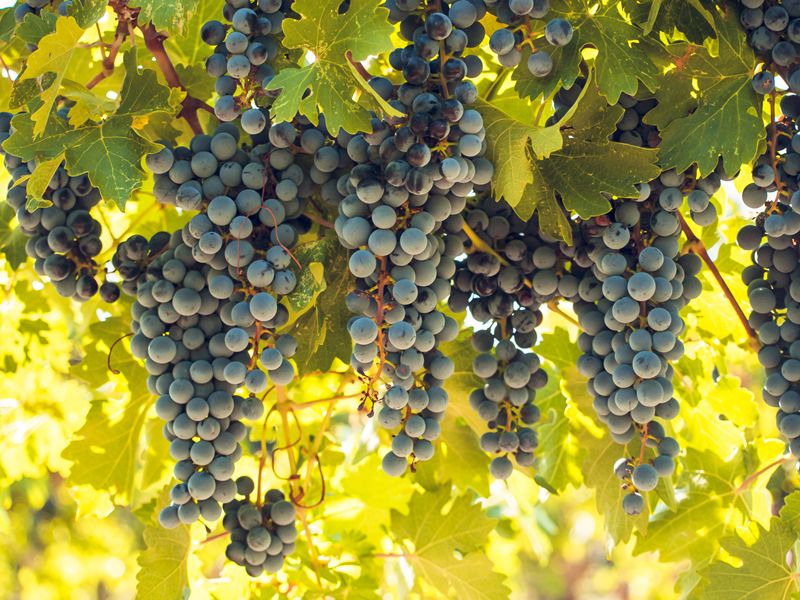
France’s Agriculture Ministry has postponed its first official estimate of the 2026 grape harvest after weeks of heat waves and drought left growers and public officials unable to judge, with confidence, how much fruit will actually reach the wineries.
The ministry, which usually releases its first national harvest outlook in early August, said it would wait until Sept. 8, when state services expect to have a clearer picture from the first rounds of picking and from weather conditions in the weeks ahead. The delay is unusual for a country that closely tracks each vintage and where early forecasts can influence market expectations across the wine trade.
The reason, the ministry said, is the scale of the uncertainty now hanging over vineyards in many of France’s main wine regions. Since late June, repeated heat waves and a lack of rain have been compounded in some places by storms, hail and wildfires. Those events have affected vine growth in different ways from one region to another, making it hard to measure the true production potential of the 2026 crop.
In comments reported by Agence France-Presse, the ministry said regional services had reported “strong, even very strong” uncertainty around this year’s forecasts in many important growing areas because of the exceptional weather. Officials said the impact on vine development and harvest potential was especially difficult to assess at this stage.
The decision also reflects pressure from the wine sector itself. Jérôme Despey, a grower in Hérault who leads the wine and cider council at FranceAgriMer and is also a vice president of the farmers’ union FNSEA, said the industry had asked the ministry not to publish the usual early forecast because the margin of error was too large.
He said the standard early-August estimate relies on field observations and analysis carried out in early July, before the most recent run of extreme weather fully reshaped conditions in the vineyards. In some areas, growers first expected a very early harvest, but intense heat then slowed ripening instead of speeding it up. That phenomenon, known among growers as a ripening block, can leave grapes hanging on the vine without advancing normally toward harvest maturity.
Harvesting has already started in parts of Languedoc-Roussillon, one of the warmest wine-producing areas in the country. Mr. Despey said he expected to begin again in mid-August on his own estate, noting that southern vineyards are now used to picking several weeks earlier than they once did. Even so, he said the current season is proving harder than usual to read.
The uncertainty is nationwide, but it does not look the same everywhere. In some eastern vineyards, as well as in Burgundy, Beaujolais and the Center-Loire region, growers are still preparing for early harvests around mid-August. Elsewhere, drought has scorched grapes, slowed ripening or reduced berry size. In some parcels, the vines are carrying fruit, but the berries weigh less than average, which could cut volumes even if bunch numbers look acceptable.
The next few weeks will be critical. According to Mr. Despey, the weather outlook offers little encouragement on rainfall, even though vines at this point need stable conditions, less water stress and regular rain events rather than sharp swings between hot days and cooler nights. Growers are also watching for summer storms, which can destroy fruit in the final days before harvest through hail, heavy rain or strong winds.
One of the clearest divisions this year is between irrigated and non-irrigated vineyards. Mr. Despey said only about 15% of French vineyard land is irrigated, leaving most vines exposed to water shortages. In the driest plots, he said, growers are already seeing leaf drop, a sign that the vine is under stress and protecting itself by shutting down part of its canopy. When that happens late in the season, the plant may struggle to ripen fruit normally and may lose part of its crop potential.
French winegrowers are not confronting these problems for the first time. Over recent years, many have dealt with frost, hail, drought and extreme heat, all of which have eroded yields and made production less predictable. But the risk of another reduced harvest comes at a bad moment for the industry. Domestic and export demand have softened in several categories, many growers are under financial pressure, and the government has already supported programs that pay some producers to uproot vines to bring supply more in line with changing consumption.
That broader economic strain is shaping the mood in wine country as much as the weather. Mr. Despey said many growers had hoped for a normal harvest this year after absorbing sharp increases in costs. He pointed to higher prices for inputs and production linked to the wars in Ukraine and the Middle East, as well as depleted cash reserves on many farms.
For now, one of the few encouraging signs is sanitary quality. Disease pressure has been limited in many vineyards, which means the health of the crop is generally better than in wetter years marked by mildew and rot. That has allowed some producers to speak more confidently about quality than quantity.
In Bordeaux, leading classified-growth estates have also pushed back against fears that the large wildfire in Gironde could affect grape flavor through smoke exposure. According to the report carried by AFP, those producers said they did not expect the fire to taint the fruit and were still looking toward a promising 2026 vintage.
Whether that optimism extends beyond top estates and into France’s broader vineyard landscape will depend on conditions between now and the first large wave of picking. By delaying its forecast until September, the Agriculture Ministry is effectively acknowledging that this year’s vintage cannot yet be measured by the usual calendar. In a season shaped by heat, drought and sudden local shocks, France’s wine industry is still waiting to see what the vines will ultimately give.
