Cal Poly study finds regulations consume 17.5% of costs at one Napa winery
Researchers said federal, state and local compliance adds $203,832 a year, or $23.65 a case, at the 8,500-case producer.
2026-08-05
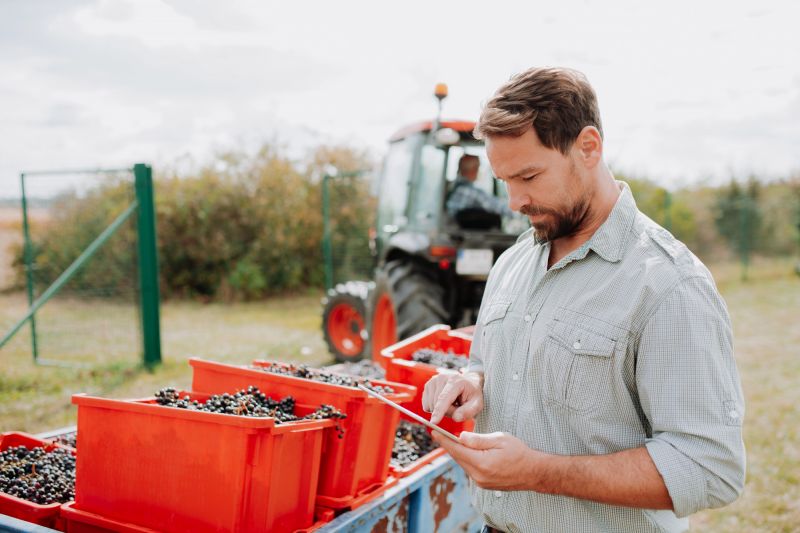
A small Napa County winery that makes 8,500 cases a year spends $203,832 a year to comply with regulations tied to producing wine and selling it directly to consumers, according to a new Cal Poly study that puts the regulatory burden at 17.5% of production costs.
The report, released in July by Cal Poly, San Luis Obispo, examined one winery during 2025 and measured the combined cost of federal, state and local rules. The main finding was that compliance adds $23.65 to every case produced and sold. Of that total, $115,874, or $13.44 a case, came from rules tied to wine production itself. Another $87,958, or $10.20 a case, came from direct-to-consumer sales requirements.
Using a weighted average production cost of $135.25 a case, the researchers found that production-related compliance alone accounted for 9.94% of costs. When direct sales rules were added, the regulatory share rose to 17.5%, an increase of 7.56 percentage points. The study was commissioned by the Napa County Farm Bureau and written by Lynn Hamilton and Michael McCullough, professors of agribusiness at Cal Poly.
The timing matters for an industry facing weaker demand in the United States after decades of growth. The authors said added regulatory costs are arriving as wineries contend with softer sales, tighter margins and higher operating expenses. They wrote that the combination raises questions about the long-term viability of California wine production.
The researchers also stressed that the study is a case study, not a broad industry average. It is based on interviews with one small winery in Napa County and should not be automatically applied to all Napa wineries or to the U.S. wine business as a whole. Even so, the report offers one of the clearest attempts to put a dollar figure on the layers of compliance that shape a winery’s cost structure.
Labor rules were the largest production-related expense. The winery spent $36,403 a year, or $4.22 a case, on labor-related compliance, including workers’ compensation insurance, paid sick leave and administration of California’s CalSavers retirement program. That made labor 31.48% of the winery’s production compliance bill.
Water rules were the next major category. Water quality compliance cost $22,236 a year, while water supply compliance added $11,117. Together, those two categories accounted for more than $33,000 a year. The winery paid $17,500 annually to a consulting company for required water testing and reporting, and it also had to upgrade and certify a backflow meter to meet state requirements. Because the winery is considered a public water system when 25 or more people are on site, it must also test drinking water every month.
Alcohol production rules were the third-largest expense at $19,988 a year, or $2.32 a case. Those costs included the winery’s California Department of Alcoholic Beverage Control license, state excise taxes, federal excise taxes and the time spent on mandatory reporting to the Alcohol and Tobacco Tax and Trade Bureau. The report notes that wine remains one of the most heavily regulated agricultural products in California because it requires licensing, taxation and reporting at both the state and federal levels.
Other production-related rules added up in smaller pieces. The winery spent money on employee training for workplace safety, sexual harassment prevention, workplace violence prevention and forklift certification. It also paid for county permits, pressure vessel inspections, hazardous materials compliance, food safety requirements, bottle recycling obligations, composting rules, business taxes and Pierce’s Disease assessments.
The study found no air quality compliance cost for this winery because it was not subject to federal Title V emissions requirements and used propane and electric forklifts that did not trigger emissions reporting. That was one of several reminders that regulatory costs can vary sharply depending on how a winery is built, how many people it employs and which activities it carries out on site.
Direct-to-consumer sales were a major source of added cost. The winery sells through wine clubs, online channels and onsite purchases, and the report found that compliance around those sales added nearly $88,000 a year. A large share came from software used to track and file sales and excise taxes, state registration and reporting for shipping wine across the country, and out-of-state excise taxes. The winery paid $2,000 a month for compliance management software alone. Its costs for label registration in other states and sales compliance reporting totaled $57,570 in 2025, and it paid another $4,500 in out-of-state excise taxes.
The report also counted website accessibility compliance under the Americans with Disabilities Act. The winery spent $50 a month to keep its e-commerce site verified as ADA compliant. The general manager also spent about an hour each month matching order fulfillment with the point-of-sale system for compliance verification.
That direct-sales burden helps explain why the study draws a distinction between making wine and marketing it. Selling only within California would likely lower compliance costs, the authors said, because interstate shipping creates a web of rules that changes from state to state. The report did not include the separate regulatory costs of running a tasting room with food service or selling through distribution channels, which means the total burden for some wineries could be higher.
The study follows an earlier Cal Poly report on Napa vineyards that found regulatory compliance accounted for about 8% of production costs for a small vineyard and nearly 12.5% for a large vineyard. This newer report shifts the focus from growing grapes to winery operations, where more rules come into play around alcohol production, packaging, sales and reporting.
The authors also pointed to costs that are already rising beyond the 2025 baseline used in the study. Napa County approved new groundwater sustainability fees after the interview period, with collections beginning in 2026. The report says wineries that qualify as public water systems will pay $129.87 per acre-foot of water used. It also flags California packaging rules, annual increases in the state minimum wage and a county General Plan update as likely sources of higher compliance costs in the coming years.
For Napa, the issue reaches beyond one balance sheet. The study notes that the county’s wine and grape business is the region’s main economic engine, and that profit margins have been squeezed by more wine brands competing for a market where demand is no longer rising as it did for much of the past 30 years. By putting a price on regulation at the winery level, the report adds detail to a debate that has often been discussed in general terms, especially around the complexity and cost of selling wine directly to consumers across the country.
