Climate Change Has Pushed France’s Wine Harvest About 24 Days Earlier
The ban des vendanges, the official order that opens picking, now arrives weeks sooner in several historic wine regions.
2026-08-10
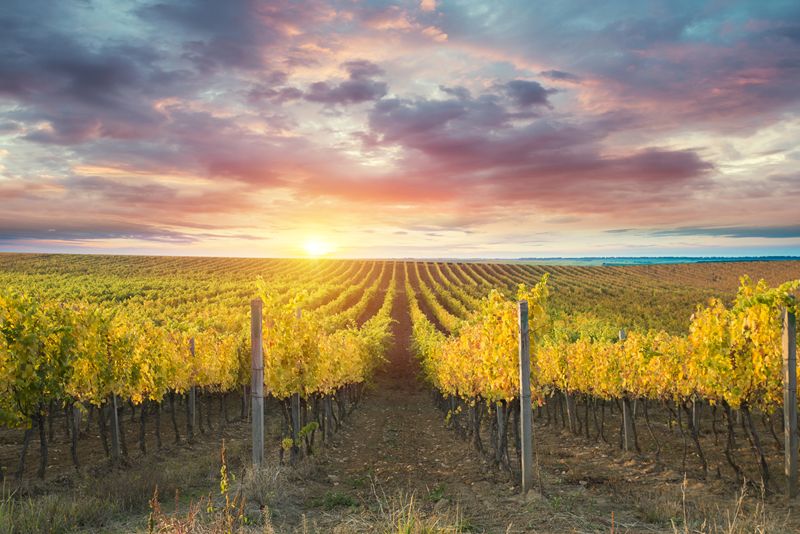
In France, the official signal that allows grape growers to begin picking is arriving against a different climate backdrop than it once did. Across several wine regions, harvest dates have moved steadily earlier over the past decades, and that shift is changing the timing of the ban des vendanges, the old legal act that marks the start of the grape harvest.
The ban des vendanges is the formal authorization to begin harvesting grapes. In practical terms, it means lifting the prohibition on picking before a date judged suitable for wine quality and for the organization of vineyard work. The phrase still carries the weight of a long history. What began as a rule to prevent growers from harvesting too soon now sits at the intersection of technical decision-making, public regulation and local celebration.
Climate change has pushed the issue into sharper focus. Since the 1980s, French harvests have advanced by several weeks on average. In Champagne, Alsace, Saint-Émilion and Châteauneuf-du-Pape, the harvest now begins about 24 days earlier than it did in the 1970s, according to French public data. Earlier budbreak, hotter summers and faster grape ripening have altered the traditional calendar in vineyards that once relied on a later seasonal rhythm.
That change matters because the ban des vendanges is not simply a ceremonial date. It still has legal force. In France, the opening date for harvest is set by prefectural order. Wine trade groups and the bodies that manage appellations propose the timing after consulting the National Institute of Origin and Quality, known as the INAO. The prefect then formalizes the decision.
Before any date is proposed, producers track grape maturity closely. They look at sugar levels, acidity and the sanitary condition of the bunches. The aim is to identify the point at which picking can begin without upsetting the balance of the future wine. That decision can vary widely from one place to another. It may differ by appellation, municipality, grape variety or wine style, even within the same region and the same vintage.
In Alsace, for example, a prefectural order may separate the calendar for crémant, still wines, grands crus and late-harvest wines. That means the ban des vendanges is often less a single opening day than a tailored harvest schedule designed around the needs of the vintage and the objectives of producers. In warmer years, this calendar can be compressed and moved forward, leaving less distance between the symbolic start of harvest and the reality of ripe fruit in the vineyard.
The rule has deep roots. In antiquity, the start of the grape harvest could be the subject of public and collective deliberation. During the Middle Ages, the power to declare the ban usually belonged to feudal, religious or municipal authorities. It was often proclaimed publicly in the village square. Until that announcement, no one was allowed to enter the vineyards to harvest. The system served several purposes at once: protecting wine quality, organizing collective labor and helping authorities monitor the rights and dues linked to wine production.
In many parts of France, that older framework never disappeared entirely. It evolved into a modern system in which agricultural science, appellation law and local administration share the role once held by seigniorial or church authority. The timing may now depend on laboratory analysis and vineyard sampling, but the underlying principle remains the same: no harvest before the fruit is ready and before the start has been officially approved.
The pressure from climate change has made that principle harder to fit within traditional expectations. Regions long associated with September harvests now face August starts more often. Producers who once had more time to monitor ripeness can now see sugar rise quickly during heat spells, forcing faster decisions. Early harvests can also put strain on labor planning, cellar preparation and the logistics of moving grapes from vineyard to winery.
Even so, the ban des vendanges has retained a public life beyond regulation. In places such as Avignon, Burgundy, Saint-Émilion and the Rhône Valley, the proclamation is often accompanied by festivities that turn a former prohibition into a community event. Processions, wine brotherhoods, food markets, tastings and public dances are common features. For residents and visitors, the ban serves as both an administrative marker and a seasonal ritual tied to local identity.
That dual nature helps explain why the tradition continues to draw attention even as vineyard conditions change. For growers, the date still signals a technical threshold: the moment when analysis of sugars, acids and grape health turns into action in the rows. For villages and wine towns, it remains a public sign that the year’s most important agricultural period has begun.
As French vineyards continue to warm, the gap between inherited custom and the new climate reality is becoming more visible. The ban des vendanges was created in a world where ripening came later and the harvest clock moved more slowly. Today, the ritual survives, but it does so in vineyards where the grapes are often ready well before the historic rhythm would have suggested.
