Abruzzo Cuts Montepulciano Yield Limit to 135 Quintals per Hectare
The regional government put part of the 2026 crop into reserve after cellar stocks topped 1 million hectoliters.
Thursday, August 6, 2026
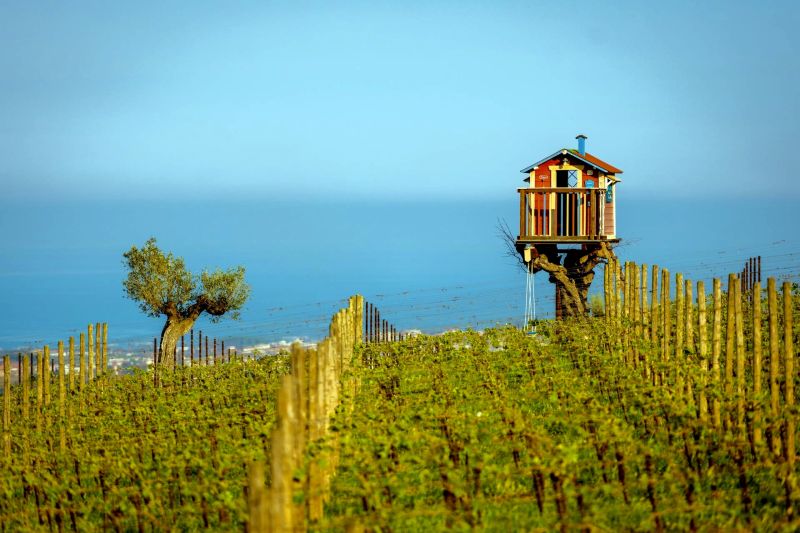
Abruzzo’s regional government has approved new limits on wine production for the 2026 grape harvest, cutting permitted yields for Montepulciano d’Abruzzo DOC and placing part of the coming crop into reserve as the region tries to contain large stocks and protect prices.
The decision, adopted by the regional executive after a proposal from the Consorzio Tutela Vini d’Abruzzo, comes as producers in one of central Italy’s most important wine regions face heavy inventories in both red and white categories. Regional data show that as of May 31, cellars still held 1,084,336 hectoliters of Montepulciano d’Abruzzo DOC. Stocks of Pecorino totaled about 240,000 hectoliters across all categories, with more than half tied to Terre d’Abruzzo.
Under the new rules, the maximum yield for Montepulciano d’Abruzzo DOC will fall to 135 quintals per hectare from 150 quintals per hectare. A quintal is 100 kilograms, making the change a meaningful reduction in the amount growers can send directly into production. Of the 135 quintals now allowed, 110 quintals per hectare will be available for normal production, while the remaining 25 quintals per hectare will be held as a harvest reserve until June 30, 2028.
For Pecorino under the IGT Terre d’Abruzzo or Terre Abruzzesi designation, the region set the maximum yield for the 2026 harvest at 140 quintals per hectare. Any production above that level, from 140.01 to 220 quintals per hectare, will have to be stored until Sept. 30, 2027, unless the consortium later asks for an extension.
The measures are designed to slow the flow of wine into a market that regional officials and producers believe is at risk of oversupply. In practical terms, the region is trying to avoid a large release of fruit that could weigh on bulk prices and undermine returns for growers and wineries. The approach does not destroy grapes or prohibit harvesting outright, but it limits what can immediately be turned into wine for sale under the main appellations.
Abruzzo has relied on similar tools in recent years, using yield controls and reserve mechanisms to manage supply in vintages when stocks appeared too high relative to demand. The latest intervention suggests that regional authorities and the consortium see the imbalance as serious enough to warrant another round of restrictions before the harvest begins.
Montepulciano d’Abruzzo is the region’s flagship red wine and one of Italy’s better-known value denominations in export markets. Pecorino, a white grape that has gained attention in recent years, has also expanded its presence, especially in the broader Terre d’Abruzzo category. That growth has brought visibility, but it has also increased the need to manage volumes carefully when inventories rise.
Emanuele Imprudente, Abruzzo’s vice president and regional agriculture official, said the measures were the result of consultations with the consortium and representatives from across the wine trade. In a statement released with the decision, he said the region’s role was to coordinate the different interests in the sector and help shape measures that protect producer income and preserve the value of the appellations without harming competitiveness.
Alessandro Nicodemi, president of the Consorzio Tutela Vini d’Abruzzo, said the restrictions were meant to preserve market balance and avoid a sharp drop in prices, especially for Montepulciano d’Abruzzo DOC. He said an unchecked surplus could threaten the economic sustainability of wine businesses in the region.
The regional government did not approve at this stage another proposal put forward by the consortium: a three-year suspension on new vineyard registrations for Montepulciano d’Abruzzo and for IGT Terre d’Abruzzo or Terre Abruzzesi. Instead, that issue has been deferred to a consultation forum scheduled to begin in September.
That forum is expected to bring together the consortium, major farm organizations, representatives of the cooperative sector and the Abruzzo regional administration. The goal is to discuss whether the region should also curb future planting, a more structural step that would go beyond temporary harvest controls and address potential long-term growth in supply.
The delay suggests there is still debate inside the sector over how far intervention should go. Limiting yields for a single harvest is one thing; freezing new registrations for three years would have broader implications for growers planning investments and for younger producers looking to expand. Regional officials have signaled that they want any move on planting rights to come out of a wider agreement among producers, cooperatives and farm groups rather than through a rushed administrative decision.
For now, the immediate effect will be felt in vineyards preparing for the 2026 harvest. Growers working under Montepulciano d’Abruzzo DOC rules will have less fruit available for free production than in prior years, and those with Pecorino in the Terre d’Abruzzo category will face storage requirements if they exceed the new threshold. Wineries, in turn, will have to plan around a slower release of part of the crop into the market.
In European wine regions, these kinds of controls are often used when cellars are full and demand has not kept pace with supply. Abruzzo’s action shows how local authorities are trying to defend the market position of well-known denominations not just by promoting sales, but by managing the volume that reaches buyers in the first place.
The next stage of that debate will begin in September, when the consultation table examines whether temporary limits on the 2026 crop should be followed by a longer pause on new vineyard registrations for some of the region’s most important wine categories.