Economist Says Fewer Than 500 Mosel Micro-Wineries May Stay Viable
An 11% drop in Riesling exports, bulk prices below cost and steep-slope farming expenses are intensifying pressure on the region’s smallest producers.
2026-08-06
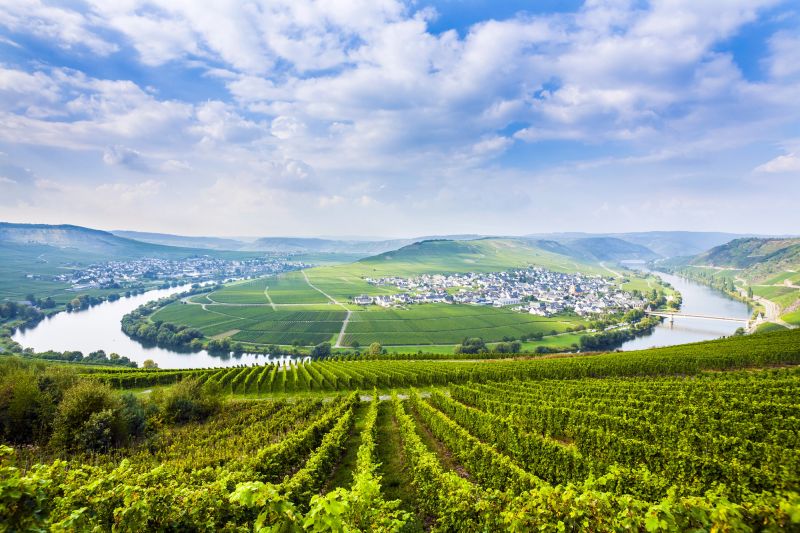
Fewer than half of roughly 1,000 micro-wineries in Germany’s Mosel region may be able to remain economically viable, according to Simone Loose, a wine economist whose assessment adds to growing concern about one of Europe’s best-known Riesling areas.
The warning comes as producers in the Mosel face a mix of weak export demand, low bulk-wine prices, rising pressure on steep-slope vineyards and growing stocks that are becoming harder to move at sustainable prices. The figures were reported by the trade publication Winemag on Aug. 3, drawing on sector data and previous reporting from sources including Nomisma, SWR and Geisenheim.
At the center of the problem is a gap between what many growers can get for their wine and what it costs to make it. Some bulk lots are being sold for just €0.60 to €0.70 a liter, according to the sector snapshot cited by Winemag, while production costs are said to be at least twice that level. In the Mosel’s steep vineyards, where labor is intensive and machinery is difficult to use, the economics are even tighter. For those sites, direct sales below €7 to €8 a bottle ex-cellar are widely seen as hard to sustain over time.
That strain is especially serious for very small operators. The Mosel has long depended on a large number of family-run vineyards and tiny wineries, many of them working fragmented parcels on sharp slopes along the river. Those vineyards are central to the region’s identity and to the style of wines that built its reputation, but they are also costly to maintain. Hand work remains essential in many plots because mechanization is limited or impossible.
Loose’s estimate suggests that, out of about 1,000 micro-enterprises in the region, fewer than 500 may have a realistic path to staying afloat under current conditions. Her assessment does not amount to a formal official tally, but it reflects a broader judgment that a large share of the smallest producers are operating with fragile prospects.
Export data are adding to the anxiety. Mosel Riesling exports fell 11% from January through April of 2026, according to the industry figures cited in the report. That compares with a 5.5% decline for German protected-origin wines as a whole over the same period, a gap of 5.5 percentage points. The report did not specify whether the export change referred to volume or value, and that limits the precision of the comparison. Even so, the trend points to weaker external demand for Mosel Riesling than for the broader German appellation wine segment.
For a region that depends heavily on the image and reach of Riesling, that matters. The Mosel remains one of Germany’s most internationally recognized wine regions, and its producers have long relied on export markets to absorb a share of production and support pricing. A sharper drop there than in the wider category suggests the area may be facing a more specific challenge, whether from weaker positioning, changing consumer demand, increased competition or pressure at price points where Mosel wines once performed better.
Domestic economics are not offering much relief. When bulk wine trades below production cost, growers with limited direct sales power can be pushed into difficult choices. They can hold stock in hopes of better prices later, but that ties up cash and space. They can sell at a loss to move wine, which weakens already thin margins. Or they can reduce work in the vineyard, an option that may save money in the short term but can damage quality and long-term viability.
In steep-slope viticulture, those tradeoffs are severe. Vineyard work costs more because pruning, canopy management and harvest often require manual labor. Transport and access are more complicated. The fixed costs of keeping terraces, walls and narrow parcels in production can remain high even when market conditions deteriorate. If the bottle price needed for sustainability is €7 to €8 ex-cellar, and the market does not consistently support that level, the business case narrows quickly for growers without strong brands, wine tourism income or established direct-to-consumer channels.
That is one reason the issue goes beyond individual balance sheets. If small vineyards are abandoned because they cannot be farmed profitably, the result could reshape parts of the Mosel landscape. Steep parcels that fall out of production are difficult to recover, and abandonment can affect not only output but also local employment, tourism appeal and the cultural fabric of villages built around winegrowing.
The current diagnosis also points to inventory pressure. Stocks that accumulate when sales slow can weigh further on prices, especially in a region dominated by many small players with limited storage flexibility and limited leverage in the market. In that setting, discounting by some sellers can spread quickly and deepen the pressure on others. Low bulk prices then become both a symptom and a cause of sector stress.
The figures now circulating should be read with caution. The 11% export decline cited for January through April of 2026 was presented without a clear indication of whether it measured value or volume. The bulk price range of €0.60 to €0.70 a liter was also presented as part of a sector diagnosis rather than as a new official statistical series with a defined reporting window. Even with those limits, the picture described by economists and trade sources is consistent: prices are under cost in parts of the market, exports are soft, stocks are building and the smallest operators in labor-intensive vineyards are under the most pressure.
For Mosel producers, the challenge is not only selling wine but selling it at levels that cover the realities of this region’s production model. That is proving hard in a market where low-priced bulk wine is available, direct sales are unevenly distributed and the premium needed to support steep-slope farming is not always being achieved. The result is a widening gap between the value attached to Mosel’s heritage and the returns many of its smallest wineries are actually able to earn.
