Champagne growers brace for one of the earliest harvests on record
Grape picking could begin by Aug. 15 in some areas as the region also trims its 2026 marketable yield to 8,800 kilograms per hectare
2026-08-03
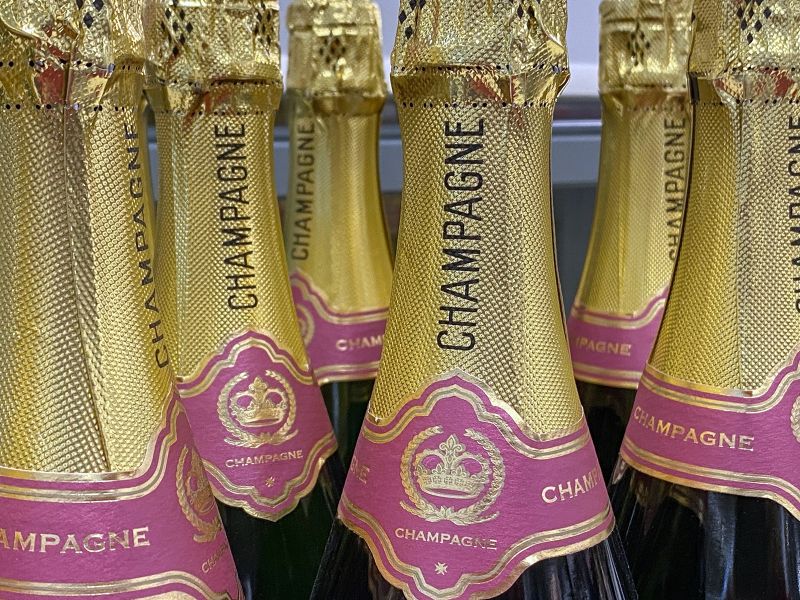
Champagne is preparing for what could be its earliest harvest on record, with grape picking in the French region expected to begin between Aug. 20 and Aug. 25 and possibly around Aug. 15 in some areas, according to industry estimates released as growers and houses also agreed to cut the 2026 marketable yield again.
The Comité Champagne, the trade body that brings together growers and Champagne houses, set the commercial yield for the 2026 harvest at 8,800 kilograms per hectare on July 22. That is down from 9,000 kilograms per hectare in 2025, a reduction of 200 kilograms per hectare, or 2.2%. The group said the move is meant to gradually reduce inventories while protecting producers’ finances and maintaining quality standards.
The decision comes as Champagne faces two pressures at once: a harvest season moving forward because of heat and drought, and a market that remains uneven despite a modest recovery in shipments. Through the end of June, Champagne shipments reached 107.1 million bottles in the first half of the year, up 1.2% from a year earlier. The increase was driven by exports, while sales in France continued to lag.
The harvest calendar has not yet been formally fixed. In Champagne, official starting dates are set by municipality and grape variety after checks by the region’s grape-ripening monitoring network, known as the Réseau Matu. Those dates are then published as the legally binding “ban des vendanges.” Producers may delay picking slightly, but they cannot start before the official date.
Even so, the current forecast points to an unusually early campaign. Industry observers say the start could come at least 12 days earlier than the recent average. If confirmed, it would extend a pattern that has become more visible in recent years as harvests have shifted from September into August.
The region’s vineyard conditions are far from uniform this year. The Comité Champagne said the 2026 growing season has been marked by strong differences between sectors after frost episodes, intense heat in June and more recent signs of drought. Those swings have accelerated ripening in some parcels while raising concern about water stress and uneven development across the appellation.
Champagne’s yield-setting system is unusual in French wine. Each year, growers and houses negotiate how much fruit can be sold from the coming harvest based not only on vineyard conditions but also on stock levels and expected demand. The mechanism is designed to smooth supply over time in a region where reserve wines play a central role in blending nonvintage Champagne and where price stability is closely tied to inventory management.
In announcing this year’s decision, Maxime Toubart, president of the Syndicat Général des Vignerons de la Champagne and co-president of the Comité Champagne, said the region had to protect farm balances while preserving quality in a year marked by major disparities and difficult weather conditions. David Chatillon, president of the Union des Maisons de Champagne and also co-president of the committee, said the lower yield reflected a responsible approach at a time when economic conditions remain uncertain and stocks are still being rebalanced.
The cut is modest, but it signals continued caution after several years of softer demand in key markets. Champagne remains heavily exposed to shifts in consumer confidence because it is closely linked to celebrations and discretionary spending. Exports have recently offered some support, but domestic consumption in France has not recovered at the same pace.
Climate pressure is adding another layer of uncertainty for producers. Champagne was once defined by harvests that usually began in September and sometimes later. Now August starts are becoming more common. The region’s chalky soils help retain winter water and release it gradually during the growing season, which has long been one of Champagne’s natural advantages. But repeated heat waves and dry spells are testing that resilience.
The region has responded over time with changes in vineyard practices and research into disease-resistant grape varieties permitted under strict limits within the appellation rules. Those efforts are part of a broader strategy to adapt to warmer conditions without changing the style that defines Champagne.
For now, however, attention is focused on the next few weeks. The final start dates will depend on ripeness checks across Champagne’s villages and vineyards, especially for Chardonnay, Pinot Noir and Meunier, which do not always mature at the same pace. Until those official notices are issued, any harvest timetable remains a forecast.
What is already clear is that Champagne is entering another season shaped by scarcity management and climate acceleration at once: fewer kilos authorized for sale from each hectare, inventories still under watch, exports doing better than France, and grapes likely to be picked well before the traditional rhythm that once defined one of the world’s most closely watched wine regions.
