France Orders 4,000 New Evacuations as Heat Threatens Gironde Wildfire
Officials said the blaze near Arcachon Bay stayed stable overnight, but hotter weather could reignite fire activity across the tourist region.
2026-07-28
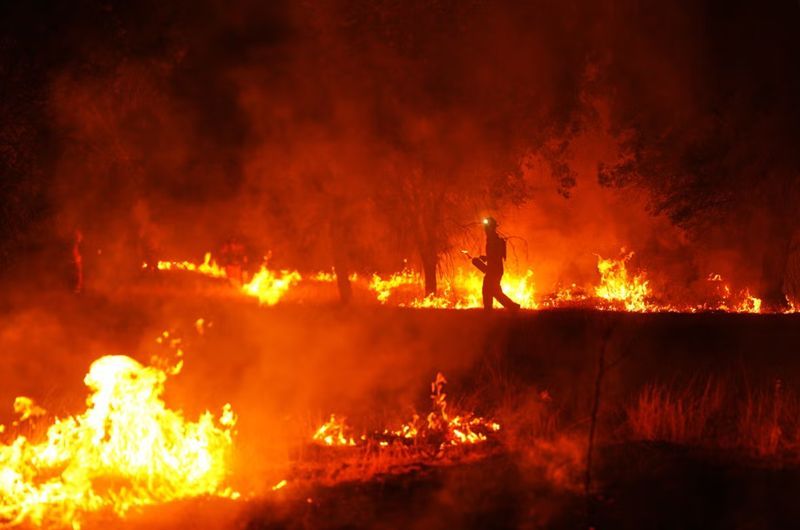
A major wildfire in France’s Gironde region remained stabilized on Monday after what local authorities described as a calm night, but officials ordered about 4,000 new precautionary evacuations in Lacanau as hotter weather threatened to worsen conditions around the Arcachon Bay area near Bordeaux.
The fire has not been fully contained, but it did not advance over the previous 24 hours, according to Sophie Brocas, the prefect of Nouvelle-Aquitaine and Gironde. Authorities said the burned area remained at 42,000 hectares. Fire crews dealt overnight with several flare-ups that were later brought under control, including in the northern part of Le Porge and in the northern sector of Cap-Ferret.
The new evacuation order affects people staying in campgrounds, tourist residences and vacation villages in Lacanau. Officials said the measure was taken ahead of unfavorable weather conditions as Gironde moved into a yellow heat alert at midday Tuesday. The concern is that a new heat wave could make firefighting more difficult and increase the risk of renewed fire activity in a heavily forested department that is also one of France’s busiest summer tourism areas.
Firefighting operations continued early Tuesday. Military units resumed work at 6:30 a.m. creating tactical firebreaks designed to slow or stop the spread of flames. Authorities said 103 kilometers of those barriers had been completed.
The response remained large. Officials said 2,750 firefighters were deployed, supported by 1,500 military personnel, 1,440 members of internal security forces and 18 aerial assets. On Monday, a French A400M military aircraft again carried out two drops of fire retardant.
European support was also expanding. Brussels announced that two additional aircraft would be deployed starting Tuesday through the European Union’s civil protection mechanism, bringing the European contribution to nine planes and two helicopters. Germany also increased its assistance. The Bundeswehr said it had sent two CH-53 transport helicopters and firefighting equipment to the Bordeaux area, with supplies flown to Cazaux air base aboard an A400M. The German military said the mission was initially planned for five days in coordination with French authorities.
President Emmanuel Macron visited firefighters on Monday and defended his government’s handling of the crisis against criticism from political opponents who say the state was not adequately prepared. Macron pointed to what he said was a near doubling of the civil security budget since he took office. His government has faced criticism over its handling of an order for two additional Canadair water bombers that was canceled in 2024 before being confirmed again in June 2026, with delivery not expected before 2032.
France’s Interior Ministry said the country has 12 Canadair aircraft and that 11 are currently available and operational, alongside other aerial resources. Macron said a total of 67 aircraft were mobilized, calling it a historic level, and wrote after his visit that France would win the fight against the fires.
French officials have also stressed that human behavior remains a central factor in this summer’s fires. According to the government, nine out of 10 wildfires are caused by people, most often through negligence such as discarded cigarette butts or unsafe work practices. Authorities said people responsible for deliberately setting fires can face prison terms of up to 15 years.
Since July 6, 162 people have been detained in investigations linked to the fires, according to a government account presented after Monday’s Cabinet meeting. At this stage, officials said five prison sentences have been handed down and 15 people are being held in pretrial detention pending judgment.
The mass evacuations have also created opportunities for theft and attempted burglary in emptied neighborhoods. During the night from Monday to Tuesday, police arrested a suspect in an attempted break-in, according to the prefecture. On Sunday, national police had already detained a man suspected of stealing 44 bottles of wine from a private property in Eysines, a town that has been largely evacuated.
For Bordeaux and the wider Gironde area, the fire carries broader economic risks beyond immediate safety concerns. The region is closely tied to wine production and summer travel, and prolonged evacuations or transport disruptions could affect vineyard operations, deliveries and visitor traffic during a key season for wineries, restaurants and hotels. No broad damage to vineyards or wine infrastructure was reported by authorities in the latest update, but the scale of the fire and the continuing heat threat have kept concern high across one of France’s most important beverage and tourism regions.
