Chile’s bottled wine export revenue rose 2.1% in September
January through September export value still fell 5.2% after steep declines in the United States, Japan and China
Wednesday, November 4, 2026
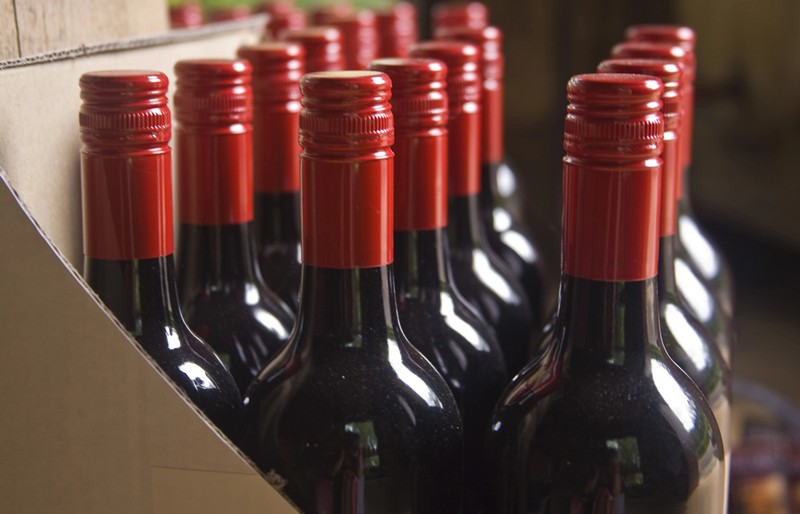
Chile’s bottled wine exports posted a small gain in value in September, but the category remained in decline for the year through September as weaker shipments to the United States, Japan and China offset growth in Brazil and several other markets.
Data published on Wednesday, November 4, by Mediabanco and attributed to Corpo showed that Chile exported 3.9 million cases of bottled wine in September for US$106.7 million. Export volume slipped 0.6% from the same month in 2025, but revenue rose 2.1% as the average price increased 2.8% to US$27.2 a case.
The monthly increase was driven in part by stronger sales in several important destinations. Brazil remained the leading market in September, with export value to that country rising 7.7% to US$22 million and volume up 14.2%. The United Kingdom posted a 52.2% increase in value, Ireland rose 53.3%, Canada climbed 24.1%, South Korea gained 21.9% and China increased 10.4%.
Those gains were partly offset by sharp drops elsewhere. Shipments to the Netherlands fell 37.8% in value in September, exports to Russia dropped 29.8%, the United States declined 18.8% and Japan was down 10.0%.
Even with the firmer September reading, the broader trend for 2026 remained negative. From January through September, Chile shipped 33.2 million cases of bottled wine worth US$902.7 million. That was down 5.3% in volume and 5.2% in value from the same period of 2025. The average price was nearly unchanged at US$27.2 a case, up just 0.1%.
Brazil was the clear bright spot over that nine-month period. Exports to the Brazilian market rose 5.3% in volume and 7.9% in value, reinforcing its position as Chile’s main destination for bottled wine. Russia also expanded sharply, with gains of 27% in both volume and value, while the United Kingdom posted more modest growth of 2.9% in volume and 5.5% in value. Canada and Mexico recorded increases in value, though not in volume.
The United States was the biggest source of weakness. Export value to the U.S. market fell 27.7% in the January-September period, while volume dropped 20.5%. Japan also contracted, with value down 14.4%, and China fell 11.6%. The figures suggest demand is being redistributed across major destinations rather than growing evenly, a shift that could matter for beverage producers, importers and distributors because Chile is one of the world’s large wine exporters and changes in its market mix can affect pricing and competition in several wine-importing countries.
The longer 12-month picture was also soft. From October 2025 through September 2026, bottled wine exports totaled 44.6 million cases and US$1.2182 billion, down 5.8% in volume and 6.6% in value from the previous 12-month cycle. The average price edged down 0.9% to US$27.3 a case.
Brazil again stood out in that rolling annual measure. It accounted for 8.8 million cases and US$218.9 million, up 3.5% in volume and 5.6% in value, representing 20% of total exported volume and 18% of total value. Russia continued to show sustained growth, with volume up 25.3% and value up 28.1%, while Canada rose 7.0% in value. By contrast, most of the other top 10 markets showed declines in value, led by the United States at -25.1%, Japan at -16.1%, Mexico at -15.7% and China at -14.6%.
Price performance varied widely by market. In the 12 months through September, Canada recorded the highest average price among the top 10 destinations at US$35.4 a case, followed by China at US$34.9 and the Netherlands at US$31.2. Average prices increased in the Netherlands, Canada, Ireland, the United Kingdom, Russia and Brazil. They fell in Mexico, the United States and Japan, with China posting a slight decline.
The September data also showed a shift toward higher-value products. Wines priced above US$30 a case increased their share of total export value to 45.6% from 42.4% a year earlier, even though the US$40 to US$50 segment declined. The US$30 to US$40 range posted one of the strongest monthly performances, with volume up 24.7% and value up 23.7%. There were also increases in the US$50 to US$60 range and in wines priced above US$60 a case, while categories below US$30 a case declined from September 2025.
For wines priced above US$50 a case, September exports rose 10.5% in volume and 4.8% in value, leaving the average price at US$82.4 a case, down 5.2%. Mediabanco’s report said that monthly growth in this premium segment was helped by strong gains in Denmark and Paraguay, which entered the top 10, along with increases in Japan, South Korea, China, the United States and Canada. At the same time, export value in that segment fell sharply to the Netherlands, Germany and Brazil. In Brazil’s case, the decline came despite higher volume because the average unit price dropped 30.5%.
The year-to-date figures for premium wine were weaker than the monthly snapshot. From January through September, exports of wines priced above US$50 a case fell 5.9% in volume and 10.6% in value, with the average price at US$92.2 a case, down 4.9%. The biggest drag came from the highest-priced tier, above US$60 a case, where volume dropped 9.5% and value fell 13.3%. Brazil remained the largest market in that premium category at US$28 million, with value up 7% and volume up 16.9%, while Canada, France, Japan and the United Kingdom showed positive value readings.
Over the 12 months through September, exports of wines priced above US$50 a case accounted for 5.5% of total volume but 18.8% of total bottled wine export value. Shipments in that category totaled 2.4 million cases and US$229.5 million, down 9.0% in volume and 14.3% in value. Brazil led that segment as well, with US$39.02 million in exports, followed by gains in Canada and France, while the remaining top destinations declined.