Prepared cocktail sales rose 1.8% over four weeks on strength in spirits-based drinks
NielsenIQ found category volume fell 2.2%, with flavored malt beverages and seltzers continuing to drag on growth
Wednesday, October 28, 2026
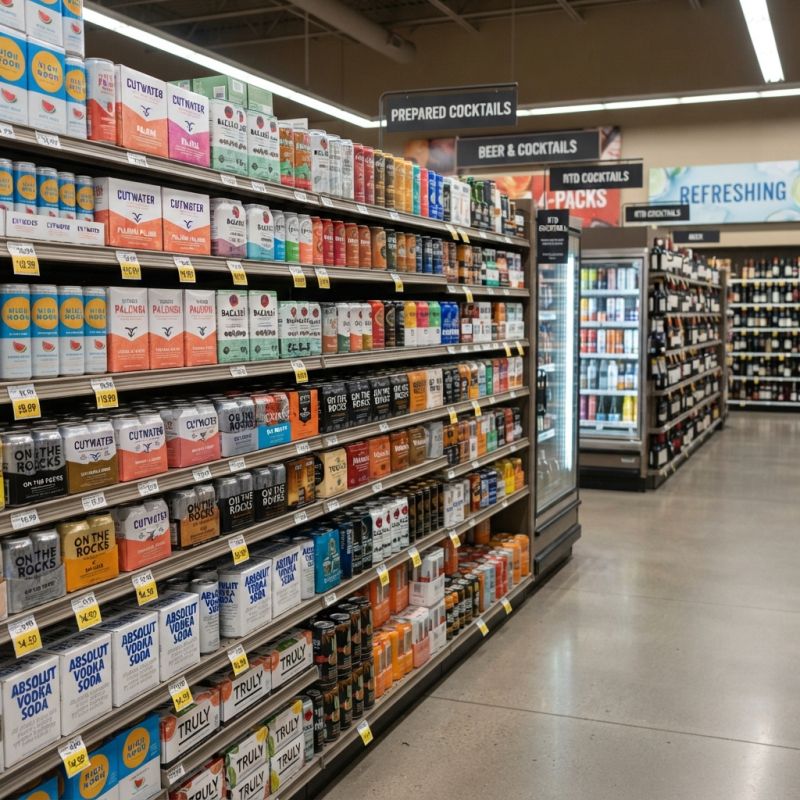
Prepared cocktail sales showed modest improvement over the four weeks ending October 17, even as the most recent weekly reading moved lower, according to a NielsenIQ report on the category.
NielsenIQ said dollar sales for prepared cocktails rose 1.8% during the four-week period, while case volume fell 2.2%. In the latest week measured, dollar sales totaled $268 million, down 1.6% from the previous week. The report said the category was still being supported by spirits-based and wine-based products, but that the gains have not yet produced steady overall volume growth.
The data covered prepared cocktails sold in the beer, wine and spirits channel and included spirit-based ready-to-drink and ready-to-serve products, wine-based cocktails, flavored malt beverages and seltzers.
Performance varied sharply by product base. Spirits-based ready-to-drink cocktails posted the strongest growth, with dollar sales up 18.4% and volume up 20.6% in the four-week period. Wine-based cocktails also grew, though at a slower pace, with dollar sales rising 6.0% and volume increasing 4.1%. Flavored malt beverages and seltzers remained the weakest part of the category, with dollar sales down 5.3% and volume down 7.6%.
That mix left the category in an uneven position. Faster growth in spirits-based drinks and continued gains in wine-based cocktails helped offset part of the decline in flavored malt beverages and seltzers, but not enough to fully restore volume growth for the segment as a whole.
Among manufacturers, Mark Anthony Brands remained the largest by dollar sales, even though its sales slipped 0.3% and its case volume fell by 152,500 cases. Boston Beer ranked second by dollars, with sales down 4.2% and volume down 360,100 cases. Anheuser-Busch Inc. held the third spot, with dollar sales up 6.3% and volume up 30,700 cases. Sazerac ranked fourth, with sales up 5.7% and volume up 35,600 cases. Gallo rounded out the top five, with dollar sales down 3.7% and volume down 59,800 cases.
On the manufacturer growth list, Stateside Brands posted the strongest dollar growth. Its sales rose 100.6% and its case volume increased by 390,500 cases. Anheuser-Busch Inc. ranked second on that list, followed by Sazerac. NielsenIQ placed Moët Hennessy USA fourth by dollar growth, though the report did not provide a comparable dollar-change figure and only reported a volume gain of 5,900 cases. Constellation ranked fifth, with dollar sales up 63.9% and volume up 26,200 cases.
At the brand level, White Claw remained the largest prepared cocktail brand by dollar sales. Its dollar sales increased 1.3%, even as case volume declined by 26,700 cases. Twisted Tea ranked second by dollars, but its sales fell 9.0% and its volume dropped by 284,600 cases. BuzzBallz was third, with dollar sales up 7.4% and volume up 36,200 cases. Cutwater Cocktail ranked fourth, with sales rising 15.7% and volume increasing 83,700 cases. Smirnoff held the fifth position, with dollar sales up 3.0% and volume up 16,200 cases.
The fastest-growing brands looked different from the biggest brands by sales. Surfside Cocktail led the dollar-growth ranking, with sales up 53.8% and volume up 207,700 cases. Super Lyte Cocktail ranked second, though NielsenIQ did not publish a comparable dollar-growth figure and reported only that volume rose by 183,200 cases. Cutwater Cocktail placed third on the growth list, followed by Sun Cruiser Cocktail, which posted a 56.2% increase in dollar sales and a volume gain of 134,600 cases. BuzzBallz ranked fifth by dollar growth.
The report pointed to a category still being reshaped by consumer movement toward spirits-based ready-to-drink products. Large established brands continued to hold the biggest share of dollar sales, but some of the strongest gains came from newer or faster-expanding cocktail brands. NielsenIQ’s figures showed that the category’s near-term direction still depends heavily on whether declines in flavored malt beverages and seltzers continue to ease while spirits-based products maintain double-digit growth.