U.S. Keeps 10% Import Surcharge in Place Until July 24
The decision leaves imported wine and other consumer goods facing higher costs despite mounting skepticism at the World Trade Organization.
Thursday, June 11, 2026
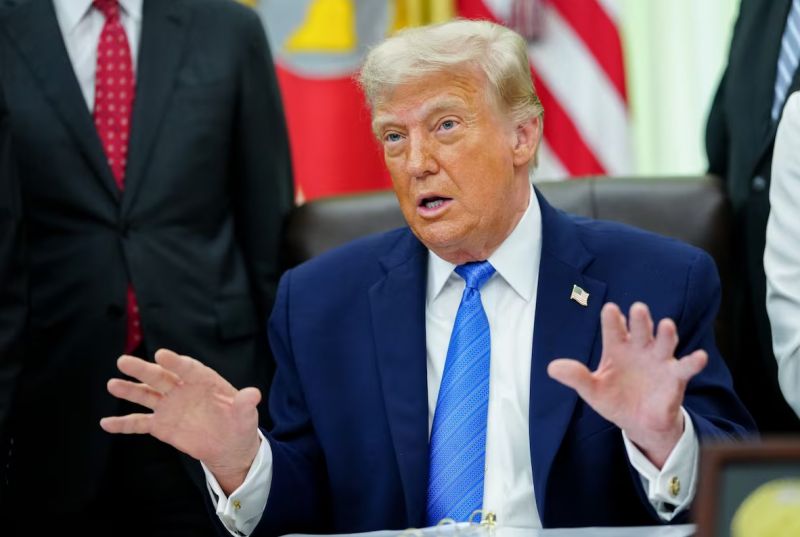
The United States has told the World Trade Organization that it does not plan to ease its temporary 10% import surcharge before the measure expires on July 24, holding to a broad tariff increase that continues to affect many imported consumer goods, including wine, unless Congress acts to extend it.
The position was set out in a U.S. submission circulated on June 2 to the WTO Committee on Balance-of-Payments Restrictions and reported this week in Geneva, where several trade officials and analysts have questioned Washington’s legal and economic case for the measure. The surcharge was imposed under Section 122 of the Trade Act of 1974 and took effect on February 24 for a 150-day period.
In its filing, the United States said it does not “currently envision any progressive relaxation” of the surcharge during the short period in which it remains in force. It described the measure as temporary and binary, meaning it would either stay in place for the full term or end early, but not be reduced step by step.
The administration has argued that the surcharge is needed to address what it calls a large and serious U.S. balance-of-payments deficit. In the WTO document, Washington said the country faces a dangerous external imbalance and cited data from the Bureau of Economic Analysis, the Council of Economic Advisers, the International Monetary Fund and other public sources to support its case.
The U.S. said its current account deficit reached $1.2 trillion in 2024, equal to -4.0% of gross domestic product, and that the goods and services trade deficit remained at $1.2 trillion in 2025, up 40% from 2019. It also pointed to a net international investment position of -90% of GDP in 2024 and said that such figures show a persistent and worsening imbalance that justifies temporary import restrictions under WTO rules.
Washington also cited the IMF’s 2026 Article IV consultation, saying IMF directors had expressed concern about the size and persistence of the U.S. current account deficit, which is projected to remain above 3.6% of GDP through 2031. The U.S. argued that because its economy generates more than 20% of global income, any disorderly adjustment would have consequences well beyond its borders.
At the same time, U.S. officials acknowledged in their filing that the surcharge is applied on top of existing bound tariff rates at the WTO and covers imports from all trading partners, with some product exceptions. Those exceptions include certain critical minerals, some agricultural products such as beef, tomatoes and oranges, pharmaceuticals and other specified goods. Wine was not listed among the exemptions described in the report from Geneva, leaving imported bottles broadly exposed to the added duty.
That matters for beverage importers, distributors and retailers because a flat 10% surcharge can raise landed costs on foreign wine at a time when margins are already tight across parts of the market. If importers cannot absorb those costs, some of the increase could flow through to restaurant lists and retail shelves, potentially affecting pricing, promotions and purchasing decisions for wines shipped into the United States during the life of the measure.
The WTO debate has centered not only on the tariff itself but also on whether the United States can credibly invoke balance-of-payments rules designed for countries facing external financing stress. According to people familiar with discussions in Geneva, several WTO members have expressed skepticism about Washington’s interpretation of Article XII of the General Agreement on Tariffs and Trade, which allows import restrictions to safeguard a member’s external financial position under certain conditions.
Critics argue that those provisions were written for an earlier monetary system marked by fixed exchange rates and capital controls, not for an economy that issues the world’s main reserve currency. They say a U.S. current account deficit does not by itself amount to a balance-of-payments crisis and note that the IMF has not recommended across-the-board import surcharges as a remedy.
Some trade officials and analysts have also challenged Washington’s use of IMF findings. While IMF directors did express concern about persistent U.S. external deficits, critics say the fund typically recommends fiscal adjustment and exchange-rate flexibility rather than broad tariffs layered onto existing duties.
Questions have also been raised about Washington’s emphasis on its negative net international investment position. Analysts note that U.S.-owned assets abroad tend to include higher-return foreign direct investment and equities, while many foreign holdings in the United States are lower-yield debt instruments such as Treasury securities. In that view, a large negative position reflects the special role of the dollar and global demand for U.S. assets more than immediate financial distress.
The United States has defended its approach by saying standard balance-of-payments accounting can obscure economically meaningful deficits and that several methods still point to a serious problem. It also said domestic policy steps already taken by Washington would not be enough on their own to restore equilibrium on a sound and lasting basis.
Among those steps, the U.S. filing cited tax changes aimed at boosting labor supply and incomes, student loan reforms intended to reduce indebtedness and discretionary spending cuts meant to improve the federal budget balance. Even with those measures, Washington said additional action was needed to protect its external position during the 150-day period covered by Section 122.
For companies tied to imported beverages, especially wine merchants handling shipments from Europe, South America or Australia, the practical issue is timing as much as policy. Goods entering before July 24 remain subject to the surcharge unless they fall within an exemption or unless the measure is terminated early. Importers negotiating contracts or planning late-summer inventories are therefore operating under continued uncertainty over whether Congress might extend the tariff authority or allow it to lapse on schedule.
The dispute now sits at the intersection of trade law, macroeconomic policy and everyday pricing in consumer markets. While WTO consultations do not automatically change U.S. policy, they have sharpened scrutiny of a measure that reaches far beyond industrial inputs and into food and beverage categories sold across American restaurants, wine shops and grocery chains.