Study Finds Climate Change Is Pushing Vineyards Toward Cooler Locations
An analysis of five Australian wine regions found hotter, drier growing seasons that could force growers uphill or farther south.
Wednesday, September 16, 2026
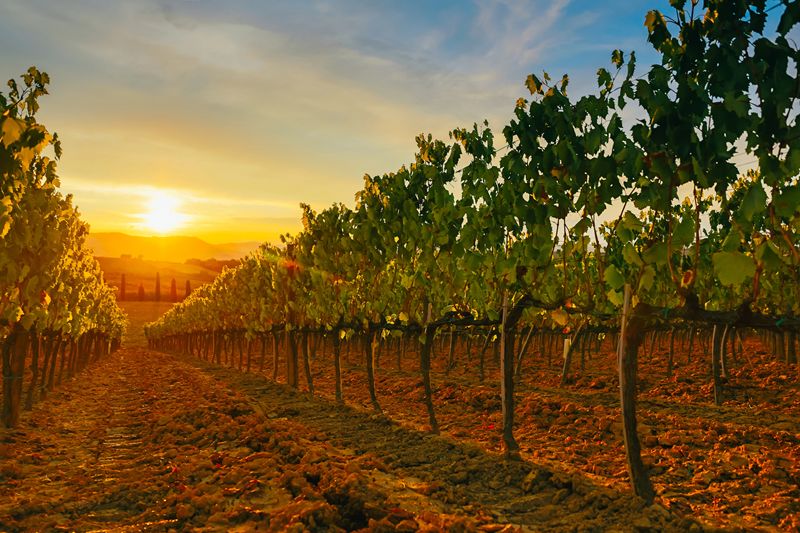
A new study says climate change is already tightening pressure on grape growers in major wine regions and is likely to push more vineyards toward cooler locations, higher elevations or different grape varieties as heat, drought and fire risk increase.
The research, reported Wednesday, examined long-term temperature and rainfall records in five leading Australian wine regions: the Barossa Valley in South Australia, the Hunter Valley in New South Wales, Margaret River in Western Australia, the Yarra Valley in Victoria and the Tamar Valley in Tasmania. The authors analyzed observations dating back to 1940 and found that human-caused climate change has already shifted conditions in those areas, making them more likely to be hotter and drier than in earlier decades, including during the main grape-growing season.
The findings come as several wine-producing areas face mounting climate stress. In Europe, a summer marked by extreme heat, drought and large fires has hit farming communities across the continent, including around France’s Bordeaux region. For vineyards, the danger is not limited to direct fire damage. Smoke exposure can affect grapes and leave wine with burnt or ashy characteristics, a problem that can also hurt sales from fire-affected regions.
The researchers said the same pattern is evident well beyond Europe. Wine regions in Australia, California, Chile and South Africa are all operating in warmer, drier conditions than in the past, which also raises their exposure to destructive fires. In California, recent fires have been worsened by dry atmospheric conditions, while in Australia fire activity has increased over recent decades as the climate has warmed.
In the Australian cases studied, the shift was clear enough that the authors said growers seeking the climatic conditions that once defined top vineyards would often need to move farther south or to higher ground. That conclusion is especially significant for a business built on long planting cycles, stable local conditions and strong regional identities. For wine producers and the wider beverage industry, the changes could affect where vineyards are developed, which grapes are planted, how water is managed and how reliable future supply and product quality may be.
The study also looked at how growers are responding. One of the main strategies is to use water more efficiently through steps such as planting cover crops and testing newer irrigation systems. Another is changing the mix of grapes being grown. In Chile’s Biobío Valley, for example, the researchers said warmer conditions may increasingly favor varieties that perform well in heat, such as semillon or tempranillo, over grapes more closely associated with cooler climates, including pinot noir and riesling.
Relocation is another option, though it can be far more complex and expensive than changing vineyard practices. Using climate models, the researchers mapped areas that in the future may offer conditions similar to those that support today’s most widely grown grape varieties. Their modeling suggested that in Western Australia, no place in the state is likely to develop a future climate close to the one Margaret River had in the past. The nearest comparable area, they said, would be the Grampians region in Victoria, on the other side of the country.
That kind of shift would challenge long-established assumptions about terroir, investment and regional branding. It also suggests that climate change may create new wine regions even as it undermines some traditional ones. The researchers pointed to England as an overseas example, where warming conditions have helped growers expand production and cultivate grapes once associated more closely with France’s Champagne region. In Australia, they said Tasmania could benefit in relative terms if warming makes local conditions more favorable for wine production.
The study does not suggest that every vineyard faces the same future or that all outcomes will be negative. Local weather, soils, water access and farming methods still matter, and some regions may adapt better than others. But the overall direction, the researchers said, is toward greater heat and dryness in many established growing areas, with more pressure from fires and more need for long-term planning.
The authors also said wine growers must think about shorter-term climate patterns on top of long-term warming. They cited El Niño-Southern Oscillation as one major factor because it can increase the odds of hot, dry conditions in parts of Australia, especially in spring and summer, and can heighten dangerous fire weather. Even so, they noted that wet conditions remain possible in some areas, underscoring that the industry is dealing with both rising averages and large year-to-year swings.
For growers, the issue is immediate as well as strategic. A single hot summer or major wildfire can threaten one season’s crop, damage vines and disrupt a business already facing high costs. But the longer-term question is whether some of the world’s best-known wine regions can keep producing the same grapes under the same names and with the same style as temperatures rise.
That question matters well beyond vineyards. Wine is a major part of the global beverage business, and decisions now on site selection, grape varieties, water systems and fire risk management may shape future availability, prices and regional wine portfolios. In practice, that is pushing more producers to test heat-tolerant grapes, improve irrigation efficiency and assess cooler or higher-altitude land that once sat outside the traditional map of premium wine production.