Georgia Unveils 20,000 Bottles Found in a Hidden Tbilisi Cellar
Officials say experts will verify claims linking some bottles to Napoleon and Stalin before any auction plans move forward
Monday, June 8, 2026
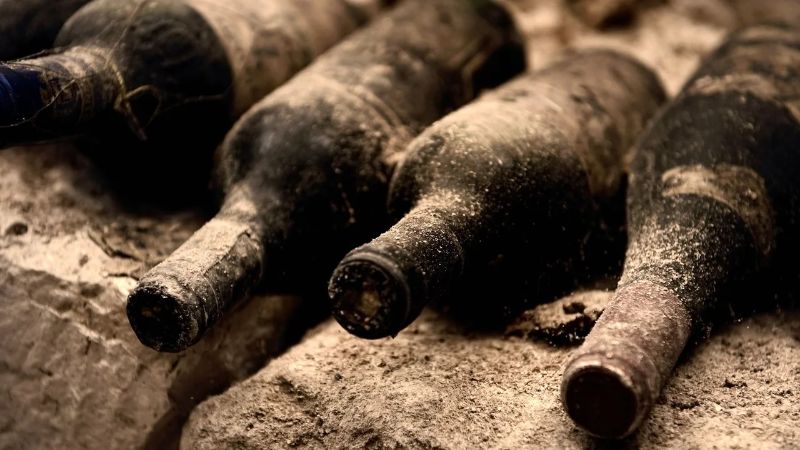
Georgia this week unveiled about 20,000 bottles of wine and spirits that had been kept for more than two centuries in a hidden cellar in Tbilisi, presenting the collection as a discovery that could draw international collectors and major auction houses.
The bottles were shown by Georgia’s National Wine Agency in the capital after being found in a vaulted brick cellar inside the former Tbilisi wine factory, a 19th-century site linked to the Georgian philanthropist and industrialist David Sarajishvili. Images released by the agency showed dusty bottles stacked from floor to ceiling in rusted metal racks.
According to the agency, the collection includes Georgian and foreign wines and spirits, among them bottles said to be associated with the personal collections of Napoleon Bonaparte, Joseph Stalin and other historical figures. Officials did not provide evidence or further details about those links when the bottles were presented, and no documentation was immediately made public to explain how the items were connected to either the French emperor or the Soviet leader, who was born in Georgia.
The agency said specialists will now examine the bottles to establish their provenance and assess both their historical importance and commercial value. That process is expected to determine which bottles are authentic, how they entered the cellar and whether any can be traced directly to notable owners or collections.
Georgian officials used the presentation to reinforce the country’s long-standing claim that it is one of the world’s oldest centers of winemaking. Agriculture Minister David Songulashvili told reporters that the collection highlighted Georgia’s importance as the cradle of wine. The government has increasingly promoted that message as part of its tourism and export strategy, tying modern wine production to archaeological findings and traditional methods that remain central to Georgian identity.
Georgia, on the Black Sea in the South Caucasus, says its winemaking history goes back 8,000 years. Archaeologists have found evidence of early viticulture in what is now Georgia dating to that period. Wine remains deeply woven into daily life, religion and family traditions across the country. In 2013, UNESCO added Georgia’s traditional qvevri winemaking method to its list of Intangible Cultural Heritage. The method uses large clay vessels buried underground for fermentation and aging.
The newly presented cellar stock appears different from that ancient tradition in both form and purpose. Much of it reflects a later commercial era, when European-style bottling, storage and trade expanded across the Russian Empire and the Caucasus. The former Tbilisi wine factory where the bottles were stored dates from the 19th century, a period when Georgia’s wine sector was becoming more industrialized while still preserving older local practices.
Officials have not yet said how long the cellar had remained sealed from public view or under what circumstances the bottles were preserved there for so many years. They also have not announced whether all 20,000 bottles will remain in state hands, be transferred to museums or eventually be offered for sale through private channels or public auction. For now, authorities are framing the discovery as both a cultural asset and a possible commercial opportunity.
The National Wine Agency said some of the bottles could become highlights at major international auctions if experts confirm their origin and condition. That prospect could attract interest from collectors of rare wine, historical spirits and memorabilia tied to political figures. Auction houses typically require extensive verification before accepting such material, especially when claims involve names as prominent as Napoleon or Stalin.
The mention of Stalin carries particular weight in Georgia, where his legacy remains contested. Born in Gori, he is still a figure of fascination for some visitors and collectors despite his role in mass repression across the Soviet Union. Any authenticated object linked to him can command attention in niche historical markets, though it can also provoke ethical debate. Bottles credibly tied to Napoleon would likely generate similar scrutiny because of their age and rarity.
For Georgia’s wine sector, the announcement comes at a time when officials are trying to raise the country’s profile beyond its established export markets and position it more strongly in premium wine tourism. Rare-cellar discoveries can help build that image, especially when they connect local history with broader European narratives. But much will depend on what experts find in the coming months as they inspect labels, glass, corks, seals and archival records.
Until that work is completed, many of the most striking claims surrounding the collection remain unverified. What is clear is that Georgia has brought into public view a large cache of old bottles from a historic Tbilisi cellar and is using that moment to underline its place in wine history while testing whether this discovery can also open doors in the global market for rare and collectible bottles.