Study Finds Grapevines Offer a Powerful Model for Drought Adaptation
A new review argues that vines reveal how rootstocks, soils, hormones and microbes shape crop survival and fruit quality under water stress.
2026-06-04
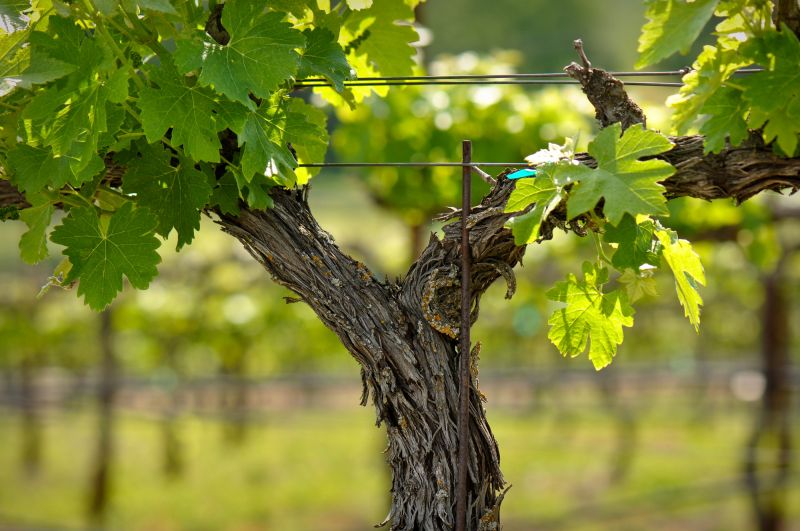
A new paper in npj Science of Plants argues that grapevine offers one of the clearest plant models for understanding how crops adjust to drought, a question with growing importance for vineyards as hotter and drier conditions affect yields, berry composition and wine styles in many regions.
The article, published on June 3 in the Nature portfolio journal, is a perspective rather than a field trial or a single experiment. Its authors review decades of work on how grapevines respond to water stress and explain why the species is especially useful for studying drought acclimation across genetics, physiology and microbiology. Their central point is that vines do not rely on one fixed response to water shortage. Instead, they move along a spectrum between avoiding stress and tolerating it, with outcomes shaped by grape variety, rootstock, soil, climate and associated microbes.
That matters well beyond academic plant science. Grapevines are grown across dry Mediterranean zones, continental interiors and irrigated regions in the Americas, Australia and South Africa. In each place, water availability affects not only crop survival and vineyard economics but also fruit ripening, sugar accumulation, acidity, phenolic development and other traits tied to wine quality. The review says that understanding these drought responses more precisely could help breeders and growers choose better scion-rootstock combinations and adapt vineyards to climate pressure.
The paper describes two broad strategies. One is drought avoidance, in which the vine limits water loss early, mainly by closing stomata, the pores on leaves that regulate gas exchange and transpiration. The other is drought tolerance, in which the plant keeps functioning under lower water potential through mechanisms such as osmotic adjustment and management of xylem embolism, the air blockages that can disrupt water transport.
In practice, the authors say, grapevines rarely fit neatly into one category. They show a continuum between so-called isohydric behavior, where leaf water status is kept relatively stable through tighter stomatal control, and anisohydric behavior, where vines continue transpiring longer as water potential declines. Real vineyard behavior usually falls between those extremes.
The review highlights how much of that response depends on grafting, a defining feature of modern viticulture. For more than a century, Vitis vinifera has commonly been grafted onto rootstocks from other Vitis species or interspecific hybrids to protect against phylloxera. That system created a broad biological platform in which the fruiting part of the vine and the root system may contribute different drought traits. According to the paper, some rootstocks trigger earlier chemical signaling linked to stomatal closure, while others support more vigorous growth and greater tolerance of prolonged dry periods.
A major focus of the article is abscisic acid, or ABA, a hormone long associated with drought signaling in grapevine research. The authors describe how roots can increase ABA production as soil water becomes less available and send that signal upward through the xylem to leaves. They also note that the strength of this signal depends on factors including xylem sap pH, leaf metabolism and how sensitive guard cells are to ABA receptors. Varieties with stronger avoidance behavior tend to be more responsive to this signal.
Soil texture also changes how vines experience drought. Clay-rich soils can hold water tightly after rain or irrigation, making some of it less available at first. But as dry conditions continue, those same soils may retain usable moisture longer than sandy soils, which lose water faster through drainage, evaporation and plant uptake. That means identical weather conditions can produce different root signals and different vine responses depending on soil type.
The paper also examines what happens when vines do not shut down quickly. In more tolerant responses, plants continue transpiring despite declining water availability. That can support continued physiological activity for longer periods in arid settings, especially with certain vigorous rootstocks often linked to Vitis rupestris ancestry. But it also raises risk if leaf water potential falls too far. The authors cite midday thresholds around −1.5 to −2.0 MPa as levels where emergency irrigation may be needed to avoid irreversible damage in some combinations.
Tolerance depends in part on osmoregulation, which helps cells maintain function at lower water potentials. It also depends on how vines manage their hydraulic system. Grapevine has become an important model for studying xylem embolism because its vessels can lose conductivity under drought but may also recover under some conditions. The review discusses evidence that smaller vessels are generally less vulnerable than larger ones, though it says this relationship needs more nuanced study at fine biophysical scales.
The authors devote significant attention to embolism repair. They describe two main processes proposed in grapevine: movement of sugars from phloem into xylem to create osmotic conditions that help refill blocked conduits, and regulation of aquaporins, membrane proteins that facilitate water movement in surrounding cells. Different cultivars may use different carbohydrate strategies during drought. The paper points to previous work suggesting that Grenache and Barbera do not manage non-structural carbohydrates in exactly the same way during embolism formation and recovery.
Another reason grapevine stands out as a model crop is that drought response is closely tied to berry development. When stomata close under severe stress, vines lose evaporative cooling capacity and leaves can overheat. In hot regions this means water stress often overlaps with heat stress. The review explains that photorespiration, photoprotection and antioxidant systems then become part of the defense response. These pathways matter because they influence secondary metabolites tied to grape and wine composition, including compounds involved in color and phenolic structure.
The paper says this link between stress physiology and ripening has made grapevine especially valuable for studying how environmental pressure affects fruit quality. ABA appears again here: beyond its role in stomatal regulation, it is also associated with secondary metabolite biosynthesis in leaves and fruits. That helps explain why moderate water deficits can sometimes alter berry chemistry in ways growers may seek or avoid depending on style goals.
The review also expands the discussion beyond plant tissues alone by emphasizing microbiomes associated with roots and grafted plants. While microbiome science in vineyards is still developing unevenly across systems and regions, the authors argue that beneficial microorganisms may play a role in root architecture, hydraulic performance and drought acclimation. They present this as an area where future breeding and vineyard management could move beyond traditional selection based only on scion or rootstock genetics.
Because the article is a synthesis piece, it does not claim one universal solution for vineyards facing less reliable rainfall. Instead it argues for integrated strategies that combine ecophysiology, molecular biology, breeding and microbial ecology. That includes selecting rootstocks not only for pest resistance or vigor but also for their signaling behavior under low water conditions; matching cultivars to local soils; refining irrigation approaches such as partial root drying; and identifying biomolecular markers that could support assisted breeding programs.
For growers and wine producers, the practical message is that drought adaptation cannot be reduced to a simple ranking of “resistant” versus “sensitive” vines. A vine that conserves water early may protect itself but reduce carbon assimilation sooner. A vine that keeps transpiring longer may sustain activity but face greater hydraulic risk later. Those trade-offs affect canopy growth, berry ripening and final composition in ways that depend on place.
The authors frame grapevine’s diversity as one of its greatest scientific strengths. Hundreds of cultivars selected across different climates, combined with widespread use of interspecific rootstocks, give researchers unusual material for comparing responses within one crop system. That diversity has helped make viticulture a useful testing ground for broader questions about perennial agriculture under climate stress.
As drought becomes a more persistent concern across wine regions from southern Europe to California and parts of South America and Australia, research like this is likely to draw attention beyond plant biology journals. The review suggests that future resilience in vineyards may depend less on any single trait than on understanding how roots, shoots, soils and microbes work together when water becomes scarce.
