Early Heat Wave Threatens French Farms
Researchers warn that vineyards, orchards and livestock in western France face losses as temperatures surge weeks ahead of schedule
Thursday, May 28, 2026
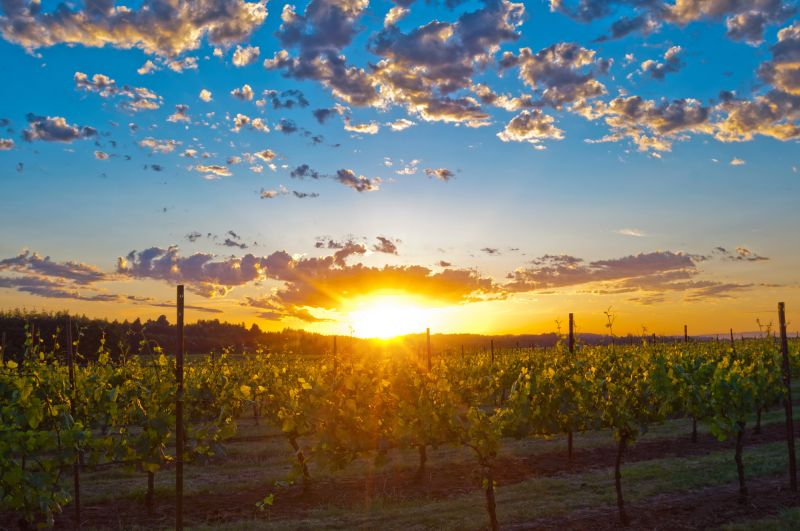
Researchers at France’s national institute for agricultural research said this week that an unusually early heat wave sweeping across the country could affect crops and livestock at a sensitive point in the growing season, with the strongest risks seen in vineyards, fruit orchards and animal production systems in the west of the country.
The warning came on Wednesday, May 27, during a press briefing by INRAE, the French agricultural research agency, as temperatures climbed well above seasonal norms across much of France. Scientists said the timing of the episode matters as much as its intensity. Many crops and animals are facing high heat weeks earlier than usual, before farms have fully shifted into summer management.
“We have extended by a month the window we had been studying for heat-wave adaptation,” said Iñaki García de Cortázar-Atauri, an agronomist and director of INRAE’s Agroclim unit in the Provence-Alpes-Côte d’Azur region. “We do not necessarily have knowledge about the quantitative and qualitative consequences on the different productions underway.”
Météo-France said the national thermal indicator set a May record on Monday at 24.6°C, then broke it again Tuesday at 24.8°C. The agency said those readings were still below the 25.3°C threshold that formally defines a heat wave, but that sustained warmth could still meet that standard if it continued for several days. On Tuesday, 17 departments in western France were placed under orange heat-wave alert.
The episode has been driven by a dome of hot air over western Europe. In several cities, including Bergerac, La Roche-sur-Yon, Niort and Poitiers, daytime highs have exceeded 35°C. Nationally, temperatures have run between +0.6°C and +2.8°C above the 1991-2020 average.
For crops, INRAE said winter cereals such as wheat and barley are at risk because many fields are now in the final stage of grain filling and maturation. Heat at this stage can affect grain development and push harvests earlier than expected. Fruit trees are also vulnerable because many species are just beginning fruit growth, when size and final yield can still be altered by stress.
The agency said vineyards may be especially exposed because many are in flowering or fruit-set stages depending on the region. Excessive heat can cause vines to slow or stop functioning temporarily to survive the stress, then resume growth later. That process can reduce berry size.
García de Cortázar-Atauri said there could also be a sudden drying of vegetation in the coming days because plants are losing water too quickly through transpiration. He said that would not necessarily cause lasting damage, but it could still affect plant condition in the short term.
For spring crops, he said the impact may be limited if water remains available. But he added that there is still too little historical data to quantify what this kind of early-season event means for yields and quality.
The researchers also noted possible mixed effects on pests and diseases. Heat can suppress some fungi and insects, but it can also weaken plants and make them more vulnerable to other pressures.
The livestock sector faces a different set of risks, according to David Renaudeau, research director at INRAE’s Pegase unit in Brittany-Normandy. He said western France is particularly exposed because it accounts for about 75% of pig production, 80% of broiler chicken production and 20% of dairy cows in France.
Renaudeau said farmers were caught off guard by how early the heat arrived. Many had not yet checked cooling systems or water supplies or adjusted feeding schedules for animals. That matters because the first heat wave of the season is often hardest on long-cycle animals such as dairy cows, laying hens and pigs, which have not yet developed physiological adaptations to repeated heat stress.
“These immediate and lingering effects cause relatively significant production losses for farmers,” he said.
INRAE cited several likely effects: lower meat output, an immediate drop of about 5% in milk production and reduced egg production. The losses do not stop when temperatures fall back to normal; they can continue afterward as animals recover.
Quality can also suffer. Eggs may be smaller and more fragile because heat disrupts calcium-phosphorus metabolism. Milk may contain less protein but more cells, which can affect payment formulas and create problems for processors.
Heat waves have also been linked to higher mortality in livestock. INRAE pointed to past episodes in 2003 and 2006 that caused mortality increases of +10% in dairy cattle and +25% in beef cattle. In poultry, losses from mortality during the 2003 heat wave reached €45 million, Renaudeau said.
The risk is highest for dairy cows early in lactation, for pigs and poultry kept indoors at high density, and during transport to slaughterhouses. Nighttime temperatures that remain high are especially problematic because animals do not get enough time to cool down.
Farmers can take some immediate steps, researchers said: maintain ventilation and cooling systems, secure water supply lines, avoid transporting animals during the hottest part of the day, reduce stocking density where possible and shift feed distribution away from peak heat hours because digestion itself generates body heat. Some producers are also adding supplements to drinking water.
Longer term, INRAE said many farm buildings need redesigning. Much of France’s livestock housing was built 20 to 30 years ago with winter protection in mind rather than summer heat stress. Newer buildings in southern France increasingly include cooling systems designed to blunt heat waves.
Researchers also pointed to changes in genetics, breeding practices and farm layout as part of future adaptation. For crop systems, they cited agroforestry, crop diversification and other approaches aimed at reducing plant stress through shade and better water management.
García de Cortázar-Atauri said there is no single solution that works everywhere. Adaptation will depend on territory, crop type and farm structure.
“We need to work on adaptation by region, by sector and by type of farm,” he said. “We do not know what the next event will be in the coming weeks or months, but we know there will probably be one.”