Concours Mondial de Bruxelles Revamps Wine Awards to Appeal to Younger, Less Experienced Consumers
Organizers shift focus from technical ratings to accessible language and engaging experiences as traditional medals lose influence.
2026-02-04
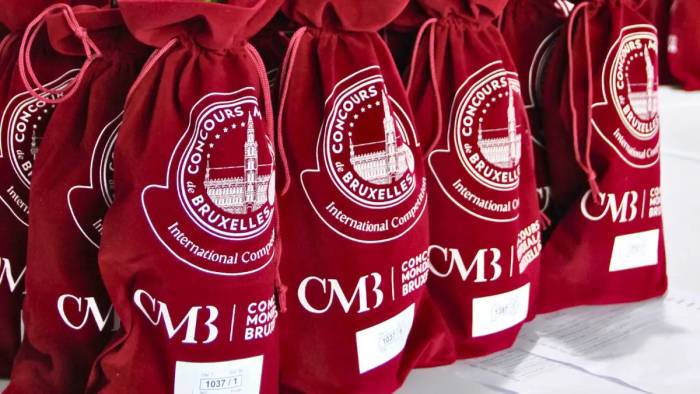
Wine competitions are facing new challenges as traditional awards and high scores are no longer enough to influence consumer choices. This shift is particularly evident among younger generations and occasional wine drinkers, who are less likely to be swayed by medals or numerical ratings. The Concours Mondial de Bruxelles, one of the most recognized international wine competitions, is rethinking how it communicates the value of its winning wines.
Baudouin Havaux, president of the Concours Mondial de Bruxelles, addressed these changes in a recent article published by Il Corriere Vinicolo. He pointed out that wine consumption is declining in many markets, and younger consumers are moving away from both wine and other alcoholic beverages. According to Havaux, the problem is not only what is communicated about award-winning wines but also how this information is presented. The industry often relies on technical language and complex messages that can seem exclusive or difficult to understand for those who are not experts.
This issue is compounded by the proliferation of awards, rating systems, and symbols that can confuse rather than guide consumers. For experienced wine enthusiasts, medals and scores may appear self-referential. For newcomers, the abundance of scales and subtle differences in ratings make it hard to know what to expect from a bottle.
Gabriele Gorelli, a well-known figure in the wine world, has also commented on this trend. He argues that wine is almost unique among consumer products in that it sometimes judges its own customers for lacking expertise. This attitude can create an unbalanced and unwelcoming relationship between producers and consumers.
In response to these challenges, the Concours Mondial de Bruxelles is developing a new communication strategy based on three main principles: trust, accessibility, and experience. Trust comes from the competition’s selective process and rigorous tasting methods. Accessibility involves simplifying language and using visual tools such as pictograms, aroma wheels, and concise tasting notes. These tools help translate technical descriptions into more immediate sensory profiles that are easier for all consumers to understand. Artificial intelligence is also being used to support this effort.
The third principle, experience, focuses on making wine more enjoyable and educational. The goal is to connect wine with conviviality, pleasure, and discovery rather than just technical evaluation. By emphasizing these aspects, organizers hope to attract a broader audience and encourage people to try new wines without feeling intimidated.
The Concours Mondial de Bruxelles’ new approach reflects broader changes in the wine industry as it adapts to evolving consumer habits. As traditional methods of recognition lose their impact, competitions and producers alike are searching for ways to make wine more approachable and relevant for today’s drinkers. The hope is that by building trust, making information accessible, and focusing on positive experiences, more people will feel comfortable choosing a bottle of wine—perhaps even one more than usual.

Founded in 2007, Vinetur® is a registered trademark of VGSC S.L. with a long history in the wine industry.
VGSC, S.L. with VAT number B70255591 is a spanish company legally registered in the Commercial Register of the city of Santiago de Compostela, with registration number: Bulletin 181, Reference 356049 in Volume 13, Page 107, Section 6, Sheet 45028, Entry 2.
Email: [email protected]
Headquarters and offices located in Vilagarcia de Arousa, Spain.