India’s Wine Imports Surge 50% as EU Nears Landmark Trade Deal Covering 2 Billion People
Tariff cuts and regulatory reforms fuel rapid growth, with imported wines projected to reach over 30% market share by 2030
2026-01-20
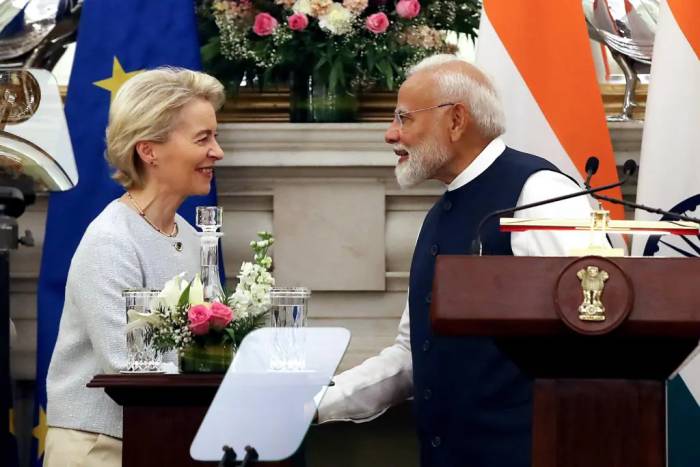
The European Union is on the verge of finalizing a major free trade agreement with India, following the recent signing of a historic deal with Mercosur. Ursula von der Leyen, president of the European Commission, described the EU-Mercosur pact as a “historic breakthrough” after 25 years of negotiations and said that the EU is now “at the doorstep” of an even larger agreement with India. She made these remarks during her address at the World Economic Forum in Davos, Switzerland.
Von der Leyen emphasized that the EU-Mercosur agreement creates the world’s largest free trade area, covering more than 20% of global GDP and including 31 countries and over 700 million consumers. The agreement aligns with the Paris Agreement on climate change and is part of the EU’s broader strategy to adapt to a tense geopolitical environment by accelerating progress in areas such as artificial intelligence, energy integration, and resource supply chains.
She stated that the deal with Brazil, Argentina, Paraguay, and Uruguay sends a message to the world that the EU chooses “fair trade over tariffs; cooperation over isolation; and sustainability over exploitation.” Von der Leyen also highlighted that the EU will not stop with Latin America. She recalled new agreements reached in 2025 with Mexico, Indonesia, and Switzerland, ongoing negotiations with Australia, and talks with countries such as the Philippines, Thailand, Malaysia, and the United Arab Emirates.
The focus now shifts to India. After Davos, Von der Leyen plans to travel to New Delhi for a bilateral summit on January 27, where she will be joined by Indian Prime Minister Narendra Modi and European Council President Antonio Costa. The goal is to sign what some officials have called “the mother of all agreements,” which would create a market of 2 billion people—nearly a quarter of global GDP—and give Europe a first-mover advantage in one of the world’s fastest-growing economies.
Negotiations between Brussels and New Delhi have faced challenges. The EU has pushed for greater access to India’s protected market for automobiles, wine, and dairy products. India has sought better terms for its textile and agricultural exports to Europe. Global trade instability has added urgency: last year, India faced punitive tariffs up to 50% from its top trading partner, the United States, due to its purchases of Russian oil. More recently, former U.S. President Donald Trump warned of new 25% tariffs on countries trading with Iran—a move that has raised concerns in New Delhi.
Since facing higher U.S. tariffs, India has signed new trade deals with partners such as the United Kingdom, New Zealand, and EFTA (Iceland, Liechtenstein, Switzerland, Norway). The EU-India agreement is seen as critical for both sides to diversify away from reliance on China and Russia.
For Europe’s wine sector—producers in France, Italy, Spain, and beyond—the Indian market has become an immediate strategic priority. Historically high federal tariffs (150%) on imported wine were cut to 100% in February 2025 as a goodwill gesture ahead of this deal. The free trade agreement is expected to further reduce these tariffs over several years—potentially down to 25% for premium wines—bringing them closer to those enjoyed by Australian wines under their own trade pact with India.
State-level taxes remain a challenge due to India’s federal structure. However, Maharashtra—the country’s most important wine-producing state—exempted wine from recent increases in excise taxes on spirits in June 2025. This move made imported wines more competitive against local whiskies and rums. In Delhi and other key markets like Bangalore and Mumbai, demand for imported wine is rising among young professionals and women—a shift from traditional preferences for high-proof spirits.
India’s wine market is growing rapidly but remains small compared to its population size. In 2025, imports rose by more than 50% in volume year-on-year. Bag-in-box wines saw explosive growth as consumers sought value formats for home consumption and parties. Urban centers such as Mumbai (Maharashtra), Delhi NCR (National Capital Region), Bangalore (Karnataka), Pune, Chandigarh, and tourist destinations like Goa are leading this trend.
Domestic producers such as Sula Vineyards dominate entry-level segments but are increasingly focused on premiumization. Sula controls about 60-65% of the market and leverages wine tourism at its Nashik vineyards to build brand loyalty. Australian wines currently lead among imports by volume thanks to lower tariffs under their bilateral agreement; they account for nearly 39% of imported wine volume as of late 2025.
European wines compete primarily on prestige and value rather than price or volume. French wines command high average import prices—over $11 per liter—and are favored in luxury hotels and corporate gifting. Italian wines are growing fast due to their popularity with Indian cuisine and sparkling wines like Prosecco.
Logistics have improved significantly in recent years. Investments in cold chain infrastructure by global logistics firms have reduced spoilage risks during transport from port to warehouse. Quick commerce platforms such as Blinkit and Zepto now offer refrigerated delivery within minutes in cities where home alcohol delivery is legal.
Regulatory changes are also making it easier for European exporters: new labeling rules align more closely with international standards; Champagne and Cava can now be imported without technical barriers related to sugar content; wines with protected geographical indications benefit from expedited customs clearance under a “Green Channel” negotiated by the EU.
Looking ahead to 2030-2035, analysts project that India’s wine market could grow from $300-400 million today to over $1 billion by 2030—a compound annual growth rate above 15-20%. The share of imported wines could rise from around 15-20% today to more than 30% by decade’s end if tariff reductions proceed as planned.
The upcoming EU-India free trade agreement represents a turning point for European wine exporters seeking alternatives amid uncertainty in traditional markets like the U.S. and China. With a young population entering legal drinking age at a rate of about 20 million people per year—and growing interest among women consumers—India offers both scale and long-term potential for premium European wines.
The finalization of this agreement will mark not just an end point but a starting line for European producers aiming to capture market share in what may become one of the world’s most dynamic wine markets over the next decade.

Founded in 2007, Vinetur® is a registered trademark of VGSC S.L. with a long history in the wine industry.
VGSC, S.L. with VAT number B70255591 is a spanish company legally registered in the Commercial Register of the city of Santiago de Compostela, with registration number: Bulletin 181, Reference 356049 in Volume 13, Page 107, Section 6, Sheet 45028, Entry 2.
Email: [email protected]
Headquarters and offices located in Vilagarcia de Arousa, Spain.