Côte Vermeille Wine Cooperative Faces Collapse With €20 Million Debt and 60,000 Hectoliters of Unsold Stock
Plummeting sales threaten half the region’s vineyards, risking jobs, heritage, and the future of France’s historic sweet wines
2026-01-14
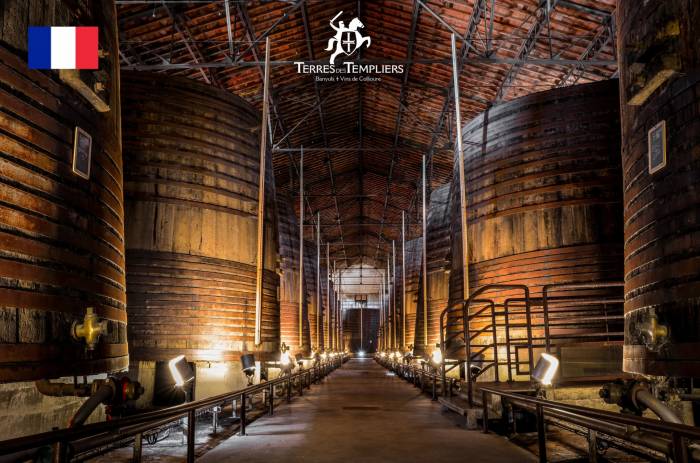
The wine region of the Côte Vermeille in southern France is facing a crisis that threatens its future. The Groupement Interproducteurs Collioure Banyuls (GICB), known as Terre des Templiers, is the largest cooperative producing the renowned Collioure and Banyuls wines. The cooperative is now on the brink of collapse, burdened by nearly 20 million euros in debt. Sales have plummeted, and many vineyards in the area could soon be abandoned.
In December 2025, GICB president Laurent Barreda sent a letter to cooperative members warning of the dire situation. He described a 2025 harvest of less than 9,000 hectoliters and a cash flow that has dried up. “The wine world is doing very badly, nothing is selling,” he wrote. The cooperative has been under financial protection since 2014, following years of mounting debt that began in the early 2000s. Now, it faces court-ordered restructuring. Barreda told members that as stakeholders, they share responsibility for the debt.
There are rumors of a potential buyer who could rescue the GICB, but no details have been made public. The cooperative represents about 40 to 45 percent of the vineyards in the Côte Vermeille region. Jean-Michel Solé, mayor of Banyuls and former GICB president, said the problems go back 15 to 20 years. The region’s fifty or so producers are split between GICB, two smaller cooperatives (Etoile and Les Dominicains), and independent winemakers.
Solé expressed concern for Banyuls’ economy and social fabric, as dozens of jobs are at risk if the cooperative fails. He also warned that abandoned vineyards could become overgrown and increase fire risk, while damaging the area’s heritage and tourism appeal. “Parents stopped encouraging their children to take over because it was too difficult,” he said. “Growers’ incomes fell as costs rose but grape prices did not.”
A new GICB winery opened in 2011 with capacity for 23,000 hectoliters, but sales never matched production. Solé recalled that when he was president, GICB accounted for 70 percent of local wine output and had annual sales of 37 million euros. But even then, debts were already high—9 million euros—and losses reached 1.2 million euros per year by 2004. Export sales remain low at around five percent of revenue, and supermarket sales have dropped from 10,000 to just 1,000 hectoliters.
Romuald Peronne, president of the Côte Vermeille wine syndicate, sees this as mainly a commercial problem. Wine consumption has fallen sharply across France and Europe. The region has about 60,000 hectoliters in stock—enough to last three to six years even without new production—but sales are not keeping up. Peronne believes vineyard area will need to shrink from today’s 1,200 hectares to just 500 or 600 hectares.
Peronne himself has abandoned four hectares at his Clos Saint Sébastien estate. While independent producers also face challenges, they can adapt more easily than a large cooperative with high fixed costs like GICB. He predicts that only five or six cooperatives will survive in the department within five years—a sharp decline from about forty thirty years ago.
Some growers are considering switching to other crops such as olives or almonds or even livestock farming. In Cerbère, many former vineyards are already overgrown. Georges Roque, a small GICB member with one hectare of vines and a former president of the cooperative, said many growers are anxious about their future and lack information about what will happen next.
The wine syndicate is exploring ways to adapt vineyards to changing demand and climate conditions. Director Igor Akhiridinov said some plots could be moved higher up into cooler areas better suited for lighter wines like whites and rosés rather than traditional strong reds or sweet wines. A network of soil sensors is being used to study these possibilities.
Efforts are also underway to improve the image of Banyuls wines among younger consumers through food tours and communication campaigns. There is even an attempt to gain UNESCO recognition for these historic sweet wines.
Local wine merchant Guillaume Geniez believes Collioure and Banyuls have untapped potential as premium products with long aging potential—comparable to Port from Portugal—but says they are undervalued both locally and abroad. He regrets that even local bars often do not serve these wines.
As the region faces this transition, questions remain about how much of its unique landscape and winemaking tradition will survive—and who will bear the cost if it does not. The outcome will shape not only local agriculture but also tourism and cultural identity along this stretch of Mediterranean coast.

Founded in 2007, Vinetur® is a registered trademark of VGSC S.L. with a long history in the wine industry.
VGSC, S.L. with VAT number B70255591 is a spanish company legally registered in the Commercial Register of the city of Santiago de Compostela, with registration number: Bulletin 181, Reference 356049 in Volume 13, Page 107, Section 6, Sheet 45028, Entry 2.
Email: [email protected]
Headquarters and offices located in Vilagarcia de Arousa, Spain.