Bulk Wine Surges to Majority Market Share in UK as Young Professionals Drive Industry Transformation
Sustainability, innovation, and flexible career paths attract a new generation to a sector once seen as low quality.
2026-01-13
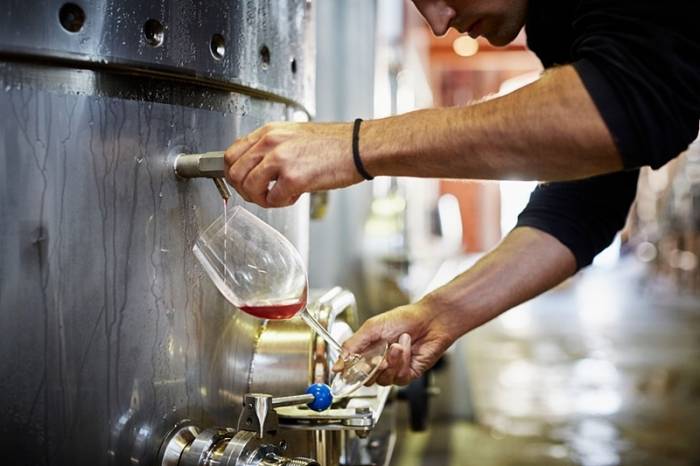
The global wine industry is seeing a significant shift as bulk wine moves from a secondary role to a central position in the market. This change is drawing attention from both established players and a new generation of professionals, who are attracted by the sector’s focus on innovation, sustainability, and efficiency. This is according to a recent report by The Drinks Business, which highlights how this category attracts young professionals and benefits from innovations in packaging, logistics and sustainability.
At the World Bulk Wine Exhibition held in Amsterdam in late November 2025, the energy was palpable. Young professionals in their 20s and 30s filled the venue, discussing technical advances in packaging and logistics. The event highlighted how bulk wine has become a meeting point for various parts of the supply chain, from producers to logistics experts and packaging designers. Stephan Marusczyk, development manager at VinLog, described the exhibition as essential for anyone involved in the industry, noting that its international scope reflects how interconnected and forward-thinking the sector has become.
Historically, bulk wine suffered from an image problem. It was often seen as a way to dispose of surplus or lower-quality wine, with little attention paid to quality or innovation. However, this perception is changing rapidly. Paul Braydon, director of business development and marketing at Kingsland Drinks in Manchester, points out that bulk wine today is about strategy rather than shortcuts. Kingsland recently supplied a Napa Cabernet Sauvignon in bulk to a UK retailer at a price point previously thought impossible for such a product. This example demonstrates how premiumization is now part of the bulk wine story.
Major wine markets like the United States, United Kingdom, and Germany rely heavily on bottling imported bulk wine locally. This approach allows for greater flexibility and cost savings while reducing environmental impact. Australia remains one of the largest suppliers of bulk wine globally, further emphasizing the international nature of this trade.
One reason for the influx of young professionals into the sector is the opportunity for rapid innovation. Unlike traditional winemaking, which is often bound by heritage and strict regulations, bulk wine offers room for experimentation with new formats such as canned wines, bag-in-box products, lightweight bottles, and ready-to-drink cocktails. Maria Kurteva, a brand manager at Corten-Vin Companie SRL in Moldova, says that working in bulk wine allows her to bring new ideas to market quickly—something not always possible in more traditional settings.
Technological advancements have also played a key role in transforming bulk wine logistics. Flexitanks—large containers used to transport thousands of liters of wine—have evolved into sophisticated vessels that protect quality during long-distance shipping. These improvements attract graduates with backgrounds in engineering and supply chain management who might not have considered careers in traditional winemaking.
Sustainability is another major draw for younger workers. Shipping large volumes of wine in flexitanks instead of glass bottles significantly reduces carbon emissions. Local bottling means glass travels shorter distances, further lowering environmental impact. Kingsland Drinks has implemented a closed-loop system where bottles are produced within 30 miles of its facility—a model that appeals to climate-conscious employees and consumers alike.
The culture within the bulk wine sector is also changing. Margherita Furia, a student at Kedge Business School who works for her family’s winery in Italy, describes the environment as less intimidating than other parts of the industry. She notes that people are more willing to share knowledge and support newcomers. Andrew Porton of Lanchester Group adds that while competition exists, there is also camaraderie among companies facing common challenges such as rising costs and shifting consumer preferences.
Despite its advantages, working with bulk wine presents unique challenges. Mistakes can be costly when dealing with tanks holding hundreds of thousands of liters. The pressure to maintain quality at scale requires careful management and attention to detail.
Some industry leaders believe that younger generations are drawn to transparency and efficiency over luxury branding. Evangy Avetisian of Monochrome Group argues that young people want to understand where products come from and how they are made—a mindset well suited to the open processes found in bulk wine production.
Opportunities for career growth are another factor attracting talent. At Kingsland Drinks, employees can move between roles in sampling, commercial operations, buying, and category management across multiple regions and product types. This flexibility contrasts with traditional paths that often require inheriting land or pursuing specialized certifications.
Consumer habits are also evolving. Younger drinkers are choosing lower-alcohol options and alternative packaging formats over classic bottles. The bulk sector’s ability to adapt quickly makes it well positioned to meet these changing demands.
Bulk wine now accounts for most of the wine consumed in markets like the UK—a sign that it has become an entry point for many new consumers worldwide. The sector’s openness to innovation and willingness to embrace new ideas make it an attractive place for young professionals looking to shape the future of wine.
As the industry continues to evolve, bulk wine stands out as a hub for creativity, sustainability initiatives, and global collaboration. The next generation is not only participating but leading these changes—helping redefine what it means to work in wine today.

Founded in 2007, Vinetur® is a registered trademark of VGSC S.L. with a long history in the wine industry.
VGSC, S.L. with VAT number B70255591 is a spanish company legally registered in the Commercial Register of the city of Santiago de Compostela, with registration number: Bulletin 181, Reference 356049 in Volume 13, Page 107, Section 6, Sheet 45028, Entry 2.
Email: [email protected]
Headquarters and offices located in Vilagarcia de Arousa, Spain.