Sake Exports Hit Record 3.45 Million Cases After UNESCO Heritage Recognition Spurs Global Demand
Japan’s centuries-old koji brewing tradition gains new international fans as education and fine dining fuel sake’s worldwide rise
Wednesday, January 7, 2026
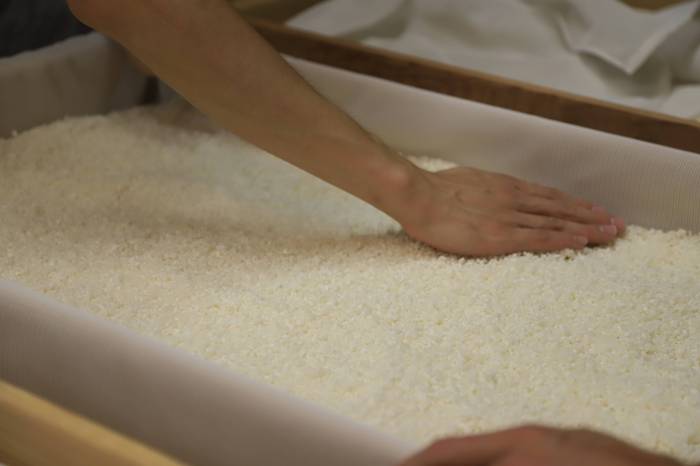
One year has passed since UNESCO recognized the traditional knowledge and skills of sake-making with koji mold in Japan as an Intangible Cultural Heritage. The registration, which took place on December 5, 2024, marked a significant milestone for Japan’s brewing industry. Rather than focusing on a single technique or ingredient, UNESCO’s decision acknowledged the collective knowledge, customs, and craftsmanship that have shaped sake-making for centuries. This includes the work of toji (master brewers) and kurabito (brewery workers), as well as the cultural practices that have allowed these traditions to be handed down through generations.
Sake-making in Japan is believed to have taken its current form over 500 years ago. Central to this process is koji mold, a group of microorganisms that play a key role in saccharifying and fermenting raw materials. The main species used are Aspergillus oryzae (yellow koji mold), Aspergillus luchuensis (black koji mold), and Aspergillus kawachii (white koji mold). These molds have been carefully selected and refined at Japanese breweries from among tens of thousands of mold species worldwide. In sake production, yellow koji is grown on steamed rice to create rice malt, while black and white koji are used in making shochu and awamori, often on rice or barley.
The process begins with tane-koji, or koji starter, which consists of spores produced by specialized makers since the 18th century. Each brewery chooses its koji mold based on the desired flavor profile, local climate, and available raw materials. The enzymes produced by different strains of koji mold affect the taste and aroma of the final product. While other East Asian countries also use fermentation cultures, Japan’s systematic cultivation of koji on steamed ingredients for foods like miso, soy sauce, mirin, and sake is unique.
In 2024, sake exports reached a record high, with shipments to 80 countries totaling 3.45 million nine-liter cases and an export value of 43.5 billion yen. From January to October 2025, exports continued to grow at an annual rate of 8 percent. The Japan Sake and Shochu Makers Association (JSS) has focused on education and experiential marketing in regions where sake culture is still developing, such as Eastern Europe and Latin America.
In Poland, Dawid Sojka of SommEvent has introduced sake through mandatory training sessions and tastings before purchase. He reports that about 90 percent of participants find a sake they enjoy after sampling different varieties. In Western Europe, sake is becoming more common in fine dining settings; about one-fifth of France’s Michelin three-star restaurants now offer it. Chefs like Andoni Luis Aduriz at Mugaritz in Spain have incorporated koji into their cuisine for its transformative properties—breaking down starches into sugars and proteins into amino acids—resulting in new flavors and textures that pair well with sake.
Luke French, chef at Jöro in northern England, also highlights the importance of koji in his kitchen for its ability to create unique flavors through various preparations.
The preservation of this heritage relies not only on documentation but on people who continue to practice and teach these techniques. Tatsuya Ishikawa, Chairman of the Japan Toji Guild Association, emphasizes the need to foster environments where new generations can learn traditional methods directly from experienced brewers.
The JSS represents around 1,600 producers of sake, shochu, awamori, and mirin across Japan. Its mission includes creating demand for these national beverages to ensure their continued production and transmission. In September 2025, during the ASI Asia & Pacific Best Sommelier Contest in Kuala Lumpur, a masterclass introduced participants to sake’s cultural significance. Reese Choi from Hong Kong, who won Best Sommelier at the event, described sake as an embodiment of Japanese culture.
On December 6, 2025, a first-anniversary event was held in Asakusa, Tokyo to mark one year since UNESCO’s recognition. Brewers, educators, mixologists, chefs, and other stakeholders gathered to discuss the future of koji-based sake-making. Despite their different backgrounds, attendees shared a commitment to preserving and expanding this tradition both within Japan and internationally.
The JSS plans to continue promoting sake and related beverages worldwide while supporting efforts to pass down brewing techniques rooted in koji culture. As global interest grows in Japanese food and drink traditions, the recognition by UNESCO serves as both an honor and a responsibility for those involved in this centuries-old craft.