Texas wine industry sees rapid growth and rising acclaim on national and international stage
State’s wineries win record awards as population boom, research, and tourism fuel transformation of local wine sector
2025-04-30
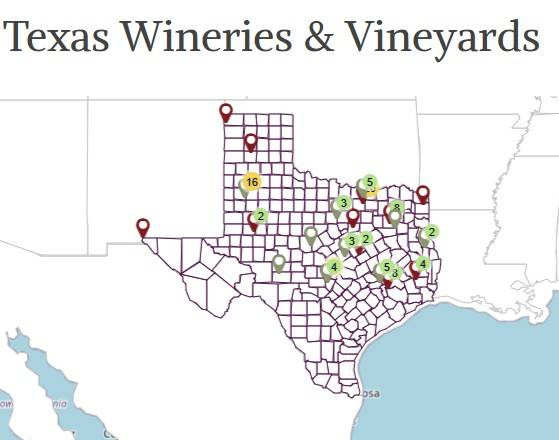
In recent years, Texas has emerged as a significant player in the American wine industry, challenging long-held assumptions about where top-quality wines are produced. The state, once known more for cattle and oil than vineyards, now boasts a rapidly growing wine sector. According to Texas Wine Growers, the number of wineries in Texas has increased from about 20 in the 1980s to approximately 450 today. Some sources, such as the Texas Wine Lovers website, put the current figure at over 500. This growth is not just in quantity but also in quality, with Texan wines winning a record number of awards at international competitions in 2024.
The roots of winemaking in Texas go back centuries. Spanish missions were producing Communion wine as early as the 1600s. Val Verde Winery, located near the Mexican border and established in 1883, is one of the oldest continuously operating wineries in the United States. However, the industry suffered setbacks during Prohibition and due to the rise of other agricultural industries like cotton and oil. It was only in the past two decades that Texas wine began its modern resurgence.
John Rivenburgh, president of Texas Wine Growers and owner of Kerrville Hills Winery, describes this period as “modern Texas wine rising.” He notes that most of the industry’s exponential growth has occurred in the last ten to fifteen years. The focus has shifted from simply increasing production to improving grape-growing techniques and winemaking practices. Traditionally, most wineries were concentrated in regions like Texas Hill Country and Texas High Plains, but new vineyards are now appearing across the state.
Jeff Cope, who runs Texas Wine Lovers, has observed this rapid expansion firsthand over his fifteen years covering the industry. He recalls that when he started visiting wineries, Texas was considered decades behind California. Today, however, Texan wines are being recognized for their quality both nationally and internationally. At the San Francisco Chronicle Wine Competition in January 2024, Texan wines won 295 awards—second only to California. In total, 105 Texan wineries received 635 top awards at global competitions last year.
Industry experts attribute this improvement to advances in viticulture research and better adaptation of grape varieties to local climates. Elizabeth Carter from the University of New Hampshire points out that scientific research has enabled regions previously seen as unsuitable for wine production to thrive. Anna Katharine Mansfield from Cornell University highlights the role of Texas A&M AgriLife Extension in providing technical support to local producers.
Marketing has also played a crucial role in changing perceptions about Texan wine. Rivenburgh admits that many Texans used to dismiss local wines in favor of those from California or Europe. However, newcomers to Texas—especially those from California—have embraced local wines and helped shift attitudes within the state.
Texas’s population boom has contributed to this trend. Census Bureau data shows that between July 2020 and 2024, the state’s population grew from 29.1 million to 31.3 million. In 2022 alone, more than 100,000 people moved from California to Texas. This influx has brought new consumers who are open to exploring local products.
Professor Tony V. Johnston notes that wine tourism has become an important part of the industry’s growth strategy. The development of wine trails and increased investment have attracted visitors and capital alike. Large areas of dry land with low insect populations have made it easier for new vineyards to flourish.
Despite these successes, most Texan wine is still consumed within state borders. Justine Vanden Heuvel from Cornell University observes that only about one percent of Texan wines are sold outside Texas. This suggests significant potential for future expansion into national and international markets.
Industry leaders believe that with continued investment and innovation, Texas could become a major force in American winemaking over the next two decades. Rivenburgh envisions a future where Texas rivals California as a leading wine region in the United States, citing affordable land and a business-friendly environment as key advantages.
As more consumers discover what Texas has to offer, both within its borders and beyond, the Lone Star State’s reputation as a serious wine producer seems set to grow even further.
