European wine sales surge in U.S. as new tariffs drive consumer stockpiling
Retailers report panic buying and rising concerns over future price hikes amid escalating trade tensions with Europe
2025-04-08
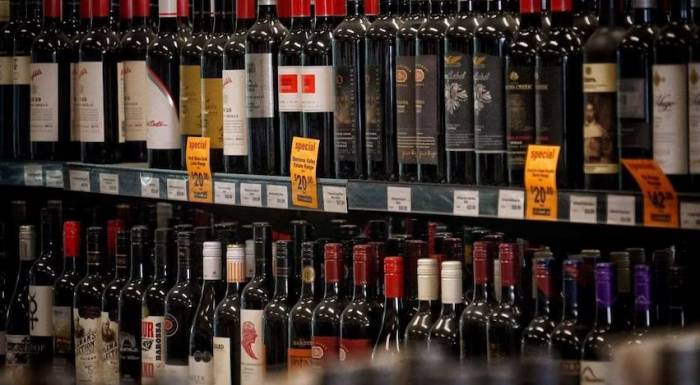
Wine retailers and importers across the United States are seeing a surge in demand for European wines as new tariffs take effect this week. The 20 percent tariff, announced by the Trump administration, applies to most wines imported from the European Union, including major producers like France and Italy. These countries supply a large share of the 37 percent of wine consumed in the U.S. that comes from abroad.
The announcement followed a March 13 social media post by former President Donald Trump, who floated the idea of a 200 percent tariff on European wines. Although that extreme measure has not been implemented, the current 20 percent tariff has already triggered changes in consumer behavior. Michael Osborn, founder of Wine.com, said his company saw an immediate shift in sales toward imported wines after Trump’s post. “Customers are over-indexing with European wine,” he said.
At Zachys, a family-owned wine shop in Chester, New York, owner Jeff Zacharia reported that customers began holding off on pre-arrival orders for high-end European wines once they realized those bottles might be subject to tariffs upon arrival. In recent days, he said, there has been a noticeable increase in customers buying up existing stock. “People know that once we have to restock, prices will go up,” he said.
The new tariffs also affect wines from other regions: South African imports face a 30 percent duty, while wines from Argentina, Australia, Chile and New Zealand are subject to a 10 percent tariff. Retailers across the country are seeing similar patterns of early buying as customers try to avoid future price hikes.
Daniel Posner, owner of Grapes the Wine Company in White Plains, New York, said his store experienced a wave of panic-buying when news of potential tariffs first broke. While that rush slowed down temporarily, he expects it to pick up again as consumers realize prices are unlikely to drop anytime soon.
Retailers say they can continue selling wine at current prices for a few months using existing inventory. But once they need to restock under the new tariff structure, prices will rise. For many importers and distributors, stockpiling isn’t feasible due to limited storage space and cash flow constraints.
Kate Laughlin, co-owner of Martine’s Wines, an importing company specializing in French wines, explained that her clients — mostly restaurants and small retailers — don’t have the resources to buy large quantities in advance. “They don’t have large stockpiles of cash,” she said. “Everybody is really concerned and worried.”
In Washington D.C., Max Evans of A. Litteri — a specialty store known for Italian food and wine — said his customers are aware of the situation but haven’t started stockpiling yet. Only one of his suppliers has ordered extra inventory ahead of the tariffs. Most others are taking a cautious approach.
Industry professionals point out that wine production is not easily relocated or replaced. American wineries cannot quickly fill the gap left by reduced imports from Europe. Even when domestic alternatives exist — such as sparkling wines made in California — they often differ significantly in taste and production methods from their European counterparts.
For businesses like A. Litteri or Martine’s Wines that focus on specific regions or styles, pivoting to other products is not a simple option. Laughlin emphasized that her business relies on long-standing relationships with French winemakers built over decades. Posner echoed this sentiment: “When the tariffs first came up, I had friends who were like, ‘Oh, just pivot.’ Well, I don’t know what to pivot to if I’m staying in this industry.”
There is also confusion among consumers about who bears the cost of tariffs. Laughlin clarified that it’s not foreign producers who pay; it’s U.S.-based importers like her company who must cover the added expense directly. “That creates a tremendous amount of economic hardship for my U.S.-based business,” she said.
This is not the first time U.S.-E.U. trade tensions have affected wine imports. In 2019, during a dispute between aircraft manufacturers Airbus and Boeing, the Trump administration imposed tariffs on French and Spanish wines that lasted 18 months. At that time, producers and sellers shared some of the burden to keep prices stable for consumers.
This time around, industry insiders believe suppliers may be less willing to absorb costs or offer discounts. Zacharia noted that wine retail operates on thin margins and there’s little room to offset additional expenses without raising prices.
The situation could worsen if further tariffs are imposed. Trump has threatened a 200 percent tariff on E.U. wines if the European Union proceeds with its own proposed 50 percent tariff on American whiskey — part of an ongoing trade dispute between both sides. The E.U.’s decision was delayed by two weeks but remains unresolved.
If enacted, such steep tariffs could have severe consequences for U.S.-based wine businesses. Tom Wark, executive director of the National Association of Wine Retailers, warned that triple-digit duties would be devastating for importers and retailers alike. “It’s a whole different ballgame,” he said.
For now, many in the industry are bracing for higher costs and uncertain futures as they navigate shifting trade policies and changing consumer behavior driven by fear of rising prices.

Founded in 2007, Vinetur® is a registered trademark of VGSC S.L. with a long history in the wine industry.
VGSC, S.L. with VAT number B70255591 is a spanish company legally registered in the Commercial Register of the city of Santiago de Compostela, with registration number: Bulletin 181, Reference 356049 in Volume 13, Page 107, Section 6, Sheet 45028, Entry 2.
Email: [email protected]
Headquarters and offices located in Vilagarcia de Arousa, Spain.