New Survey Highlights Growth and Challenges in Italian Wine Tourism
Study reveals increased revenue for wineries but rising costs and lack of skilled staff pose significant challenges.
2025-03-19
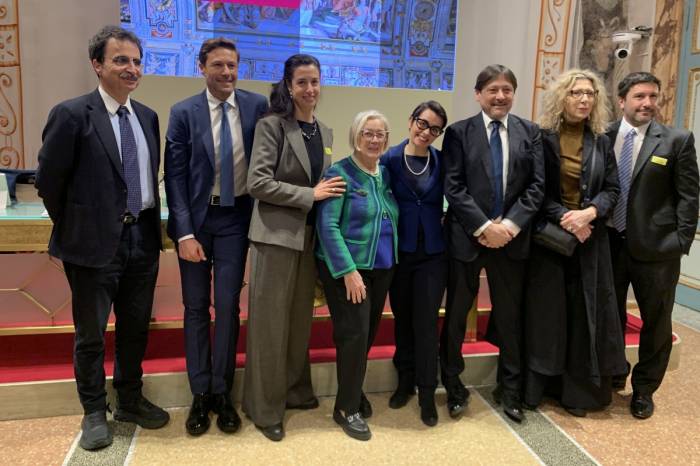
The first survey by the Movimento Turismo del Vino and the Ceseo-Lumsa was presented at Palazzo Giustiniani in Rome, marking the launch of a new observatory. The event, moderated by Massimiliano Ossini, featured notable figures such as Anna Isabella Squarzina, Donatella Cinelli Colombini, Violante Gardini Cinelli Colombini, Antonello Maruotti, Francesco Bonini, and Dario Stefàno. The study, titled "Wine Tourism: New Challenges and Opportunities," was conducted by Antonello Maruotti with contributions from Pierfrancesco Alaimo Di Loro, Martín Farfan, and Federico Marsilii. It surveyed 237 wineries that are members of the Movimento Turismo del Vino, the first entity to join the new research center.
Violante Gardini Cinelli Colombini, president of the Movimento Turismo del Vino, emphasized the study's comprehensive look at the diverse and dynamic nature of the wineries involved. The research aims to highlight the sector's unique features while systematically analyzing challenges and opportunities. The findings will help develop training courses for wine tourism businesses, provide regional presidents with reliable data, and encourage members to enhance their offerings, solidifying their leadership in Italian wine tourism.
The study focused on four main areas: winery profiles, communication channels, hospitality, and the role of artificial intelligence (AI). It highlighted the integration of complementary activities, the emergence of new professional roles, and digitalization. Initial findings show that wine tourism is thriving, with 53% of wineries reporting increased revenue. Among these, 24% experienced double-digit growth. However, rising costs are a concern for 81% of wineries, affecting profit margins. Small businesses, which make up a significant portion of the sample, are particularly vulnerable.
Professionalization and skills within wineries were also examined. Currently, only 38% of wine tourism businesses have staff with specific expertise in wine hospitality. In many cases, the owner or other employees handle visitor interactions. Financial constraints often prevent investment in qualified personnel. Despite this, the hospitality aspect is crucial for the Movimento Turismo del Vino, which has been redefining wine tourism for over 30 years. The association aims to make winery experiences more accessible and inclusive, as demonstrated by improved hospitality standards and a variety of complementary activities.
The survey revealed that the landscape is a major draw for visitors, with 33% of wineries offering vineyard picnics and 30% organizing vineyard walks. Additionally, 43% of wineries are organic, and 38% adhere to sustainable agriculture standards, surpassing the national average. Notably, 26% of wineries provide electric car charging stations. To counter criticisms of monotonous offerings, the study found that 65% of wineries focus on a limited number of experiences, while 35% offer a wider range of activities.
Wineries also emphasize local products, with 87% offering regional specialties during tastings. A quarter of them host dinners with producers, and 20% offer cooking classes. Family-friendly experiences are also a priority, with 38% organizing activities for children, including play areas and educational farm visits. Wine experience costs vary widely, from 15 to 150 euros, with an average of 25 euros.
The research highlights the effectiveness of weekend tourism, with over half of the wineries open on Sundays and 85% accessible year-round. A significant 68% welcome visitors without appointments. This diverse offering reflects the varied nature of the Movimento Turismo del Vino's members, who cater to different audiences, including nature lovers, sports enthusiasts, and families. A recent partnership with Agricamper Italia aims to support open-air tourists and promote rural development, contributing to more sustainable tourism.
Digitalization is another key focus. Websites are essential tools, though not fully utilized for visibility and customer engagement. Many wineries receive fewer than 1,000 monthly visits, and 15% do not regularly track access. Similarly, email communication is underused, with 42% sending monthly updates and 33% doing so three times a year. Social media is a crucial promotional tool, with Facebook and Instagram being the most popular platforms. LinkedIn and TikTok have a smaller presence, likely due to their perceived business-to-business focus.
Despite a strong online presence, this does not always translate into increased visitor numbers. To boost direct sales, wineries are encouraged to create wine clubs, use customer relationship management (CRM) systems, and leverage AI effectively. Currently, only 20% of wineries use AI tools, primarily for digital communication, marketing, and booking management. AI is seen as a competitive advantage for enhancing personalization and operational sustainability. However, its adoption is limited, possibly due to perceived high implementation costs and the traditional nature of many wineries. These challenges represent significant hurdles for the growth of Movimento Turismo del Vino members and the broader sector.
