Trump Threatens 200% Tariff on European Wine in Response to EU Whiskey Tariff
Tensions rise as Trump demands removal of EU's 50% tariff on American whiskey, sparking market volatility and geopolitical concerns.
Thursday, March 13, 2025
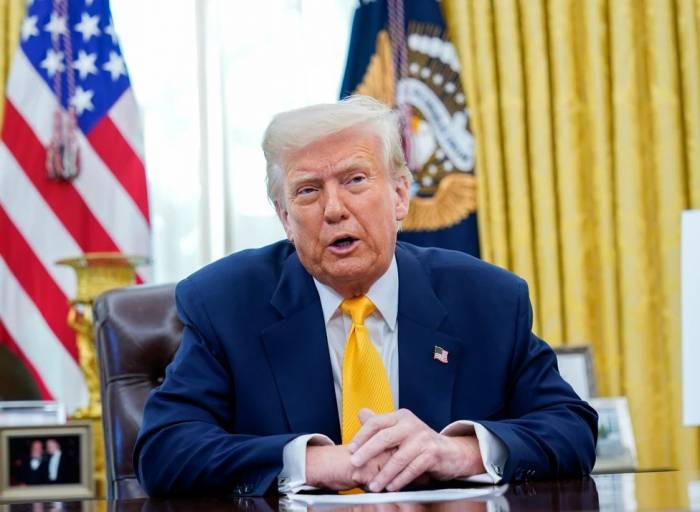
President Donald Trump has threatened to impose a 200% tariff on wines, champagnes, and other alcoholic products from France and other European Union countries. This move comes in response to the EU's decision to impose a 50% tariff on American whiskey. Trump demands the immediate removal of this tariff, which was announced by European Commission President Ursula von der Leyen. Trump argues that the United States does not have free trade but rather "stupid trade," claiming that the world is taking advantage of the U.S.
This approach mirrors Trump's recent tactics with Canada, where he threatened to double tariffs if Ontario did not remove a 25% surcharge on electricity. After negotiations, Ontario's premier agreed to remove the surcharge, which Trump hailed as a victory. Now, Trump is applying similar pressure on the EU, which he describes as one of the most hostile and abusive fiscal authorities globally, created to exploit the U.S.
Within the U.S. administration, there is growing tension, with some pointing fingers at Commerce Secretary Howard Lutnick for the erratic tariff announcements. These actions have led to market volatility, with major U.S. stock indices showing uncertainty. Treasury Secretary Scott Bassent downplayed the market's reaction, emphasizing a focus on the real economy and suggesting that volatility is not a significant concern.
Despite market and geopolitical reactions, Trump remains firm in his stance, insisting that tariffs are successful and bring in billions of dollars. He criticizes media outlets like The Wall Street Journal for opposing his trade policies, labeling them as outdated and harmful to the U.S. Trump claims that tariffs are benefiting the U.S. economy, despite rising inflation and other economic challenges.
Trump's tariff threats are part of a broader strategy to address what he sees as unfair trade practices. He believes that tariffs will open new markets for American businesses, including wine and champagne producers, even though the U.S. does not produce champagne. This approach aligns with his long-standing economic views, which date back to the 1980s.
The EU, on the other hand, has stated that it is prepared to retaliate if the U.S. imposes additional tariffs. The EU's spokesperson, Olof Gill, emphasized the desire to negotiate and avoid tariffs, which they believe only lead to losses. The EU aims to work with the U.S. to address global issues like steel and aluminum overcapacity.
Trump's tariff threats have sparked immediate reactions in financial markets, with futures falling after the announcement. However, they recovered slightly following a favorable inflation report. Trump's protectionist trade policies have been a hallmark of his administration, despite warnings from economists and business groups about their potential negative impacts.
The announcement of potential tariffs on European alcoholic products follows the implementation of U.S. tariffs on steel and aluminum imports, which prompted retaliatory measures from the EU and Canada. Trump argues that these tariffs will benefit the U.S. wine and champagne sectors, although the U.S. does not produce champagne.
The EU has confirmed that its trade commissioner is in contact with U.S. counterparts to discuss the dispute. The U.S. is the largest import market for wine and champagne globally, with significant annual sales. In contrast, U.S. exports of wine and champagne are much lower.
Trump's tariff strategy is seen as a pressure tactic to achieve immediate results, such as encouraging companies to relocate operations to the U.S. This aligns with his campaign promise to increase domestic and foreign investment in American manufacturing.
Since returning to the White House, Trump has used tariffs to address trade deficits and as leverage against countries like Mexico, Canada, and China. His administration views tariffs as a tool to pressure these countries into reducing the flow of illicit substances like fentanyl into the U.S.
The EU remains committed to negotiating with the U.S. to avoid further tariffs and address global trade issues collaboratively. However, Trump's aggressive tariff strategy continues to create uncertainty in international trade relations.