Italy Overtakes France as World's Top Wine Producer
Italy's Wine Production Up 8%, France's Down 18%
2024-09-20
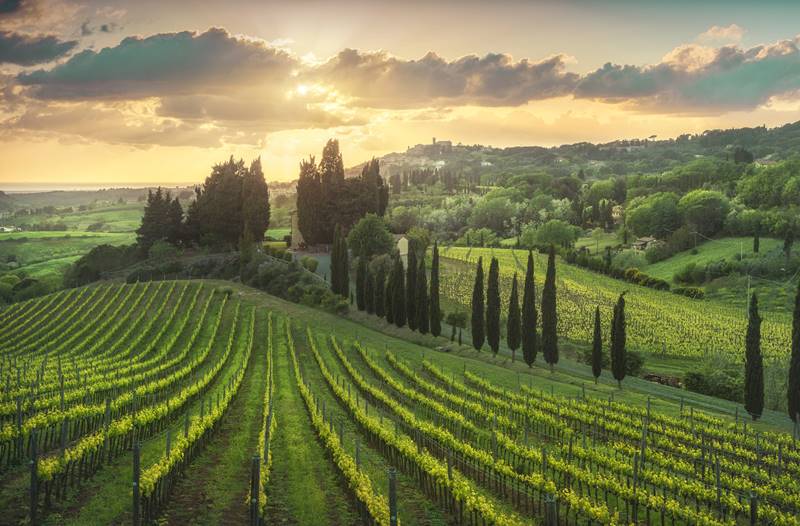
Italy is set to regain its position as the world's leading wine producer in 2024, edging out France after a brief dip in output last year. According to data from Italy's primary agricultural association, Coldiretti, the country's wine production is expected to increase by roughly 8%, reaching between 41 and 42 million hectoliters. Meanwhile, France, facing significant climatic challenges, anticipates an 18% reduction in output, with the Ministry of Agriculture forecasting a total of 39.3 million hectoliters.
This shift marks a dramatic turnaround for Italy, which saw a sharp decline in wine production in 2023, a year in which France reclaimed the top spot. Despite a range of meteorological difficulties in both nations, Italy's rebound positions it to lead the global wine industry once more, a title it has held consistently since 2007, except for brief interruptions in 2011, 2014, and again in 2023.
Italy's victory comes despite the country's ongoing battle with volatile weather patterns, which have continued to threaten its vineyards. Severe storms, hail, and droughts have disrupted the agricultural sector across various regions, complicating harvests and impacting yields. The north of Italy, for instance, faced persistent rainfall and violent hailstorms during the spring and early summer, leading to localized crop damage. At the same time, the southern regions, including the prominent wine-producing island of Sicily, have been grappling with an enduring drought.
In response to these extreme conditions, many wine producers have had to adjust their practices. Harvests in several regions were advanced due to elevated temperatures and a critical lack of rainfall, particularly in the south. Despite these obstacles, the overall increase in Italian wine production in 2024 reflects a resilience that is deeply ingrained in the country's viticultural tradition.
France's Declining Production
By contrast, France is grappling with a far more substantial drop in production. Adverse weather has wreaked havoc on many of its most renowned wine regions, with some areas seeing historic declines. The Jura region, located in eastern France, is set to experience the most severe impact, with output expected to fall by a staggering 71% due to a combination of spring frosts and mildew.
In western France, the Charente region, famous for its Cognac, is anticipated to see a 35% reduction in production, driven by similarly harsh weather conditions. Notably, hailstorms and wet weather have taken a heavy toll on the Loire Valley and Burgundy-Beaujolais, two iconic French wine areas. The Loire is projected to see a 30% reduction in yield, while the Burgundy-Beaujolais area could face a 25% decline.
The impact of these declines has rippled across the French wine industry, sparking concerns not only about the short-term loss of production but also the long-term sustainability of viticulture in regions increasingly exposed to erratic and damaging weather patterns. The recurrence of spring frosts, in particular, has raised alarms, as they have struck multiple times over the past several years, cutting into the critical early stages of grape development.
Climate Change
Both Italy and France's wine industries are being profoundly affected by the intensifying effects of climate change. The erratic weather patterns experienced by these two wine-producing giants illustrate the larger issue confronting viticulture worldwide. The susceptibility of vineyards to temperature extremes, unpredictable rain, and sudden frosts has been increasing year by year, threatening the stability of this cornerstone of European agriculture.
In Italy, this year's weather divergence between the north and the south highlights the complex challenges vintners are facing. Northern regions, like Veneto and Piedmont, may have been battered by rain and hail, but they have largely managed to bounce back, thanks in part to their established winemaking infrastructure. Meanwhile, southern regions, reliant on irrigation and consistent warm conditions, are under more significant pressure from the effects of drought.
For France, the repeated hits from frost and hail underscore a new reality for wine producers, who are finding that the traditional safeguards against such weather events are increasingly ineffective. As temperatures rise and weather events become less predictable, French winemakers are left with fewer tools to combat these challenges. The introduction of new vine varieties more resistant to heat or cold, or shifts in the timing of harvests, are potential solutions being explored by both nations, but these are costly and slow to implement.
The expected reversal of fortunes between Italy and France has significant implications for the global wine market. Italian wine, already a major export, is likely to see increased demand as its production expands. Wines from renowned regions such as Tuscany, Veneto, and Sicily could become even more dominant on the world stage, especially as some French producers struggle to fulfill international orders.
For France, the production drop may translate into higher prices, particularly for premium wines from regions like Burgundy, where yields are severely limited. This could drive demand for alternative sources of high-quality wine, further benefiting Italy as well as other major wine-producing countries like Spain and the United States.
Additionally, the climate challenges faced by these two leading wine nations are emblematic of the broader risks facing wine regions globally. As climate change continues to alter weather patterns, the wine industry will need to adapt to ensure that both production levels and quality remain viable in the face of growing uncertainty.
As Italy prepares to reclaim its title as the world's leading wine producer in 2024, it does so against a backdrop of both optimism and concern. The country's ability to bounce back after a challenging 2023 underscores the resilience of its winemaking tradition, but the shadow of climate change looms large. With France facing a sharp decline in production due to a series of weather-related disasters, the two nations highlight the delicate balance between tradition and adaptation that will define the future of winemaking in the coming decades.

Founded in 2007, Vinetur® is a registered trademark of VGSC S.L. with a long history in the wine industry.
VGSC, S.L. with VAT number B70255591 is a spanish company legally registered in the Commercial Register of the city of Santiago de Compostela, with registration number: Bulletin 181, Reference 356049 in Volume 13, Page 107, Section 6, Sheet 45028, Entry 2.
Email: [email protected]
Headquarters and offices located in Vilagarcia de Arousa, Spain.