Fabián Ruggeri Sees Signs of Recovery for Argentina’s Wine Industry as COVIAR Sets New Priorities
Domestic demand remains central with up to three quarters of Argentine wine consumed at home.
2026-03-11
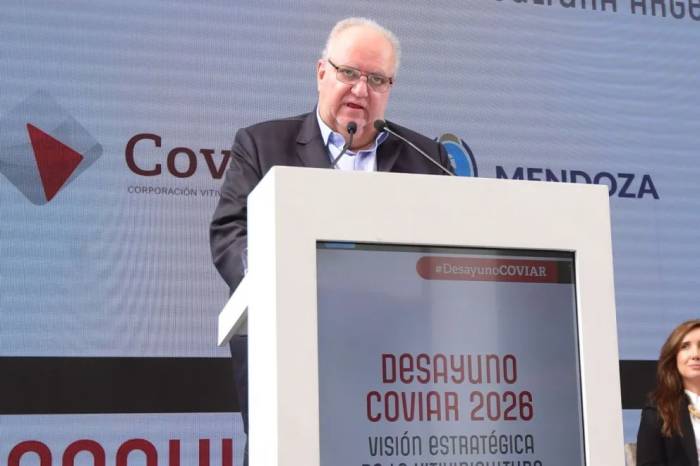
Fabián Ruggeri, the new president of the Argentine Wine Corporation, or COVIAR, has taken office with a cautious but clear sense of optimism about the future of the country's wine industry, pointing to an unexpected rise in wine consumption in January and a growing shift in consumer preferences toward lighter styles.
In an interview with local outlet 0264Noticias, Ruggeri said January showed a slight increase in wine consumption, a result he described as encouraging because sales usually fall during that month. He linked the improvement to product diversification by wineries, which have expanded their offerings with fruitier white wines, lower-alcohol labels and sweeter options aimed at changing consumer tastes.
Ruggeri said the market is moving toward fresher wines with less alcohol, and argued that producers must respond to that demand. He said low-alcohol wine is now a necessity and added that, if consumers want alcohol-free wine, the industry has to adapt. In his view, both white and red wines with lower alcohol content have become a strong requirement among today's consumers, and products with low or no alcohol are likely to gain a firm place in international markets.
His remarks came after COVIAR's annual breakfast event held last weekend in Mendoza, where the organization signed several agreements intended to support the sector. Among them was a deal with the Federal Investment Council, known as CFI, to develop and implement a program to promote Torrontés Riojano. The plan is designed to expand the variety's presence in key markets and strengthen its role in the productive and tourism development of Argentina's wine-producing provinces.
Ruggeri said the broader economic situation remains difficult for the wine business, although he stopped short of calling it the worst period in the industry's history. He recalled earlier crises in which grape harvesting was restricted or wine was discarded because demand had collapsed. Even so, he said he believes the current downturn can begin to reverse this year and next.
That matters because domestic consumption remains the industry's main engine. According to Ruggeri, between 70 percent and 75 percent of the wine sold in Argentina is consumed within the country, which means even small changes in local demand can have a direct effect on producers, wineries and the wider supply chain.
Exports, by contrast, have weakened in recent years, and Ruggeri said he expects that trend to continue as wine consumption declines in some traditional markets. Still, he pointed to Brazil as an example of future opportunity. Per capita wine consumption there remains low, but the size of the market gives it strong growth potential. Ruggeri said that if Brazilian consumption rose to two liters per person, it would generate an additional demand of 140 million liters.
He also addressed the cost pressures weighing on competitiveness, especially rising energy and fuel prices. Ruggeri said logistics costs are particularly heavy, noting that transporting goods to port can cost between $2,200 and $3,000 per container, roughly the same amount as shipping a container directly to China. For Argentina to compete more effectively with neighboring producers such as Chile, he said, the tax burden will need to come down.
Another issue on COVIAR's agenda is legislation tied to the use of grape must in the food industry. Ruggeri said the organization is working with the provincial governments of Mendoza and San Juan on a bill related to the sweetening of natural juices. The proposal would allow broader use of must in food manufacturing and could benefit both grape producers and businesses connected to the wine sector. He did not give a firm timeline for the bill's introduction, but said it would be presented soon.
Ruggeri will lead COVIAR for the next three years and has said he intends to work across all of the industry's main fronts, including domestic and international promotion, wine tourism and scientific research. Those efforts are aligned with the goals of the Argentina Wine Strategic Plan 2030, known as PEVI, which seeks to improve the sustainability and competitiveness of the national industry.

Founded in 2007, Vinetur® is a registered trademark of VGSC S.L. with a long history in the wine industry.
VGSC, S.L. with VAT number B70255591 is a spanish company legally registered in the Commercial Register of the city of Santiago de Compostela, with registration number: Bulletin 181, Reference 356049 in Volume 13, Page 107, Section 6, Sheet 45028, Entry 2.
Email: [email protected]
Headquarters and offices located in Vilagarcia de Arousa, Spain.