Wine imports to U.S. hit $7 billion despite tariff concerns
France and Italy maintain top supplier status
2025-05-29
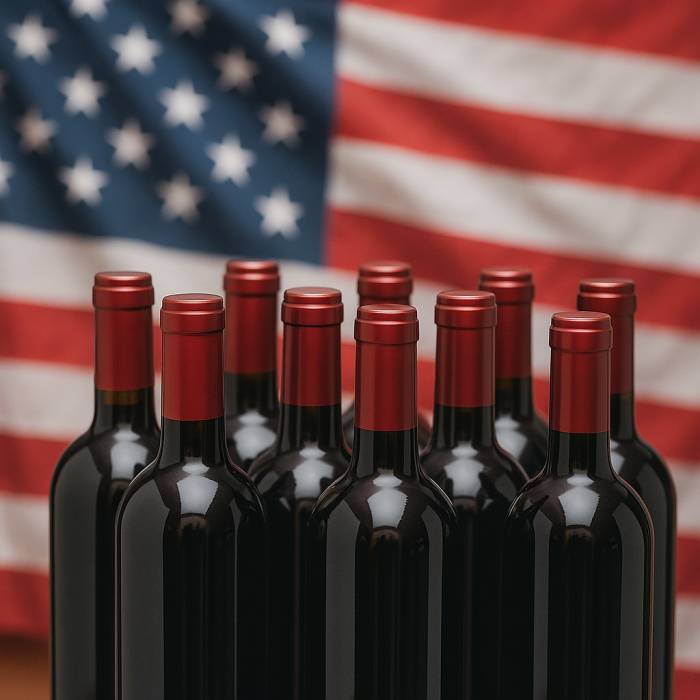
Wine imports into the United States continued to rise through March 2025, though the pace of growth has slowed since the surge seen late last year. A report published May 28 by DelreyAWM, a market analysis agency, shows that U.S. wine imports grew 7.2% in value over the twelve months ending in March, exceeding $7 billion. While total volume remained nearly unchanged, up just 0.9% to 12.4 million hectoliters, the average price per liter rose 6.2% to $5.71.
The report indicates stronger gains in the first quarter of 2025 compared to the same period in 2024. From January to March, import values increased by 17.9%, volumes rose 3.9%, and average prices jumped 13.5%. However, this momentum slowed in February and March. In December 2024 and January 2025, import values had risen more than 23% each month. That pace declined to about 16% in February and 14% in March. Volume increases followed a similar path, spiking nearly 30% in December before falling to just over 2% in March.
Analysts attribute the earlier surge to importer stockpiling after Donald Trump's election, driven by fears of steep tariff hikes on foreign wine. In February, speculation over possible tariffs of up to 200% on European wines triggered a rush in imports. By April, official guidance had scaled back proposed increases to 20%, then to 10%, but the ongoing changes have introduced uncertainty. Many importers have since reduced purchases and held back on building up inventory.
Despite this caution, the U.S. wine import market continues to show stronger value growth than volume, underscoring a shift toward higher-priced products. Bottled still wines and sparkling wines remain the primary growth drivers. Americans spent $5 billion on bottled still wines and $1.8 billion on sparkling wines over the past year. Bottled still wine imports rose 8.5% in value, while sparkling wines increased by nearly 10%. Bulk wine imports dropped sharply, falling over 25% in value.
Sparkling wine imports rose 19% in volume, reaching nearly two million hectoliters. Bottled still wine volumes grew nearly 9%, totaling seven million hectoliters. Bulk wine volumes declined by about 19%.
France and Italy remain the top wine suppliers to the U.S., but their export trends have diverged. French exporters reacted quickly to tariff concerns, leading to a 37% increase in exports for the quarter, though growth slowed to 11% in March. Italy's export pace was steadier early on but gained momentum recently, rising nearly 17% for the quarter and over 22% in March.
Other suppliers, including Canada, Australia, and Chile, experienced setbacks. Canadian bulk wine exports to the U.S. have fallen significantly. Chile's shipments dropped nearly 25% in March compared to the previous year. Australia also saw declines.
Spain continues to be the seventh-largest supplier by volume and fourth by value. Its exports to the U.S. have grown consistently, rising over 13% in the past year and 15% in the first quarter, but growth slowed to just under 10% in March.
The ongoing uncertainty around U.S. trade policy and tariffs is making importers cautious about future buying decisions. While demand for imported wine remains solid, especially for premium categories, the growth rate has become more measured following the post-election rush in late 2024.

Founded in 2007, Vinetur® is a registered trademark of VGSC S.L. with a long history in the wine industry.
VGSC, S.L. with VAT number B70255591 is a spanish company legally registered in the Commercial Register of the city of Santiago de Compostela, with registration number: Bulletin 181, Reference 356049 in Volume 13, Page 107, Section 6, Sheet 45028, Entry 2.
Email: [email protected]
Headquarters and offices located in Vilagarcia de Arousa, Spain.