Diageo Agrees to Reformulate Top Spirits Brands Across India
The move follows regulators’ challenge to added flavorings in whisky and rum, including Royal Challenge, which sells 4.5 million cases a year.
Tuesday, August 18, 2026
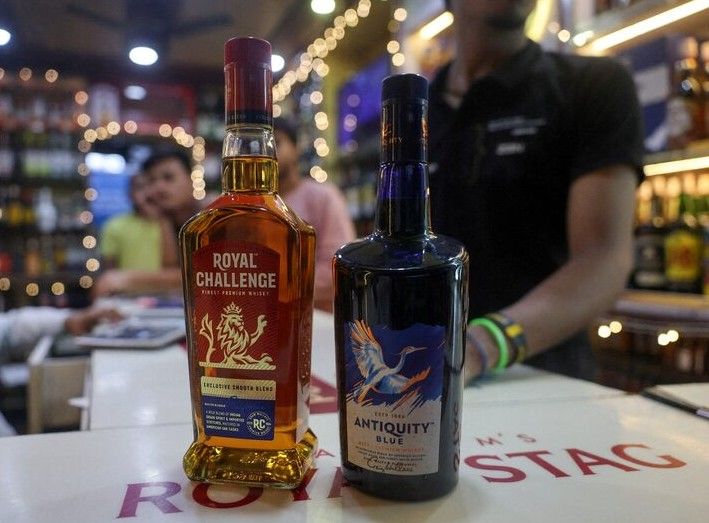
Diageo has agreed to reformulate some of its best-selling spirits in India after regulators challenged the use of added flavorings in products sold as whisky and rum, a move that will affect production across the country and reach one of the company’s biggest local brands.
According to Reuters, citing two government sources, Diageo accepted that it will stop adding flavorings that reproduce the taste of whisky in whisky or rum in rum in several products marketed in India. The decision follows restrictions imposed earlier this month by the Food Safety and Standards Authority of India, or FSSAI, in a dispute over labeling and composition rules in one of the world’s largest alcohol markets.
The products identified in the dispute include Antiquity Blue whisky, Royal Challenge whisky and McDowell’s No. 1 Celebration Matured XXX Rum. The original restrictions applied to production in specific states, including Madhya Pradesh and Maharashtra, but the agreed changes will now apply to the manufacture of those brands throughout India, according to the government sources cited by Reuters.
That makes the decision significant for Diageo’s Indian business. Royal Challenge is one of the company’s most widely sold whiskies in the country. Diageo says annual sales of Royal Challenge in India exceed 4.5 million nine-liter cases, equivalent to more than 40.5 million liters a year. The brand sits in what the company has described as the mid-prestige price segment, giving the reformulation broader commercial importance than a limited state-level compliance issue.
The Economic Times reported that the reformulation is expected to be completed in about three months. During that transition, the flavorings used in the affected products will have to be clearly disclosed on the front of the label. That interim step is intended to keep the brands on the market while production recipes, labels and inventories are adjusted.
The case emerged during a wider crackdown by Indian regulators on alcohol labeling and manufacturing practices. Earlier this month, authorities moved against several spirits brands made by Diageo and other Indian liquor companies, alleging mislabeling and the improper use of flavoring substances. The issue centered on the addition of flavorings that, according to regulators, should not be used in a way that blurs the distinction between a spirit’s base composition and an added taste profile.
In the case of Royal Challenge, the product’s back label has said it contains demineralized water, grain neutral spirit and Scotch, and that it includes permitted color and added nature-identical whisky flavoring substances. Regulators took issue with that practice under India’s food safety framework, setting off a dispute that has now led to the company’s agreement to change the formulation.
India is a critical market for Diageo, which has described the country as its “consumer market of the decade.” Its local unit, United Spirits, is central to that strategy, with a portfolio that reaches mass-market, prestige and premium drinkers across a broad network of states and distribution channels. A product-level regulatory dispute in India therefore carries more weight than a routine labeling matter, especially when it involves brands with national scale.
The nationwide scope of the change is one of the most important parts of the agreement. Rather than only modifying production in the states where officials had restricted sales or manufacturing, Diageo will need to alter recipes and packaging for the same brands wherever they are produced in India. That could require changes in plant operations, supply planning and state-by-state inventory management, though no official estimate has been made public on the cost of the transition.
Neither Diageo’s India unit nor FSSAI immediately responded to Reuters requests for comment when the news agency first reported the decision. FSSAI also has not yet published a formal order lifting the earlier restrictions, a point that leaves some uncertainty around timing and implementation even as the company moves ahead with the reported agreement.
That absence of a published final resolution matters for the industry because it means the practical terms of compliance may still depend on follow-up instructions from regulators. For Diageo, the main question is how quickly it can move from agreement in principle to production on revised formulas without major disruption to supply in a market where large brands depend on constant replenishment.
The episode also comes as Diageo faces broader regulatory attention in India. Reuters reported last week that inspectors had seized about 18,000 boxes of Diageo liquor bottles over allegations that they lacked markings showing they were made using safe recycled plastic. That issue is separate from the flavoring dispute, but together they have increased scrutiny of the company’s compliance practices in the country.
For the Indian spirits market, the case may have implications beyond Diageo. Regulators’ challenge to added flavorings in whisky and rum could prompt other producers to review product formulas, labels and claims to avoid similar action. India’s rules on food and beverage composition can vary in interpretation and enforcement, and a high-profile case involving one of the sector’s biggest players often becomes a signal to the rest of the market.
What remains unclear is the business impact during the transition. There has been no public estimate of reformulation costs, no official figure for stock that may have been delayed or held back by the restrictions, and no disclosure of any sales effect on the affected brands. It is also not known whether distributors or state excise authorities will require additional approvals before revised products return to normal circulation.
Still, the agreement marks a shift from a regulatory dispute in a few states to a national product change for some of Diageo’s best-known labels in India. For a company that sells millions of cases of local whisky in the country each year, that turns a technical compliance issue into an operational change with consequences for manufacturing, labeling and shelf presence across one of its most important growth markets.