Brittany winemakers divided over new organic wine label as historic boundaries and organic standards spark debate
Exclusion of Pays Nantais and mandatory organic rules fuel tensions among producers seeking official recognition for Breton wines
Monday, June 2, 2025

Views › 2009
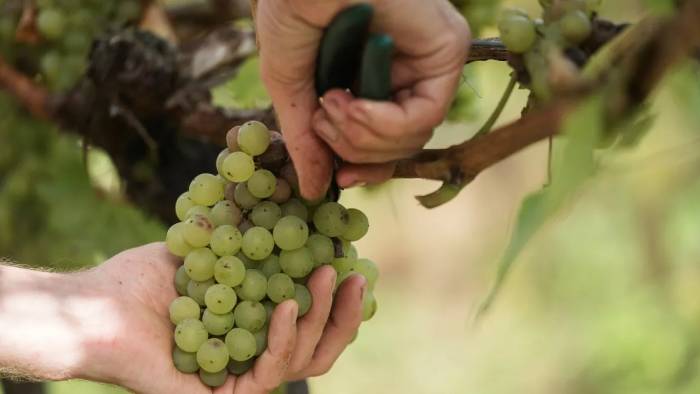
In December, young winemakers from Morbihan, Finistère, Côtes-d’Armor, and Ille-et-Vilaine announced a plan to apply for a new organic wine designation, the IGP Vins de Bretagne, with support from the Brittany regional government. The application was submitted to France’s National Institute of Origin and Quality (INAO). Notably, the proposal excludes the vineyards of the Pays Nantais, an area historically part of Brittany but now administratively attached to the Pays de la Loire region. This exclusion has sparked strong reactions south of the Loire River.
Maxime Chéneau, president of the Syndicat des vignerons de Bretagne (SVB) based in Monzillon, Loire-Atlantique, quickly responded. He insisted that the geographical area for the new IGP must include all five departments of historic Brittany. Chéneau warned that if this condition is not met, his group will formally oppose the application during the national review process. The SVB represents established winemakers in Loire-Atlantique who see themselves as part of Brittany’s wine heritage.
The younger winemakers leading the IGP initiative are taking a more diplomatic approach. Romain Le Guillou, president of the Association pour la valorisation des vins de Bretagne (AVVB) and a winemaker in Belz, Morbihan, said they are open to discussion and want to understand all perspectives. He emphasized that there are no taboos in their approach and that dialogue is necessary.
Chéneau remains firm on his position. He believes that if all parties work together, approval for the IGP could come within 18 months. Without agreement, he predicts a process that could drag on for a decade. The younger Breton winemakers worry that if the IGP covers all five departments—including Nantes—they could be overshadowed by their more experienced and financially stronger counterparts from Pays Nantais.
Another point of contention is the desire among the younger group to make this IGP France’s first 100% organic wine designation. The established Nantais winemakers are less enthusiastic about this requirement. Chéneau argues that making organic production mandatory is too restrictive but says his group supports environmental efforts in general.
The dispute could also affect relations with other wine producers in the broader Loire region. The Syndicat des vins IGP Val de Loire, whose largest producing department is Loire-Atlantique, opposes overlapping designations. Justin Lallouet Jonas, director of the syndicate, said that having two IGPs covering similar areas would create confusion for producers and consumers alike. He considers this a red line and points out that Val de Loire producers can already use an additional label mentioning “Marches de Bretagne” to highlight their connection to Brittany.
Despite these options, some winemakers want to go further and secure a distinct identity for Breton wines. The debate continues as both sides try to balance historical ties, commercial interests, and environmental ambitions while seeking official recognition for their wines under French law. The outcome will shape not only how Brittany’s wines are marketed but also how its cultural identity is expressed through its vineyards.