Croatian study finds pruning-derived biochar raises grape yields in dry-farmed vineyard
Researchers saw no consistent water-management benefit across seasons or rootstocks at an application rate vineyards could produce on-site
Wednesday, November 25, 2026

Views › 707
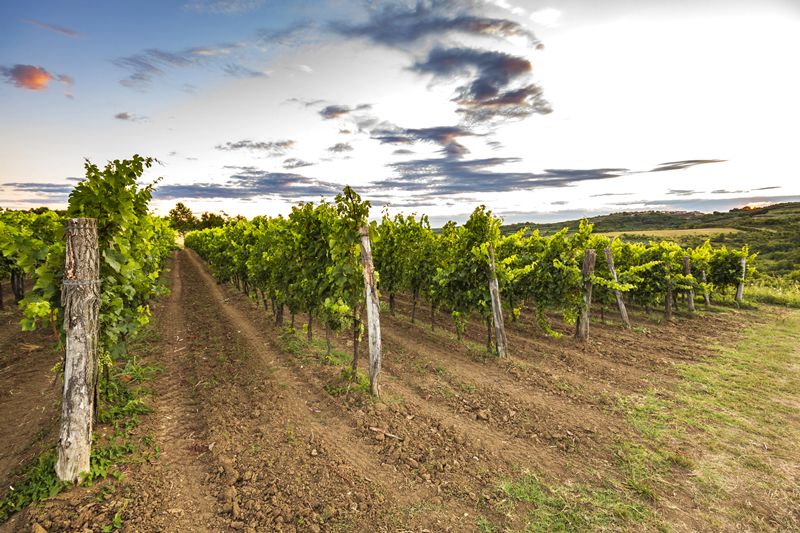
A two-season field study in Croatia found that biochar made from grapevine prunings increased grape yield in a dry-farmed vineyard, even as its effects on soil moisture and vine water status changed with the year, the rootstock, and the stage of the growing season.
The research, published in Frontiers in Plant Science, followed Malvazija istarska vines in Poreč, in the Istria region, during the 2021 and 2022 growing seasons. The vineyard was planted on Terra Rossa soil and managed without irrigation. Researchers tested whether pruning waste from the vineyard itself could be turned into a practical soil amendment under a circular system that keeps biomass on the farm instead of bringing in outside material.
The team compared five soil treatments: a control with no amendment, standard biochar made from grapevine prunings, urea-enriched biochar made from the same feedstock, shredded pruning residues, and an organic fertilizer. The standard biochar was applied at 1.2 t ha-1, a rate the authors said matched the amount that could realistically be produced from the vineyard’s own annual pruning residues.
That point is central to the study. Many earlier biochar trials in agriculture have used much larger application rates, often far above what a single vineyard could produce from its own prunings. In this case, the researchers wanted to test a lower rate that could be achieved on-site. They produced the biochar with Kon-Tiki flame-curtain pyrolysis using winter pruning residues collected in January 2021 and January 2022.
Across both years, the standard pruning-derived biochar treatment produced the highest yield per vine on both rootstocks tested, SO4 and 420A. SO4 generally yielded more than 420A. The authors said that, despite year-to-year variability in several soil and plant measurements, the positive yield response to the standard biochar was consistent in both seasons.
The rest of the picture was less uniform. The study measured soil carbon dioxide flux, soil volumetric water content, leaf net carbon dioxide assimilation, leaf water potential, and yield per vine across seven phenological stages. Responses in the soil and in the leaves often depended on which rootstock the vines were grafted onto and when the measurements were taken. Treatment effects on soil carbon dioxide flux, soil moisture, and leaf water potential also differed between 2021 and 2022.
That matters because the two seasons had similar total rainfall but very different rainfall patterns. The 2022 season had a hotter and drier stretch in mid-season, from fruit set to véraison, followed by a large rain event in September. The authors said these differences likely shaped how the vines and the soil responded to the amendments.
The findings suggest that biochar made from vineyard prunings may help support yield under Mediterranean rainfed conditions, but they do not show a simple or reliable water-management effect. The study did not find a uniform improvement in vine water relations across rootstocks and seasons, and the authors cautioned that the water-related effects of the biochar were contingent on both seasonal conditions and rootstock type.
The work also leaves important questions open for growers and the drinks industry. The researchers did not measure yield components such as cluster number or berry size, and they did not assess fruit composition. That means the study cannot say whether the higher yields came with changes in sugar, acidity, phenolics, aroma compounds, or other traits that shape wine style and quality. For wine producers and other beverage businesses that depend on grape quality as much as tonnage, that limits how far the results can be taken.
Even so, the trial is likely to draw attention because it tested a dose that growers could plausibly make from their own vineyards rather than from imported biomass. That could make pruning-derived biochar more relevant to commercial wine production than studies based on far higher application rates. It also points to a possible way for vineyards to reuse annual pruning waste instead of removing it or burning it in the field, while potentially supporting grape output in dry conditions.
The trial was conducted in a 12-year-old vineyard with 4,000 vines per hectare. Each experimental plot included 18 vines, and the design used five replicate blocks for each rootstock-by-treatment combination. The amendments were incorporated into the soil in early spring in both years, on March 1, 2021, and March 7, 2022.
The standard biochar and the urea-enriched biochar were both made at about 400°C. The standard biochar was quenched with water, while the enriched version was quenched with a 5% urea solution. The researchers also included shredded pruning residues to compare raw biomass with pyrolyzed biomass, and an organic fertilizer treatment calibrated to provide a similar nitrogen input to the standard biochar treatment.
The authors framed the work within climate pressure on Mediterranean viticulture, where hotter summers, irregular rainfall, and more frequent drought are putting more stress on vineyard soils and vines. They said practices that improve resilience without depending heavily on outside inputs are of growing interest, especially in systems where water is limited.
Still, the paper stops well short of broad recommendations. The authors said the results need to be tested over longer periods and in more locations before wider conclusions can be made. For now, the study offers evidence that pruning-derived biochar, applied at a farm-realistic rate, can raise yield in a rainfed vineyard, while leaving open the bigger question of whether that advantage also improves, preserves, or potentially changes the quality of grapes used for wine and other grape-based drinks.